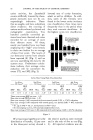
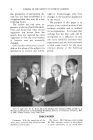
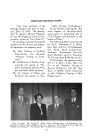
LACTOBACILLUS TEST IN CONTROL OF DENTAL CARIES 83 in the morning, before breakfast and before the teeth are brushed. Patients should also be cautioned not to smoke just before providing the specimen, since smoking often results in a temporary drop in the count. The patient is provided with a small pellet of paraffin and a sterile bottle equipped with a plastic screw top. He is instructed to chew the paraffin vigorously with all his teeth and then to spit the accu- mulating saliva into the bottle until about 10 cc. are obtained. In the laboratory the specimen is placed in a shaking machine for ap- proximately two minutes. One cubic centimeter of the saliva is mixed with 4 cc. of the dextrose acid broth, and 0.1 cc. of this dilution is spread evenly over the surface of a tomato agar plate with a sterile glass spreader. The plate is then incubated at 37.5øC. for four days. The Lactobacilli can be differen- tiated from other bacteria on these media by their colonial characteris- tics when examined at a magnifica- tion of seven times with a wide field stereoscopic microscope. The num- ber of Lactobacillus colonies on the plate is estimated by counting them over a calibrated chart (the Frost's plate counter No. 4099, prepared by the Arthur H. Thomas Co., of Philadelphia, is satisfactory for this purpose). The number of colonies on the plate times fifty equals the number of Lactobacilli per cubic centimeter of saliva. In clinical practice, counts over 10,000 are considered high enough to warrant strict dietary supervi- sion. The percentage of counts over twenty thousand is significant in comparing the prevalence of dental caries in population groups. Lacto- bacillus counts were determined in connection with dental caries studies in Elmhurst, Maywood, Aurora, Joliet, and Galesburg, II1., where the water supplies contain more than 1 ppm. of fluorine (F), and in Elgin, II1., with a water supply containing 0.5 ppm. of fluorine.* These were compared with Lactobaci//us counts in Evanston, Oak Park, Waukegan, and Quincy, II1., and Escanaba, Mich., which are cities using fluo- ride-free Lake Michigan water (2). The most striking differences in the Lactobaci//us counts were ob- served in the 0 to 100 range and in counts over 20,000 to 30,000. The differences in the counts in these ranges paralleled the differences in the dental caries attack rates in the fluoride and fluoride-free cities. In Galesburg, twelve- to fourteen-year- old children had 189 teeth with caries experience per 100 children as compared with 636 in Quincy, a ratio of approximately 1 to 3 (Fig. 1). Fifteen per cent of the Gales- burg counts were over 30,000 in contrast to 52 per cent in Quincy, nearly a 1 to 3 ratio. Cities using over 1 ppm. of fluorine averaged 37.5 per cent in the 0 to 100 Lacto- bacillus count range, compared with * The reference to "parts per million," in this paper written "ppm.," of the fluorine or fluoride content of water or food always means the number of parts per million of the element fluorine, not of a compound of fluo- rine, in the medium under consideration.

84 JOURNAL OF THE SOCIETY OF COSMETIC CHEMISTS OF TH[ GROUP• EX•ED •T GALE•URG A•D AT •UI•CY 6ALESaUR• ß - - •ee ............ lee eo 5o , , , m• I•oo J reD- I moo-I •ooo. l•,o•-I•,ooo-I•o,ooo iooo 5ooo i•.ooo 2hOOD •o,ooo A•o •STIMATED NU•OER OF LAGTOBAGILLI PEri CG OF SALIVA Figure 1.--Percentage distribution of Lacto•aciEi in the saliva of the groups ex- amined at Galesburg and Quincy, II1., clas- sified according to the estimated amount. (From Dean, H. T., Jay, P., Arnold, F. A., Jr., McClure, F. J., and •]vove, E., Domestic Water and Dental Caries, Including Certain Epidemiologic al Aspects of Oral L. acidopM]us. Pu•. Heah• Rep., 54, 862-888, May 26,1939. 17.8 per cent in the fluoride-free areas. Elgin, with an intermediate fluorine value of 0.5 ppm., fell in between, with 21.2 per cent of its counts in the low range. In the cities using more than .1 ppm. of fluorine the counts over 20,000 averaged 26.7 per cent, as compared to 52.4 per cent for the non-fluoride areas. Elgin had an intermediate value of 40 per cent. It was also found that repeated .surveys in the same city yielded remarkably consistent results. The 0 to 100 counts in Waukegan, II1., for 1942, 1943, and 1944 were 15 per cent, 14 per cent, and 16 per cent. The counts over 20,000 were 55 per cent, 56 per cent, and 58 per cent during these years.* It is ap- parent that this method is a valuable adjunct to mouth examinations in * Unpublished data obtained by F. A. Arnold, Jr., and P. Jay. the evaluation of public health or water-treatment programs. LACTOB^CILLUS ACIDOPHILUS Cou•ws As ^ PUBLm HE^LTH ME^SUR•. There has been considerable spec- ulation concerning the possible role of Lactobacillus counts in state health department laboratory pro- grams. For some time this service has been available to dentists in several states. A few dental schools have also offered this service to the dental profession. Since Lactobacilli increase in num- ber before dental cavities appear, the early reduction of high Lacto- bacillus counts should prevent the formation of dental cavities. Many practitioners find this technique useful in the management of pa- tients with rampant dental caries (Becks, Jay). The restriction of carbohydrate, particularly sugar, is the most effective measure thus far reported for the reduction of caries. Becks, Jensen, and Millarr (3) reported the successful control of rampant caries after the reduction of Lactobacillus counts in patients who were placed on low sugar diets. An attempt has been made to re- duce Lactobacillus counts by re- stricting the amount of carbohy- drate in the diet periodically. Dur- ing the course of earlier observa- tions there was an indication that if these bacteria were eliminated from the oral flora they did not re- establish themselves readily even when patients consumed liberal amounts of sugar. Lactobacillus
Purchased for the exclusive use of nofirst nolast (unknown)
From: SCC Media Library & Resource Center (library.scconline.org)