SYRIAN HAMSTERS TESTED FOR THERAPEUTIC DENTIFRICE STUDIES 89 promise of being effective agents are impotent under in vivo condi- tions. It is also regrettable that controlled clinical studies in humans are both time consuming and ex- pensive. A review of progress in preventive medicine indicates that many of our advances can be attributed to the discoveries and utilization of test animals. It follows logically that provided we have an animal that can be shown to develop tooth decay under controlled laboratory condi- tions much can be learned about agents capable of limiting dental caries. The primary prerequisites for such animals would be the pos- session of teeth with morphological characteristics similar to those of man and dietary preferences com- parable to those of man. In addi- tion, the animal should be inex- pensive to maintain and the period necessary for disease production should be short. The available information over- whelmingly supports the concept that dental caries initiation is pri- marily a local phenomenon (3). It is associated with the oral retention of fermentable carbohydrates and their rapid breakdown by oral micro- organisms. These events can be demonstrated in human beings and in some animals, particularly cer- tain rodents. In the latter group, considerable attention has been directed toward the Syrian hamster. This small rodent, a close relative of the rat, possesses molar teeth re- sembling those of man and is easily maintained on diets containing large quantities of fermentable poly-, di-, or monosaccharides. In 1942 it was demonstrated by Arnold (4) that provided these ani- mals were maintained on diets with high fermentable carbohydrate con- tent, tooth decay was quickly and easily produced. Histologically, the lesions resembled those in humans and the distribution of the cavities paralleled that of man, occurring on the occlusal and proximal surfaces and in pits and fissures of the tongue and cheek surfaces of the molar teeth. These initial observations have been greatly extended by sev- eral groups of investigators, no- tably those working at the Uni- versity of Rochester, University of Chicago, and the Polytechnic Insti- tute at Copenhagen, Denmark. In those areas in which their investiga- tions have overlapped the findings have been in surprisingly good agree- ment. It is particularly important to point out that the same agents which have been shown by clinical experimentation to inhibit human dental caries are effective in limit- ing the experimental disease in the hamster. These include systemic and topical fluoride therapy and local penicillin therapy. In 1947, Lazansky (5) reported on the influence of tooth brushing with various chemicals on hamster dental caries. He noted that the brushing procedure alone made for a slight reduction in tooth decay incidence and that sodium fluoride applied in this fashion was an ef- fective caries inhibitory agent. Acidulated fluoride solutions were

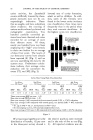
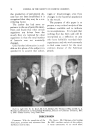
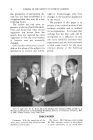
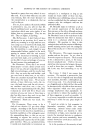
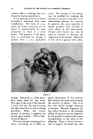
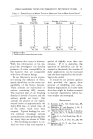
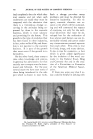
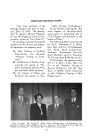
90 JOURNAL OF THE SOCIETY OF COSMETIC CHEMISTS without effect, a finding later con- firmed by human experiments. In our laboratory we have utilized Lazansky's technique with some modification. The tufts of a cos- metic eye brush (mascara) are re- duced to approximately the same proportion as those of a tooth brush. The quantity of the denti- frice is controlled bv having it ejected from a 2-cc. graduated crose. The severity of the disease may be modified by reducing the amount of sucrose in the diet or by substituting glucose for sucrose. In general, the same quantity of hexose produces only one-half as much decay as the disaccharide. Certain other factors may also be used to increase or decrease the magnitude of the disease. Removal of the salivary glands with subse- ~ . -•-•-=..' •. .... 3- 4 . •-: "' :?,. - 5:' ..... ,.•, c:"'"""/' '• .':7' "'? .:: ...'•,.' --- : ¾• •' ...... , ,: . • ,• •. } ..-: ,...:•,?' '•. 57'•'., :F,. •"•.,•'•:•:.•: .. * C '4•':" ' r. .... .: ...•:., "::' :-":r: '". :"!5: "." • " "'5... .•' Figure 2. syringe. One-tenth cc. of the denti- frice seems ideal for this work. The nape of the neck of the hamster is held with the left hand leaving the right hand free for the brushing procedure. When the correct amount of pressure is applied, the mouth opens readily. This is illus- trated in Figure 2. The test hamsters are placed on a ration containing up to 60% su- quent diminution of the salivary flow hastens the onset and increases the severity of decay. This is in line with similar changes observed in humans. Recently Sognnaes (6) has called attention to the seeming ability of prenatal sucrose ingestion by the mother to enhance the caries susceptibilities of the teeth of the offspring. There is clinical informa- tion to support the belief that this
Purchased for the exclusive use of nofirst nolast (unknown)
From: SCC Media Library & Resource Center (library.scconline.org)