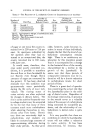
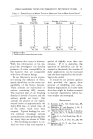
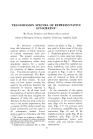
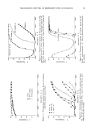
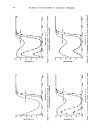
LACTOBACILLUS TEST IN CONTROL OF DENTAL CARIES 85 counts can be reduced through the use of diets which are not particu- larly low in carbohydrate, provided they are sugar-free but the change in the oral flora does not take place quickly, and the Lactobaci//us count generally returns to its previous high level as soon as sugar is included in the diet. In a preliminary study several patients were placed on a diet which was modified at two-week intervals according to the following plan. During the first two-week period the diet contained no free sugar, and carbohydrate in other forms was restricted to approximately 100 gm. a day. This was known as Diet Plan I. After the initial two-week period the patient progressed to Diet Plan II, which included all carbohydrates other than sugar. The Lactobacillus counts remained low in approximately 80 per cent of the patients. When they were per- mitted to include sugar with one meal a day for a two-week period, the Lactobacillus counts remained low in 70 per cent of them. Eighty per cent continued to have low Lactobacillus counts on a diet which was entirely unrestricted. When the procedure was repeated with a larger number of patients, comparable results were obtained. This was rather remarkable, since in the second study few subjects received dietary instructions at first hand from the laboratory. In order to determine the practicability of this method from the point of view of a public health department pro- gram, the dietary instructions were sent to dentists in various parts of the United States and Canada. They arranged for the shipment of saliva specimens from patients in dental practices throughout the country. It was first determined that specimens not more than three days old were suitable for ascertain- ing Lactobaci//us counts and since specimens from great distances were sent by air mail few of them had to be discarded. The cultures were made according to the usual tomato- agar-plate method described pre- viously. Counts over 10,000 were considered high enough for treat- ment, and diets were prescribed by the dentist according to the instruc- tion material which had been pro- vided. Obviously the patients did not receive uniform instructions and were not equally conscientious in following the diets. Nevertheless, it can be seen from Table 1 that most of them who did persist through the various phases of the program were eventually able to re- turn to normal diets without a re- currence of their previous high state of caries activity. Of the 809 patients who started on Diet Plan I, the counts were successfully reduced in 675, or 83.4 per cent. Five hundred and sixty- three progressed to Plan II. Of the 112 who did not continue some preferred to remain on the low car- bohydrate diet, and others merely neglected to return specimens. The counts of 459, or 81.6 per cent, remained low on Plan II. Among the 313 who progressed to Plan III, which permitted the use

86 JOURNAL OF THE SOCIETY OF COSMETIC CHEMISTS TAI•tE I--.THE REt.•TXO• or L. acidophilus Cou•Ts To Number of Number of Number of Patients with Per- Patients with Per- Patients Diet Plan Reduced Counts centage Increased Counts centage 809 .... Started I 675 83.4 563 .... Continued on II 459 81.6 i64 1•'.• 313 .... Continued on III :230 73.4 83 :26.5 127 .... Continued on IV 103 81.2 24 18.8 Plan I: Approximately 100 gm. of carbohydrate daily. Plan II: Plan I plus starch. Plan III: Plan II plus sugar at one meal. Plan IV: Unrestricted. of sugar at one meal, the counts re- mained low in 230 cases or 73.4 per cent. In specimens submitted by 127 patients after they had re- turned to an unrestricted diet, the counts remained low in 103 cases, or 81.2 per cent. It would seem, therefore, that even under poorly controlled con- ditions, it is possible to transform the oral flora so that Lactobacilli do not flourish even though liberal amounts of sugar are consumed by the patient. It has been observed clinically that this condition may spontaneously occur periodically during the life cycle of most indi- viduals. The varying states of caries activity are often explained by changes in dietary habits. The rise in caries activity frequently seen in college students may be accounted for by the fact that many of them consume much more carbohydrate while adapting themselves to con- ditions away from home. Dormi- tory diets are notoriously high in carbohydrate, and students are likely to consume large amounts of sugar-containing delicacies during their study periods. As they grow older, however, caries becomes in- active in many of these individuals, despite the fact that the level of car- bohydrate consumption remains high. There is no satisfactory ex- planation for this transition except that it is accompanied by a change in the bacterial flora of the mouth, characterized by a decline in the growth of the Lactobacilli. It seems now that these periods of comparative immunity may be in- duced at will by a drastic reduction in carbohydrate intake for short periods of time. There is a great deal of specula- tion concerning the actual role that the Lactobacillus plays in the etiol- ogy of dental caries. Regardless of its etiologic relationship, its presence in the mouth serves as a valuable index of the amount of carbohydrate being consumed by susceptible pa- tients, and the relationship of car- bohydrates to dental caries is quite clear. It is very possible that there are conditions in which the Lactobacillus count will not reflect a reduction in caries activity. It has been demonstrated, for instance, that
Purchased for the exclusive use of nofirst nolast (unknown)
From: SCC Media Library & Resource Center (library.scconline.org)