THE POTENTIAL OF ENZYMES FOR TOPICAL APPLICATION By T. CAYLE, Pa.D.* Presented •anuary 9, 1963, New York City ABSTRACT Examination of the skin and cutaneous disorders from the standpoint of potential substrates for a variety of enzymes leads to the conclusion that these highly specific, mildly acting reagents will probably find a place amongst the more important active ingredients available to the cosmetic chemist. In addition to a recognition of the enzyme-substrate relationship that is so im- portant to the successful use of enzymes, the cosmetic chemist must have an under- standing of the possible interplay between an enzyme and the vehicle in which it is formulated, and vice versa. Although enzymes can be extremely useful, attention is drawn to the fact that they should not be considered a panacea. A number of areas which appear to offer some exciting new approaches to the cosmetic industry are discussed. I. INTRODUCTION No matter what his specialization, at one time or another during the career of every chemist, he is exposed to some of the unique properties of enzymes. He is made aware of enzyme specificity, rapidity of action, mild operating conditions, etc., and it is easy to understand why the formulating cosmetic chemist should turn to these reagents as potentially important members of his armamentarium. The object of the following discussion is to bring into perspective some of the current thinking con- cerning the potential of enzymes for topical application. The cosmetic chemist views the skin and its appendages as a part of the body to be maintained and to be beautified. The enzyme chemist, on the other hand, views the integument as a continuous source of varied substrates, many of which are exceedingly refractory to enzyme attack. The successful ap- plication of his product, the enzyme, is based on the objective scrutiny of those who expect it to perform a particular task, and this it can only do if the skin lends itself to attack. Therefore, the enzyme chemist is more interested in the chemical changes than in the morphological changes that occur during keratinization of the epidermis: the conversion of a "normal" * Wallerstein Co., Div. Baxter Laboratories, Staten Island 3, N.Y. 249

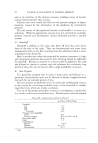
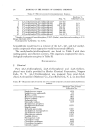
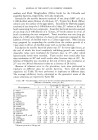
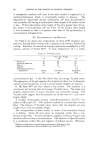
250 JOURNAL OF THE SOCIETY OF COSMETIC CHEMISTS cellular protein to a form that is completely insoluble and extremely refractory to enzymatic degradation. Synthesis of this "new" protein form takes place in the active basal layer, with a period of "curing" required as the cells migrate toward the periphery. The keratin precursors are stabilized and made three dimen- sionally rigid by virtue of the inter- and intra-molecular disulfide linkages so abundant in the keratin product. The degree of rigidity and, therefore, the ability of the molecule to withstand enzymatic hydrolysis, is directly correlated with the number of disulfide linkages present, as well as with the extent of hydrogen bond formation between protein chains. Table I shows the half-cystine content of several keratins and that found in several "typical" soluble proteins. Hair and nails are examples of so-called "hard" keratin and represent the type of material most refractory TABLE I.--CoMPARISON OF HALF-CYsTINE CONTENT OF SEVERAL KERA'rINS WITH TI•AT FOUND IN SEVERAl. SOLUBLE PROTEINS Half-Cystine Content, Moles per 105 g. Protein Keratin Wool* 92-114 Human Hair* 138-150 Epidermis* 19-32 Collagen• 0 CaseiM- 3 OvalbumiM- 13 * (1, p. 32). t (2, p. 278). to hydrolysis and having the highest content of stabilizing disulfide groups. "Soft" keratin is represented by epidermis and is said to contain about 20% of a water-soluble protein which is electrophoretically identical to keratin. The higher half-cystine content of hard keratin is indicated by the sulfur content of approximately 5(•, whereas it is only approximately 1% in the case of soft keratin (2). The epidermis is the origin of accessory structures known as skin ap- pendages, i.e., hair, sebaceous glands, sweat glands (apocrine and eccrine) and nails. In 1961, 40% of the dollar volume (3) spent on toilet goods was devoted to products designed to maintain, retain, diminish or glorify these accessory appendages. In addition, almost one fifth of all diseases of the skin seen by dermatologists were diagnosed as ache (4), a syndrome associated primarily with hair follicles and sebaceous glands. The approximate composition of sebum, the secretion of the sebaceous gland, is given in Table II. The predominantly lipid nature of this
Purchased for the exclusive use of nofirst nolast (unknown)
From: SCC Media Library & Resource Center (library.scconline.org)