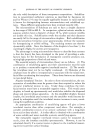
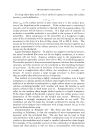
CHEMICAL STRUCTURE AND ANTIMICROBIAL ACTIVITY OF BIS-PHENOLS. III. BROAD SPECTRUM EVALUATION OF HEXACHLOROPHENE AND ITS ISOMERS BY WILLIAM S. GUMP, Pu.D., and Gsov,•s R. WALTER, P•.D.* Symmetrical methylenebis-(trichlorophenol) isomers being either 2,2'-, 3,3'- or 4,4'- with regard to the methylene bridge were investigated for their antimicrobial activity against a broad spectrum of bacteria, molds and yeasts. There are 10 possible isomers, including hexachlorophene two of them• 2,2'-methylenebis(3,5,6-trichloro- phenol) and 4,4'-methylenebis(3,5,6-trlchlorophenol), whose preparation would have been very difficult, had been omitted from the study. Maximum activity against bacteria was shown by the 2,2'-methylenebis-phenols 2,2'-methylenebis(3,4,5- u ichlorophenol) was found to be generally more potent than hexachlorophene and the other 2,2'-isomer. Great variations between the 3,3'-isomers were noted the 4,4'-isomer was definitely the least active of the compounds tested. Against the dermatophytes, the activity of the isomers was found to be of the same magnitude. None of the bis-phenols was active against C. albicans or P. ova/e at a concentration of 100 •g./ml. A previous investigation pertained to the bacteriostatic and fungi- static properties of a number of bis-phenols and a discussion of the relation- ship between chemical structure and antimicrobial activity (1). This work was then extended to an evaluation of the bactericidal properties of a se- lected group of the same bis-phenols in the presence of a synthetic anionic surfactant (2). Initially, 65 compounds were investigated for activity against three micro6rganisms. It would seem to be of interest, from the viewpoint of structural specificity and biological activity, to evaluate the closely related methyleneNs (trichlorophenol) isomers against a broader spectrum. •I'here are ten possible symmetrical configurations of the methylenebis- (trichlorophenols) being either 2,2'-, 3,3'- or 4,4'- with regard to the methylene linkage. Two isomers, 2,2'-methylenebis(3,$,6-trichlorophenol) and 4,4'-methylenebis(3,$,6-trichlorophenol), have been omitted because of the complicated preparation of the starting material, 2,3,5-trichloro- phenol (3, 5). Furthermore, condensation of 2,3,5-trichlorophenol with * Sindar Corporation, Delawanna, N.J. 269

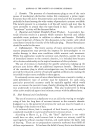
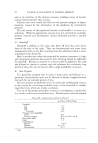
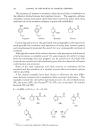
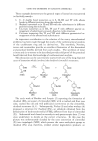
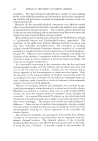
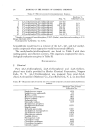
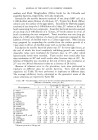
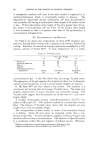
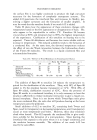
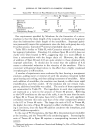
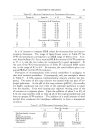
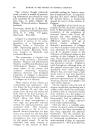
270 JOURNAL OF THE SOCIETY OF COSMETIC CHEMISTS TABLE I--METHYLENEBIS(TP. ICHLOP. OPHENOL) ISOMEP. S Analyses, % No. Isomer M.p. øC. ChlorineJ' found 1 2,2'-methylenebis(3,4,6-trichlorophenol) * 2 2,2'-methylenebis (4,5,6-trichlorophenol) 3 2,2'-methylenebis (3,4,5-trichlorophenol) 40 3,3'-methylenebis (2,4,6-trichlorophenol) 65 3,3'-methylenehis (2,4,5-trichlorophenol) 66 3,3'-methylenebis (2,5,6-trichlorophenol) 67 3,3'-methylenebis (4,5,6-trichlorophenol) 42 4,4'-methylenebis (2,3,6-trichlorophenol) 161-163 220-222 193.5-195 52.1 208-211 51.8 239-241 52.2 184-186 52.2 240-243 51.7 166-167.5 52.3 * Sample of commercial hexachlorophene, U.S.P. (Sindar), manufactured according to U.S. Patent 2,812,365 (1957). J' Calculated for C•3H402C16: CI, 52.3%. formaldehyde would lead to a mixture of the 2,2'-, 4,4'- and 2,4'-methyl- enebis compounds whose separation would be extremely difficult. The methylenebis(trichlorophenols) are listed in Table I with their melting points and chlorine contents. The organisms employed for micro- biological evaluation are given in Table II. EXPERIMEN'I AL I. Chemical Pure 2,4,$-trichlorophenol, 2,3,4-trichlorophenol and 2,3,6-trichloro- phenol were kindly provided by Hooker Chemical Corporation, Niagara Falls, N.Y. 3,4,5-Trichlorophenol was prepared from pract.2,6-di- chloro-4-nitroaniline (Matheson Co., East Rutherford, N.J.) as described TABLE II--ORGANISMS EMPLOYED FOK THE EVALUATION OF METHYLENEBIS(TRICHLOROPHENOL) ISOMERS American Type Culture Name Collection No. Staphylococcus aureus 6538 Staphylococcus epidermidis 155 Bacillus subtilis 9372 Bacterium ammoniagenes 6871 Proteus vulgaris 9920 Escherichia coli 11229 Salmonella typhosa 6539 Pseudomonas aeruginosa Pseudomonas fluorescens 11251 Shigella sonnei .... Klebsiella pneumoniae 10031 Trichophyton mentagrophytes 9129 Trichophyton rubrum 10218 Microsporum audouini 11347 Candida albicans 10231 Pityrosporum ovale Clostridium tetani 8033 Clostridium perfringens 8009 Clostridium sporogenes 11437 Chlorella vulgaris 9765
Purchased for the exclusive use of nofirst nolast (unknown)
From: SCC Media Library & Resource Center (library.scconline.org)