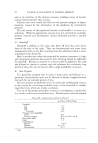
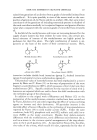
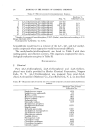
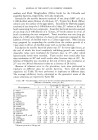
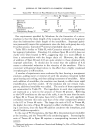
POTENTIAL OF ENZYMES FOR TOPICAL APPLICATION 251 TABLE II.--THE APPROXIMATE COMPOSITION OF SEBUM • Free, unsaturated fatty acids Triglycerides Fatty acid esters Cholesterol (free & combined) Hydrocarbons, including squalene 20% 25% 25% 5% 15% * (5, p. 362). material suggests the enzyme that might be useful in treating conditions associated with seborrhea. Other skin appendages will not be discussed here, except to mention that the nail is composed of hard keratin and the associated cuticle of soft keratin. II. AREAS AMENABLE TO ENZYME TREATMENT There are many "conditions" that Fall within the realm of the cosmetic chemist that appear to be amenable to treatment with enzymes. The following list is not meant to be inclusive but represents some of the more obvious areas of high interest. A. Ache B. Hair removal and conditioning C. Skin softener D. Dandruff E. Oral hygiene Each of these will be examined from the standpoint of availability as a substrate for known enzyme systems. AI. .4cne Based on a recent survey of the ten most common skin diseases (4), acne represents almost 20% of all diagnoses by dermatologists, and may be observed in up to 80% of adolescents (6, p. 273). According to Rothman (7), "Natural juvenile acne has two main patho- genetic factors. One is sebaceous-gland hyperplasia, and the other is ex- cessive follicular keratinization at the orifice, which occludes the pore and hinders the expulsion of sebum." In addition to the varying quantities of sebum present in the coinedones, one usually finds keratinized cellular debris. Usually the clinical picture is complicated by secondary bacterial infections brought about by squeezing, scratching, etc. Frequently sub-surface papules associated with increased inflammatory exudate are present (8). If one were to examine this clinical picture from the standpoint of potential enzyme substrates, it would become apparent that there are at least four major focal points of attack. 1. Sebum. A lipolytic complex should be quite useful in softening and reducing the sebaceous component blocking the follicular pore.

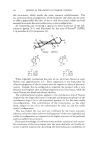
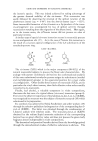
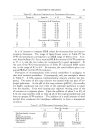
252 JOURNAL OF THE SOCIETY OF COSMETIC CHEMISTS 2. Keratin. The presence of a keratinaceous plug as one of the main causes of mechanical obstruction makes this component a prime target. Enzymes that will aid in the penetration and removal of this material can probably be found among the wide variety ofproteolytic systems available. The keratin present in a comedone is of the soft variety and may thus be more amenable to attack than the type found in hair. The question of "keratinase" activity will be discussed below. 3. Bacterial and Cellular Metabolic l/Faste Products. A secondary bac- terial infection results in a pustule which contains bacterial and cellular metabolic waste products in addition to sebum and keratin. Probably the most important of these, for this discussion, is the nucleic acid which contributes toward the viscosity of the follicular plug. Deoxyribonucleases should be useful in this area. 4. Inflammation. The recent success of many enzymatic anti-inflam- matory preparations may provide the impetus for dermatologists to try similar therapy in those acne conditions which warrant such treatment. While this application would be systemic and, therefore, outside the area of immediate interest to the cosmetic chemist, it is included here because of its obvious relationship to the topical treatment of this syndrome. The use of enzymes to hydrolyze the specific substrates making up the primary acne lesions offers an additional important benefit. Destruction of the comedone plug in which micro Srganisms may be imbedded should pro,4de for enhanced activity of topically applied antibiotics by making the microbial invaders more available to these agents. In extremely severe cases of acne where lesions have a necrotic overlay, a mild debridement tyl•e of activity may be indicated. In such cases, particular proteolytic enzymes could be topically applied which would serve to remove the necrotic tissue, thereby allowing the healthy granula- tion underneath to function unimpeded. This also would serve to bring other active medicinal agents into intimate contact with the affected area. B. Hair Removal and Conditioning The use of enzymes as a depilatory or as an aid in the waving or straight- ening of hair has long been of extreme interest to the cosmetic chemist. Judgment as to the potential of enzymes for such use must b• based on a knowledge of the chemistry of hair. As indicated above, hair is composed of hard keratin, and, as such, is completely insoluble in water and refractory to enzyme attack. According to Harry (5, p. 571), the "ideal" depilatory is one which would have no odor, would remove hair in about one minute, could be used regularly without causing irritation, and could replace the daily task of shaving. There are no preparations currently marketed that fulfill all of these requirements. It has been the belief of many that a true keratinase
Purchased for the exclusive use of nofirst nolast (unknown)
From: SCC Media Library & Resource Center (library.scconline.org)