TRANSPARENT EMULSIONS 279 If a long-chain fatty acid or fatty alcohol is spread on water, the surface tension 3? can be defined as where •'w= is the surface tension of pure water and •r is the surface pres- sure of the long-chain polar compound. If the surface area is maintained constant, and an anionic surfactant is injected into the aqueous phase, the surface pressure will be found to increase. If a high ratio of nonpolar oil molecules to emulsifier molecules is now added to the system, it will form a mixed film. Upon compression of the mixed film on a Langmuir trough, some of the oil molecules will be squeezed out and will spread on the mixed monolayer in the form of a thin oil film, about I50 to 500 •. thick. The tension at the newly formed oil-air interface holds the interface together and permits measurement of the surface pressure, from which the interfacial tension can be calculated. LiquidInterphase Required: In addition to a negative interfacial tension, the mixed interfacial film must not be too highly condensed, or a micro- emulsion will not form. Aqueous solutions used in the preparation of microemulsions generally contain from 10 to 40% of emulsifying agents. The micelles present in these concentrated aqueous solutions have a lamellar structure, and this structure can be considered as the interphase between oil and water. In the case of emulsions of the type stabilized by choles- terol and a straight-chain alkyl sulfate, the interphase is strongly con- densed. It cannot assume a large enough curvature to form droplets that are smaller than about one micron in diameter. One method of converting a highly condensed interphase into a liquid interphase is to add an alcohol of medium chain length to the system. The addition of an alcohol containing five to eight carbon atoms to an aqueous solution containing lamellar ionic micelles will cause the micelles to swell almost without limit in both water and oil. Interpenetration of the mi- celies by the medium chain-length alcohol results in a liquid interphase. If the chain length of the alcohol is greater than ten carbon atoms, inter- penetration of the micelles by the alcohol also occurs. However, the interphase is strongly condensed, and the micelles do not swell. The interphase can also be made less strongly condensed by raising the tem- perature or by using an ionic surfactant with a large counter ion, as in the case of an alkanolamine soap. Interpenetration of Nonpolar Oil: The third and final requirement, according to Schulman, is that the nonpolar oil must interpenetrate and associate with the interfacial film. The oils that can be used to form microemulsions with a given emulsifier combination must be structurally similar to the emulsifiers and of equal or smaller hydrocarbon chain length. For example, if the emulsifier consists of the combination of alkanolamine oleate and oleyl alcohol, it will not form a microemulsion with benzene.

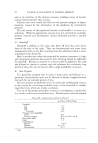
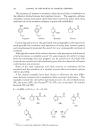
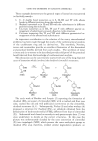
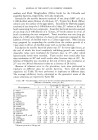
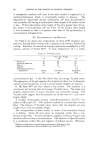
280 JOURNAL OF THE SOCIETY OF COSMETIC CHEMISTS A transparent emulsion will form if the oleyl alcohol is replaced by p- methylcyclohexanol, which is structurally similar to benzene. The alkanolamine oleate-oleyl alcohol combination will form microemulsions with nonpolar oils having a hydrocarbon chain length of 18 carbon atoms or less. If the hydrocarbon chain length of the oil is greater than 18 car- bon atoms, a microemulsion will not form. If the alcohol chain length is now increased so that it is greater than that of the hydrocarbon, a microemulsion will again form. II. EXPEP, IMENT^I• As• REsvLws In Table I are shown the compositions of three O/W emulsions pre- pared by heating while stirring with a spatula until uniform, followed by cooling. Emulsion 1A consists of isopropyl palmirate emulsified in a 45% aqueous solution of Tween 60. ©* At room temperature 1A is a white, TABLE I.--O/W EMULSIONS Parts By Weight • IB IC Tween 60 20 20 20 Isopropyl palmirate 20 20 20 Water 25 25 25 Span 80 6.5 6.5 2-Ethylhexanediol-l,3 6.5 Appearance opaque translucent transparent gel gel fluid semi-translucent gel. A thin film shows blue and orange Tyndall colors. The appearance of the gel suggests that droplets of about 1 or 2 • diameter, typical of macroemulsions, as well as much smaller droplets are present. In lB, Span 80 ©* has been added to the system. The emulsion is a translucent gel showing blue and orange Tyndall colors. The larger size droplets characteristic of macro emulsions are essentially missing. The Tyndall colors suggest that the particles are of the order of •/4 the wave- length of light. A medium chain-length alcohol, 2-ethylhexanediol-l,3 (6.12©)•, was added to lB to give 1C. This addition resulted in a crystal-clear viscous fluid. The absence of Tyndall colors shows that the droplets are now smaller than •/4 the wavelength of light. The interpretation of these results in terms of microemulsion theory is as follows. Tween 60 alone gives an expanded, rather than a con- densed, surface fihn. It cannot produce a negative interfacial tension, and therefore will not form a microemulsion. The addition of Span 80 results in a condensed surface fihn and negative interfacial tension. However, * Registered trade names of Atlas Chemical Industries, Wilmington, Del. t Registered trade name of Union Carbide Corp., New York, N.Y.
Purchased for the exclusive use of nofirst nolast (unknown)
From: SCC Media Library & Resource Center (library.scconline.org)