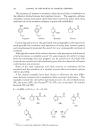
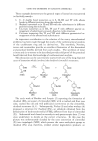
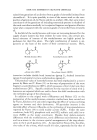
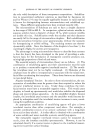
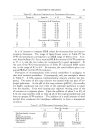
POTENTIAL OF ENZYMES FOR TOPICAL APPLICATION 253 will be the ideal depilatory. In the opinion of the author this is a possibility but it is not a probability. An enzymatic depilatory could act in one of two ways the hair could be hydrolyzed to the point where it becomes solubilized, as with thio- glycolate and sodium sulfide, or the follicle could be attacked, loosening the hair, as with sodium sulfite. With either method, the insolubility of the native keritin (assuming the keratinaceous lining of the follicle is degraded in the second case) would prevent an enzyme from attacking it with the dispatch required of a useful cosmetic preparation. In addition, if an enzyme was active enough to destroy the stable structure of hair keratin rapidly, it would more than likely attack the skin. Goddard and Michaelis (9, 10) were able to show that the most stable of keratins becomes susceptible to proteolysis subsequent to reduction by a number of reducing compounds such as those indicated in the following reactions: R--S--S--R -1- 2HS--CH2COOH --• 2R--SH -1- (S--CHzCOOH)2 R--S--S--R -• HCN --,- R--SH -• R--S--CN R--S--S--R -• 2Na2S --• 2R--SNa -• NazSz In these illustrations thioglycolic acid, hydrogen cyanide and sodium sulfide all provide for the reduction of the indicated disulfide. It should also be noted that forms of keratin normally most stable can be converted to a susceptible substrate for a number of proteolytic enzymes by oxidation (9) and mechanical disruption (9, p. 176). In other words, there are a variety of treatments to which keratin can be subjected which result in transforming this stable protein into substrate for ordinary proteases. This type of information, coupled with the fact that reports in which "true" keratinase activity is described are subject to alternative interpretations for the observations that are recorded, has convinced many enzyme chemists that the activity attributed to "true" keratinases may, in reality, be ascribable to ordinary proteolytic enzymes acting on a modified keratin substrate. It may thus be possible to modify hair characteristics by the judicious combination of chemical treatment and proteolysis. Whether this could result in rapid enough depilatory activity is difficult to predict. However, the effects of such treatment on hair conditioning (waving, straightening, dying, etc.) might well be worth investigation by the cosmetic chemist. C. Skin Softener Reference here is made to those conditions which result from a build-up of keratin at the skin surface, whether by an increase in the rate of keratini- zation without concomitant sloughing off of the horny layer at a comparable

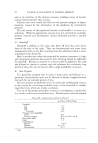
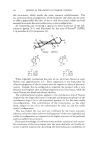
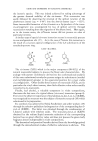
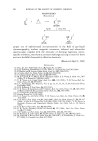
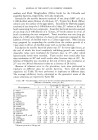
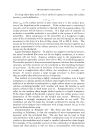
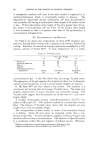
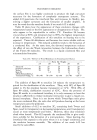
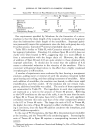
254 JOURNAL OF THE SOCIETY OF COSMETIC CHEMISTS rate or by retention of the stratum corneum, yielding a layer of keratin- aceous material greater than normal. Calluses and corns would also fall into the general category of hyper- keratosis, caused by the stimulation of the epidermis by intermittent pressure. The soft nature of this epidermal keratin could enable it to serve as a substrate. While the appropriate enzyme may not currentJy be available, product research and development should ultimately provide a suitable system. D. Dandruff' Dandruff is defined as the scales that flake off from the outer horny layer of the skin of the scalp. They are keratinaceous and many times impregnated with an oily film resulting from the seborrhea which so often accompanies the dermatitis. Here is another area where the potential for enzyme treatment is high, and the general approach discussed for skin softening should be applicable for dandruff. Because an enzyme in a cream could be applied to the scalp and allowed to remain in contact with the substrate for a relatively long period of time, this area of interest offers a high probability of success. E. Oral ttygiene It is generally accepted that in order to keep caries and halitosis at a minimum, food particles must not be allowed to remain trapped between the teeth for an extended period of time. Salivary amylase undoubtedly serves to reduce the carbohydrate content in the mouth by converting in•olub 1• (""Ms of the c _, •__•: , _ ............ •ouus•u• to soluble, ingestib!e forms which are ream•y swanowed. The use of the proper proteolytic enzyme in a toothpaste, or preferably in a troche, could serve several functions. Proteinaceous material trapped TABLE III.--CoMPOSlTION OF DENTAL PLAQUE* g./100 g. of Dry Plaque Inorganic Ca 2.7 Mg 0.6 PO4 3.8 Total ash 10.6 Nitrogen (micro~Kjeldahl) Total 12.6 Protein nitrogen 11.1 (X 6.25 = 69.4) Free amino acids 11.6 I,ipid 1.9 Carbohydrate Glucose 3.5-5 Pentose ca. 1.0 Hexosamines 0.1 *
Purchased for the exclusive use of nofirst nolast (unknown)
From: SCC Media Library & Resource Center (library.scconline.org)