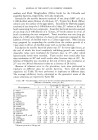
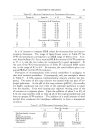
PO'IENTIAL OF ENZYMES FOR TOPICAL APPLICATION 255 between the teeth would fall ready prey to such activity and would be solubilized and removed from the site where fermentation and putrefaction could take place with the resultant acid and odor production. Another important application of enzymes in the area of oral hygiene is concerned with plaque formation. Dental plaque is composed primarily of protein, as shown in Table III. The low carbohydrate content of plaque is not surprising, since, as mentioned above, one would expect the salivary amylase to prevent the accumulation of such insoluble carbohydrates as starch. One day after deposition on the teeth, plaque becomes quite difficult to remove by toothbrush alone. It is likely that a troche containing the proper proteolytic enzyme can be used to diminish the rate of plaque for- tnation. Prevention of the initial deposition of protein by enzymatically degrading this foodstuff should inhibit plaque fortnation. III. FORMUL^T•ONS There are few special requirements that have to be met when choosing an enzyme for a formulation and the wide assortment of enzymes currently available (or available in the future) serves to ease the burden on the formulatot. An enzyme should be considered as merely another active ingredient that is present in a product. However, often the choice of enzyme dictates the composition of the topical preparation. .4. Enzyme Selection Some of the factors important in enzyme selection are the following: 1. Nature of Substrate. That the nature of the substrate imposes re- strictions on the formulatot is obvious, but this is slightly complicated by the fact that there are many enzymes from which one could choose to act on a particular class of substrate. For example, the term "proteolytic" covers a multitude of enzymes, and it is important to know other factors possibly influencing enzyme activity that are associated with the substrate in question. 2. pH of the Environment. For most topical applications the pH range of the skin is used as the basic frame of reference. While it is known that the pH of the skin varies throughout the body, it is generally agreed that the range is pH 4.2-5.6 (5, p. 16). Enzymes should be chosen that are active at these pHs otherwise the formulation must be buffered to the pH at which activity will l•e exhibited. Irritation of the skin may, of course, result if the formulation is buffered at a poorly tolerated pH. It is also important to consider the pH requirements of each enzyme if a mixture is employed. There is no point in attempting to combine enzymes with different requirements in the same formulation. Fortunately, the

256 JOURNAL OF THE SOCIETY OF COSMETIC CHEMISTS wide variety of these catalysts available from microbial sources allows the formulator a large degree of freedom in this area. 3. Stability Characteristics of the Enzyme. In addition to the pH-activity characteristics of an enzyme, the formulatot must be cognizant of the pH-stability qualities as well. Selection must be based on a knowledge that the enzyme would be stable in a formulation in the pH range 4.2-5.6. Other factors will be discussed below which contribute to the longevity of an enzyme in a formulation. B. Dosage Form Enzymes can be incorporated in all of the typical dosage forms used by the cosmetic chemist, e.g., ointments, lotions, etc. However, this does not mean that a//enzymes can be incorporated into all existing ointments and lotions. The following are some of the areas of special concern: 1. Enzyme Compatibility. Formulators will immediately recognize the importance of avoiding basic incompatibilities between the enzymes and other components in a formulation. It should be noted, though, that the form an ointment, lotion or emulsion might take could be responsible for the stability characteristics of an enzyme. Many enzymes are susceptible to oxidation, resulting in loss of activity, and most are relatively unstable in solution in an aqueous medium in the absence of stabilizers. It has been our experience that incorporation, as a suspension, in a non- aqueous vehicle provides for excellent product shelf life. The main diffi- culty with this approach is associated with the need for the suspended enzyme to leach out, as a solubilized agent, following application to the skin. If this does not occur, the enzyme will remain suspended, and its activity will not be available. On the other hand, if it leaches out of the oil phase too readily, then the shelf life of the product could suffer. Since the distribution of an ingredient is inherently more uniform when it is in solution rather than suspension, it may be advisable to seek ways to include the enzymes as stable components of the aqueous phase of an emulsion. It is sometimes possible to prepare stable preparations without resorting to the suspension technique by protecting the enzyme in the aqueous phase by such polyhydric compounds as sorbitol or glycerol, and this, in turn, is made the internal phase of a water-in-oil ernulsion. In this way the oil also acts as a protective coating around the enzyme-containing aqueous phase. Of course, it is also possible to incorporate enzymes into a completely nonaqueous ointment. In addition to the drawback that greasy, inelegant cosmetic preparations have, the lack of any moisture in the formulation could hinder or prevent the proper functioning of the enzyme. Unless an extraneous source of moisture is applied, the enzyme must depend on body exudates to supply the necessary water for enzyme solubilization and for
Purchased for the exclusive use of nofirst nolast (unknown)
From: SCC Media Library & Resource Center (library.scconline.org)