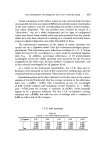
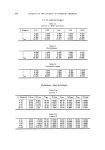
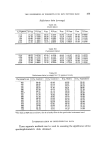
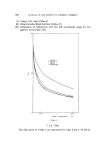
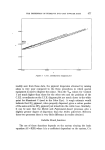
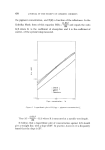
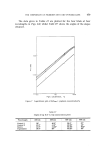
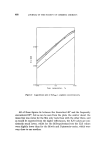
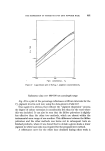
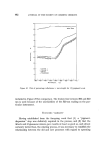
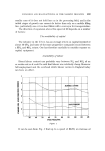
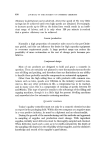
482 JOURNAL OF THE SOCIETY OF COSMETIC CHEMISTS Figure 10 8C 7C 6C 5C 40 20 10-- _ x..•..x..._x• x x White ba•.e -- x Control I [] Control 2 o Moritz ,• Papenmeier %o I I I I I ] I I r I I I I I 420 460 500 540 580 620 660 700 Wavelength, m H. Plot of percentage reflectance v. wavelen•h for 1% pigment levels included in Figure 10 for comparison. The broken line between 500 and 540 nm is used because of the unreliability of the 520 nm reading on the par- ticular instrument. ECONOMIC VIABILITY Having established from the foregoing work that (1) a "pigment- dispersion" step was definitely required in the process, and (2) that the Moritz and Papenmeier mixers gave results at least as good as, and almost certainly better than, the existing process, it was necessary to establish the relationship between the old and new processes with regard to operating

THE DISPERSION OF PIGMENTS INTO DRY POWDER BASE 483 costs, and then between the two new processes with regard to operating and capital costs. As stated above, the actual machine processing time could be cut from 1• to • hr for a 500 kg batch of dry powder. It was estimated that this could cut the total man hours involved from 8 to 3• per 500 kg of dry powder. We also anticipate that by achieving a more consistent degree of pigment dispersion we will be able to reduce the amount of time spent in shade matching the powder. Power consumption The following figures apply per 500 kg batch:-- Existing process Primary mix • hr at 25 hp Pulverising 1 hr at 10 hp Secondary mix • hr at 10 hp Moritz mixer • hr at 50 hp 12} hp hr Total 18• hp hr Papenmeier mixer ¬hrat175hp 43•hphr. Hence the Moritz is the most economical process of the three in power consumption. Between the Moritz and the Papenmeier mixers there was a difference of approximately f2000 in capital cost. Thus it can be seen that once a decision to adapt the new style process was taken the Moritz was the obvious choice, and its purchase price could be repaid over the first 2-3 years of its operative life. An additional bonus is that for the same capacity, the new equipment takes up much less floor area and makes greater use of the height of the operating department. (Received: 14th July 1967.) DISCUSSION MR. K. E. FRA•c•s: We have just completed a similar survey of mixing machines, and we found that one could tell the difference between mixing machined and milled products. Could you please give us some more information on the number of passes through the mill and the size of screen with which you were comparing? TI•E LECTURER: The mill process was a standard No. 2. micro-pulveriser using a
Purchased for the exclusive use of nofirst nolast (unknown)
From: SCC Media Library & Resource Center (library.scconline.org)