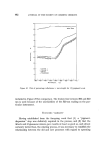
490 JOURNAL OF THE SOCIETY OF COSMETIC CHEMISTS efficiency in girl labour can be achieved. Above the speed of 70, very little savings can be achieved until very high speeds are obtained. For example, to increase speeds up to 100 on the lotion lines would result in an ineffi- cient usage of labour, and it is only when 120 per minute is reached that a greater efficiency can be achieved. Linear production Normally a high proportion of cosmetics sales occur in the pre-Christ- mas period, and this can influence the desire for high capacity equipment to overcome requirement peaks. A large product range can reduce the possibility of more automation as the cost of change parts becomes pro- hibitive. Component design Most of our products are designed to hold and grace a cosmetic in question. They are certainly not planned to ease the manufacture nor for the ease of filling and packing, and therefore there are limitations in our ability to handle these probably unstable components on automated equipment. Other than the high selling lines or with products with common con- tainers such as talcs, speeds over 100/min in the industry would be rare. And so, like any other problems in life, a compromise has to be reached, and in many cases this is a compromise of running at speeds between 70 and 80/min. This type of speed is usually to the advantage of the filling and capping machines, though it is a little high for present labelling machines and somewhat slow for automatic cartoning machines. QUALITY CONTROL Today's quality controller must not only be a cosmetic chemist but also an expert in the packaging field. Within his own company as a negative man in a very positive industry, he must be a diplomat and an educationMist. During the growth of the manufacturing unit his methods and approach to sampling of supplies and production must change. With ingredient supplies, initially most deliveries must be thoroughly sampled and checked. When deliveries reach such a size as to be multi-containered, the depth of the sampling will depend on the reliability of that supplier, and the chemist's knowledge and record of the supplier's past history.

EXPANSION AND MANUFACTURING IN THE COSMETIC INDUSTRY 491 A similar type of approach can been taken •vith component supplies, but here preventive quality control should be a prime consideration as the company gets larger. Stress must be laid on requirements and specifications. It is necessary to clearly and minutely define all the requirements of a particular component. If a supplier fully understands the specifications and tolerances laid down, and the user knows what is required, preventive quality control becomes a reality. Without doubt the packaging chemist must become an expert in many fields. In our industry we use many components made of naturally occurring materiMs right through to the modern plastics and it is not surprising that the naturally occurring products are far more difficult to control and specify than the modern plastics and newer materials. An exact and re-produceable specification for a crease in an ordinary piece of board has yet to be achieved. Much work has been done on tear testers and crease testers, but as with all naturally occuring materials, paper has yet to be closely defined, particular- ly when we are relating its operations to a labelling or cartoning machine. WAREHOUSING The manufacturing department usually controls the component and ingredient warehouse. These stores are too often regarded as a static function, a place in fact where something is placed. Warehousing is very much a mobile and dynamic operation, and it should be regarded by management as a production unit. It has been said that warehousing is not necessary. If we could ensure co-ordinated delivery of all components immediately before use, the ware- house would not be required. However, at the present time this state has yet to be achieved. In a smaller unit the quantity to be stored is pro- portionally more as it is determined by the size of the off-take which is usually low. When the deliveries are larger the off-take is a noticeable pro- portion of a supplier's production, and therefore the need for a proportionally large warehouse for components and ingredients becomes less necessary. The prime factor in any warehouse is to ensure that the basic unit storage, usually the corrugated packer, is palletiseable, and will stack satis- factorily, with good volume occupancy on a pallet. If this state of affairs is achieved, warehousing will be good, whether bulk stacking, racking or using a fully mechanised system. Warehousing is usually one of the great- est space users in the factory, so it must be utilised to the best advantage. At the very early stages of growth it must be ensured that it is expandable
Purchased for the exclusive use of nofirst nolast (unknown)
From: SCC Media Library & Resource Center (library.scconline.org)