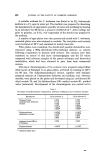
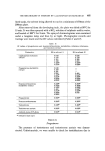
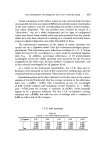
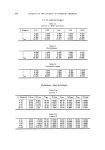
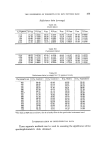
THE METABOLISM OF STEROIDS BY' CLADOSPORIUM HERB.4RUM 465 lined tanks, the solvent being allowed to run for a minimum of 170mm of the 200mm plate. After removal from the developing tank, the plate was dried at 50øC for 15 min. It was then sprayed with a 50% solution of sulphuric acid in water, and heated at 160øC for 3 min. The sprayed chromatograms were examined under a tungsten lamp and then by uv light. Photographic records and tracings were made and the Rf values calculated (Tables I and II). Table II Rf values of progesterone and desoxycorticosterone metabolites, reference substances and inoculum extract. Extractive Cladosporium herbarurn extract Progesterone metabolite extract Desoxycorticosterone metabolite extract I(f in solvent A 0.045 0.110 0.151 0.198 0.420* 0.514' 0.048 O. 109 0.151 0.200 0.420* 0.515' 0.550' 0.572' 0.226* 0.342* 0.418' 0.490 0.512' 0.560* 0.580* Rf in solvent B 0.500* 0.030 0.118 0.180 0.305 0.530* 0.636* 0.460 0.534* 0.566* 0.632* 0.650* 0.350* 0.460* 0.502* 0.531' 0.620* 0.640 Progesterone 0.550* 0.565* Desoxycorticosterone 0.224' 0.350' Testosterone 0.345* 0.460* Testosterone acetate 0.560* 0.640* Androst-4-ene-3:17-dione 0.513' indicates main spot. RESULTS Progesterone The presence of testosterone and testosterone acetate was demon- strated. Unfortunately, we were unable to check for testololactone due to

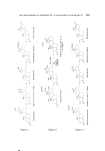
466 JOURNAL OF THE SOCIETY OF COSMETIC CHEMISTS the non-availability of a reference sample. There was no spot corresponding to the reference sample of androst-4-ene-$:17-dione, possibly because the conversion to testosterone occurs rapidly. Desoxycorticosterone The presence of androst-4-ene-$:17-dione, testosterone and testosterone acetate was demonstrated. Once again it was not possible to demonstrate the presence of testololactone. Hydrocortisone The presence of androst-4-ene-ll[t-ol-3:17-dione was demonstrated and from2the size and intensity of the spot, its concentration increased steadily with time. No other steroid metabolites were detected. DISCUSSION It was clearly demonstrated that Cladosporium herbarum metabolises steroids in a similar manner to C. resinae. The degradation of desoxy- corticosterone followed an identical pathway to that of progesterone and therefore the nature of the C •7 side chain would appear to be unimportant. The degradation of hydrocortisone did not proceed beyond the point of formation of androst-4-ene-ll[i-ol-$:17-dione. The only difference between the systems, apart from the C•7 side chains, is the presence of an lilt- hydroxyl group in hydrocortisone and androst-4-ene-ll[t-ol-$:17-dione. Hence it is possible that the presence of the 1111-hydroxyl group blocks the formation of 111t-hydroxy-testosterone which would be found in theory. Using the experimental technique described it is possible to detect degradation products in micro-quantities. It is possible that the technique can be directly applied to pharmaceutical and cosmetic emulsions. Explora- tory work in this direction has been encouraging. The type of degradation observed in investigations reported could well occur in cosmetic prepara- tions, and this technique can be used to assist in rapidly determining the nature of the substrate and the chemical pathway of the degradation. From this information it may then be possible to introduce a suitable blocking agent into the formula or to eliminate the substrate. The main drawback in establishing the details of the chemical pathway is that the method relies on the availability of reference samples.
Purchased for the exclusive use of nofirst nolast (unknown)
From: SCC Media Library & Resource Center (library.scconline.org)