496 JOURNAL OF THE SOCIETY OF COSMETIC CHEMISTS and here the packaging engineer will play his part, and at many times will probably have to arbitrate between component and machinery suppliers. INDUSTRIAL ENGINEERING Whereas all the other sections in manufacturing have grown with the growth of the company, industrial engineering should, if anything, be larger in the initial stages and level off with growth. Industrial engineering should not confine itself to works study and methods standard preparation --it should act within the company as an internal consulting group, con- cerning itself with all problems of space, machinery and personnel. Good use of such a department should pay for its cost many times. It will be found that industrial engineers act as catalysts within the company, not only in developing new ideas, but also triggering off line management to do the same. Within this section we therefore need men with a flexible approach and with an ability to apply commonsense and reasoning. They may not be of necessity work study practitioners in the accepted sense. CONCLUSIONS The man finding himself at the head of the manufacturing function in the cosmetic industry has to be more than a cosmetic chemist. He has to be a master of many fields. The emphasis of his work changes during the growth of the particular company. Initially, probably a chemist, then an engineer, an inventory controller, and finally an administrator. To define the characteristics of a manufacturing man more closely would be wrong, and could be mis-interpreted. What is required is a flexibility of approach and at all times an acceptance of change for the betterment of the industry. This paper has attempted to outline some management philosophies which should be appreciated by all who work within the cosmetic industry to ensure that it will continue to progress. (Received: l•lth July 1967.) DISCUSSION MR. D. E. BUTTERFIELD: Where do you see the most obvious use for computers in the cosmetic industry? THE LECTURER: We have used a computer on sales accounting for a number of

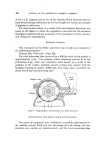
EXPANSION AND MANUFACTURING IN THE COSMETIC INDUSTRY 497 years. We are, at the moment, switching a lot more of the manufacturing work onto the computer, and we are doing this initially in the field of inventory control. MR. A. FOSTER: You state that • ton batches can usually be made in a ton mixer. Can you expand on this problem of designing new equipment to take smaller size batches or conversely, having smaller size equipment and make more batches? THE LECTURER: Our original plant in Northampton was built for the batch sizes we started off with in the first three years. We have now been in operation for seven to eight years in this country and it has become obvious that we were outstripping this smaller equipment. You ultimately need the larger equipment to give uniformity of product. To make a number of small batches you increase the overheads all round, right through the testing of the batches to the maintenance of the equipment. In the cream side of our manufacture we use two basic pieces of equipment, one for heavy duty and one for the lighter duty. The equipment we have are (1) the A bbe, which is an American machine, probably very much overpowered and used for such things as lather shaving cream. On the other side we use the Agimixer. I would much prefer to take the larger equipment at the start rather than have to replace equipment after two or three years in a fast expanding company. My own company, in the U.S.A., have looked at continuous processing, but very few cosmetic companies have the runs which really stand up to continuous pro- cessing. MR. I•. E. ROBERTS: You referred earlier on to purchasing and the need for a man to have a technical background apart from a pure purchasing function. We know today that value analysis plays a growing part in increasing the profits of the company and in my experience there is still insufficient cooperation between the sales department in buying their advertising materials, display materials and the purchasing department. Can you perhaps give us some indication whether your sales department applies the same value analysis techniques as your purchasing department does on the factory side? THE LECTURER: This problem is being studied at the very moment. Up to now our sales promotion area have purchased their own print material. It was always thought of as a technical purchasing problem and for that reason it stayed in sales promotion. The general feeling now is that it should go into the purchasing department which can apply techniques such as value analysis. It is surprising how much is purchased by other departments within the company if they get out of hand, i.e. by normal growth and people taking on the responsibility. I favour the idea of the commercial pur- chasing department, and I would favour an engineer in the purchasing department. As you grow the technical aspect of purchasing must be put over to your manu- facturing control side or, in terms of equipment, on to your engineering side. MR. P. C. ADAMS: You mention the problems of buying talc in bulk, and I am just a little curious how you justify this at the present time to talc suppliers in the country? Do you find a lot of justifications are more by management policy than having a strict pay off in a set number of years? How does your company go about this?
Purchased for the exclusive use of nofirst nolast (unknown)
From: SCC Media Library & Resource Center (library.scconline.org)