j Soy. Cosrnetiv Chemists 19 469-484 (1968) ¸ 1958 Society of Cosmetic Chemists of Great Britain The dispersion of pigments into dry powder base: A comparison between three mechanical methods T. A. BROCK* Presented at the Symposium on "Processing and Manu- facturing", organised by the Society of Cosmetic Chemists of Great Britain, at Leamington, Warwicks. on 14th November 1967. 8yn0psls---The paper describes the method used to compare the efficiency of three systems of dispersing inorganic pigments into a white base. The instrumental method of colour measurement used is outlined, and the significance of the results obtained discussed. The effect of the various systems on the economics of coloured dry powder production is indicated. INTRODUCTION The work which forms the basis of this paper was put in hand as part of a programme to investigate the efficiency of the production of coloured dry powders. This led to a critical appraisal of the equipment and procedures which had been in use for many years for this process. At the time that this programme was instituted in the compounding department concerned, the laboratory was investigating the possible application of an abridged spectrophotometer/colorimeter to the problems of cosmetic shade matching. It was therefore decided to use the instrument to assess the degree of colour dispersion attained by the three methods under investigation, in addition to the normal visual assessments called for in our regular quality control procedures. The numerical data obtained were evaluated both on the basis *Formerly with Max Factor, Bournemouth, Hants. Now with Yardley of London Ltd., Basildon, Essex. 469

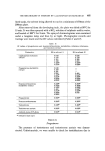
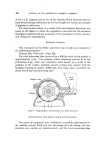
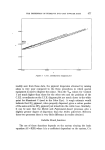
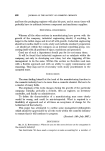
470 JOURNAL OF THE SOCIETY OF COSMETIC CHEMISTS of the C.I.E. diagram and by use of the Kubelka Munk functions derived from the percentage reflectances at set wavelengths for various percentages of pigment in white base. The final decision taken, as a result of the investigation described, was based on the degree to which the equipment concerned met the increased throughput demand and the economics of the operation in terms of power and manpower requirements. EXISTING PROCESS This was based on the Mikro pulveriser type of mill and consisted of the following operations:- Primary MixmPulverise--Final Mix The total processing time involved for a 500 kg batch of dry powder is approximately l•-hr. The primary colour dispersion process is in the pulverizing stage, where size reduction occurs mainly as a result of the particles of the various materials present coming into contact with the hammers rotating at approx. 6,000 rpm. This stage alone accounted for about 1 hr of the total processing time. Deflector • l-n feed Screen' • Figure I Diagrammatic representation of a Mikro pulveriser ALTERNATIVE PROCESSES UNDER INVESTIGATION Two pieces of equipment were considered as possible replacements for the existing system. Both had the advantage that all mixing and size reduction was carried out simultaneously and the total processing time
Purchased for the exclusive use of nofirst nolast (unknown)
From: SCC Media Library & Resource Center (library.scconline.org)