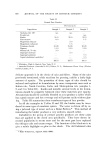
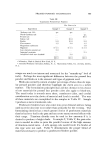
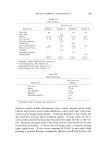
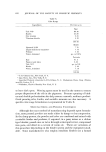
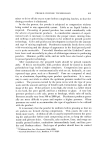
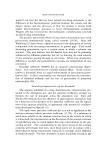
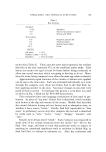
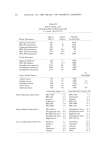
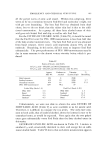
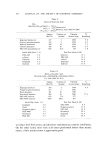
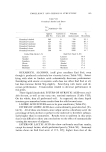
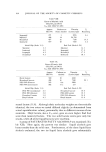
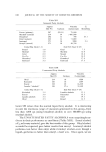
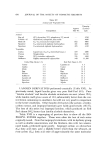
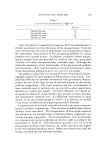
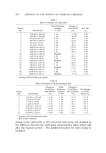
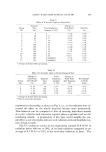
610 JOURNAL OF THE SOCIETY OF COSMETIC CHEMISTS result. Also, most important is the type of applicator employed. The final cake must be evaluated with the specific brush or foam pad to be used. Important features are the texture of the brush, contour, material (foam pad or brush), and thickness of pad or bristle. These factors all influence the payoff of the final product. A basic matte eye shadow pro- totype is shown in Table VIII. Iridescent or pearlized eyeshadows have become extremely popular in the past five years. Through the use of pearlescent products, women have been able to achieve more striking effects in the application of eye make-up. The formulating chemist now has a number of different pearlescent materials at his disposal and can achieve many unique effects. The choice of ingredients depends upon the pricing of the final product as well as the desired effects. The most widely used pearlescent material is bismuth oxychloride. The cost of the material is quite high in relation to the other ingredients and this usually influences the amount to be used in the final products. BiOC12 produces a high luster on the skin and may be pressed with relative ease in high quantities, as shown in sample 3, Table IX. BiOC12 does not give much sparkle to the cake tone of the final cake. If this effect is desired in cake tone, the materials best suited are titanium-coated micas and pearl flakes, as shown in samples 1 and 2, Table IX. Bismuth-coated micas are now being used in greater quantities as a replacement in part for straight BiOCla. However, these types of materials tend to produce soft, spongy cakes if not formulated properly. A properly formulated pearlescent shadow will most likely have a blend of several types of pearlescent materials, as no single ingredi- ent is able to satisfy all requirements. Samples 4 and 5, Table IX, ex- emplify this fact. Amounts used will vary with the desired effects to be achieved. The use of titanium dioxide, zinc oxide, and other opaque materials will tend to reduce the pearlescent skin effect and their usage should be very low. Kaolin and zinc stearate help to produce a more stable cake. The amount and type of binder used is also of great conse- quence. If titanium-coated micas and BiOCl,coated micas are used in quantities over 15-20%, a water-binding system should be incorporated, as demonstrated in Table IX, sample 2. If not, soft spongy cakes will result. However, with a proper selection of binder, up to 50% of these materials may be incorporated in a cake, if so desired. Low amounts of BiOCla are being incorporated today in many so-called unpearlized shades in order to achieve a creamier brighter effect. The use of blends of various materials to produce a number of cosmetic effects in pearled eyeshadows is demonstrated in Table IX.

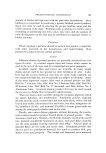
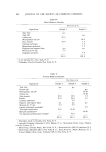
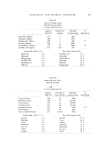
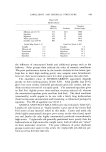
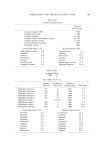
PRESSED POWDER TECHNOLOGY 611 Table IX Frosted Eyeshadows Per Cent w/w Ingredients Sample 1 Sample 2 Sample 3 Sample 4 Sample 5 Talc 141- q.s. q.s .... q.s. French talc ...... 25.0 . . . Italian talc ...... 20.0 ... Zinc stearate 6.0 10.0 5.0 10.0 Kaolin 8.0 ... 5.0 ... Pigments q.s. q.s. q.s. q.s. Robane• 5.0 ......... Neobee M-5c ... 6.0 ...... Mineral oil, 70 visc .......... 6.0 Ethyl hexyl palmitate a ...... 5.0 ... Bismuth oxychloride* 15.0 ... 40.0 10.0 Titanium-coated micaJ' 15.0 40.0 . . . 10.0 Bismuth oxychloride-coated ......... 10.0 micag Pearl flakes 120 oh 5-15.0 ......... 5 % Aqueous hydroxyethyl . . . 10.0 ...... cellulose/ 100.0 100.0 100.0 100.0 ß . . 20.0 q.s, 10.0 ß . • ß . . ß . . 5.0 ß . . 20.0 ß . . 20.0 100 0 a Whittaker, Clark & Daniels, New York, N.Y. b Robcco Chem. Co., New York, N.Y. •- Drew Chem. Co., New York, N.Y. a Van Dyke & Co. (Ceraphyl 368), Belleville, N.J. * Mearl Corp. (Mearlite LBU), New York, N.Y. Rona Pearl Co. (NLD), Bayonne, N.J. z Mearl Corp. (Timica Pearl), New York, N.Y. Rona Pearl Co. (MP-10), Bayonne, N.J. g Mallinckrodt Chem. Corp. (Bilite 20), St. Louis, Mo. h Pearl Products Corp., New York, N.Y. i Union Carbide Chem. Corp. (Cellusize QP3), New York, N.Y. No discussion of pressed powders would be complete without a short section on cake rouge. The number of users of cake rouge has in fact declined in recent years. However, there is still a hard core of women who will use no other substitute. No make-up line is really complete without several shades of cake rouge. The shade range varies from pinks to corals to reds. A cake rouge is a pressed powder that has a predomi- nance of organic lakes rather than iron oxides, although there may be a combination of both. The percentage of lakes can be as high as 20-30%, as shown in Table X. The manufacture of cake rouge is an operation that requires a great deal of clean-up time and should be kept in a special area. The high percentages of organic lakes used, which have great staining power, present several specific problems in manufacturing. Or- dinary binder systems do not properly wet down the pigment and tend
Purchased for the exclusive use of nofirst nolast (unknown)
From: SCC Media Library & Resource Center (library.scconline.org)