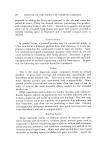
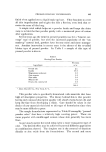
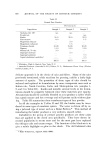
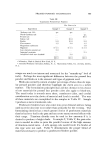
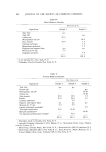
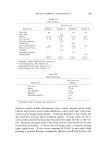
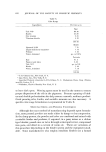
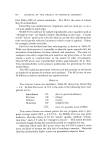
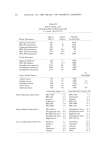
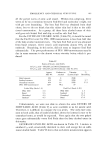
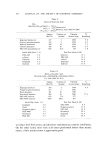
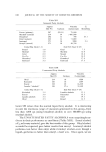
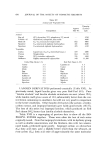
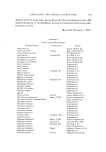
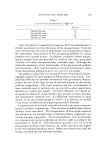
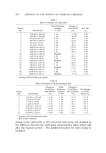
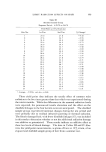
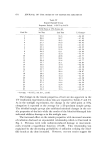
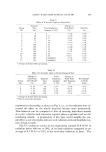
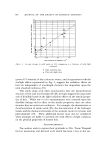
612 JOURNAL OF THE SOCIETY OF COSMETIC CHEMISTS Table X Cake Rouge Ingredients Per Cent w/w Base Talc WS • 80.40 Kaolin 12.30 Zinc stearate 2.45 Titanium dioxide 4.90 100.00 Binder Liposorb L-20 b 7.70 Liquid cholesterol emulsifier c 7.70 Perfume 5.50 Water, deionized q.s. to 100% Formula Base 41.5 Pigment and lakes 5-20 Talc 141a q.s. to 100 Binder 1.40 Water, deionized 7.10 100.00 C. B. Chrystal Co., New York, N.Y. Lipo Chem. Inc., New York, N.Y. Amerchol Products (Amerchol L-101), Edison, N.J. Maimstrom Chem. Corp. (Nimles- terol-D), Linden, N.J. Whittaker, Clark & Daniels, New York, N.Y. to leave dark spots. Wetting agents must be used in the system to ensure proper dispersion of the oils in the pigments. Pressure spraying of bind- ers and double pulverization also help ensure a smooth, uniform product. Good pressing talcs, kaolin, and metallic stearates are also necessary. A specific cake rouge formulation is represented in Table X. MANUFACTURING AND PRESSING TECHNIQUES Although the exact method of manufacturing depends upon formula- tion, most pressed powders are made either by damp or dry compression. In the damp process, the powder and color are combined and mixed with a suitable binder and perfume, if required, in a pony mixer or a ribbon type blender, passed once or twice through a micropulverizer, compressed into pans, and dried in a current of warm air. There are variations of this procedure depending on the binder system and the equipment avail- able. Some manufacturers who employ emulsion binders use a heated

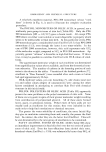
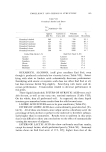
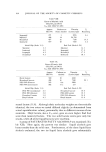
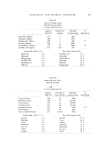
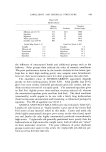
PRESSED POWDER TECHNOLOGY 613 mixer to drive off the excess water before completing batches, so that the drying procedure is eliminated. In the dry process, the powder is subjected to compression without being wetted to any appreciable extent. Little or no liquid binder is required. Processing of pressed powders has varied considerably with the advent of pearlescent products. A considerable amount of experi- mental work is necessary to determine the proper mixer, mixing time, and milling or pulverizing techniques to be utilized in pressed powder technology. Color and pearlescent development is related to the amount and type of mixing employed. Pearlescent materials break down easily with overmixing and the change of appearance in the final pressed prod- uct is quite noticeable. Twin-shell blenders and the Littleford* mixer have been used successfully in place of ribbon-type mixers in producing powders. Hammer, pebble mills, and air mills have also found a place in pressed powder technology. After manufacture, the prepared batch should be pressed immedi- ately. If this is not feasible, bulk powders should be stored in double polyethylene bags inside airtight containers. Compression into pans is done automatically or semiautomatically with an air, hydraulic, or cam- operated type press, such as a Kemwall.? Pans are composed of steel, tin, or aluminum, depending upon product specifications. It is neces- sary to carry out trials to obtain the optimum pressure needed for each product. The pressure exerted by the press varies with the type of press used, and the amount and type of binder used, formulation type, and the shape of the pan. If the pressure is too high, the result is a tablet which is too hard, has poor payoff, and has a tendency to glaze. A very low pressure produces a soft cake, prone to breakage, which rubs off easily. Pressures usually vary from 300 to 2000 psi. Pearlescent products gener- ally are more difficult to press and require a higher pressure. Often pressures are varied to accommodate the type of applicator to be utilized with the product. It is necessary that the powder be uniform before pressing so that no air pockets are formed during compression. This causes the cake to break more easily. A ribbon of silk is usually inserted between the press- ing die and powder before each compressing action, to keep the surface matte and prevent shine. Generally, cake eyebrow, liner, and rouge are usually pressed hardest, eyeshadows intermediately hard, and face pow- der and blushers softest. Each type of product should have its control * Littleford Bros. Inc., Cincinnatti, Ohio 45226. 'I' Kemwall iDstributors, Ltd., Brooklyn, N.Y. 11223.
Purchased for the exclusive use of nofirst nolast (unknown)
From: SCC Media Library & Resource Center (library.scconline.org)