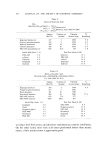
616 JOURNAL OF THE SOCIETY OF COSMETIC CHEMISTS PHYSIOLOGICAL FACTORS IN SKIN PENETRATION Skin Condition The intact skin presents a formidable barrier to skin penetration. In diseases characterized by a defective horny layer, percutaneous absorption is increased (1-6). Removal of the skin barrier by cellophane tape stripping will enhance the absorption of almost any substance (7-10). Chemical agents such as acids, alkalies, or mustard gas injure barrier cells and increase water loss. Solvents, other than water, appear to cause varied alteration in the resistance of the skin barrier (11-15). Tregear (16) has reviewed the permeability of the skin to aqueous solutes, organic liquids, and solutes in organic liquids and solids. Treatment with ether does not alter the penetration rate of salicylates or surfactants (14), while the polar solvents, acetone, alcohol, and hexane increase the penetration of water into the skin (17). Excised stratum corneum is virtually "opened" by delipidiza- tion of the stratum concern by holding it in a mixture of a polar and a nonpolar solvent, such as chloroform-methanol. Removal of the lipid fraction of the stratum comeurn can be considered to make "holes" or "artificial shunts" in the membrane (18). Skin Age Relationship of age to skin permeability has rarely been investigated. Fetal and infant skin appears more permeable than adult skin (19). Percutaneous absorption of topical steroids occurs more readily in children than adults (20). The significant derreal atrophy and gross epidermal changes in the elderly denote absorption influence (21). Regional Skin Sites There are relatively few references in the literature to the variations in absorption from one skin site to another, and much of it is con- flicting (22-36). In different "normal" individuals, there are wide variations in the absorption rate of a given substance through the same skin site, and penetration rates for the most permeable regions (pos- terior auricular skin) in some subjects are comparable to rates for the least permeable regions (plantar skin) in others (26). Variations in pene- tration rates have been demonstrated for full thickness cadaver skin, isolated from different sites. These permeations may be in direct propor- tion to the thickness of the area, for the penetration across skin, the flux, is inversely proportional to the thickness.

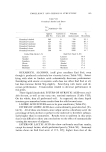
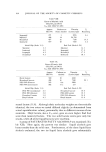
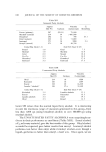
SKIN PENETRATION 617 Cronin and Stoughton (37), using the erythema reaction produced by vasodilators such as ethyl nicotinate and histamine, demonstrated that the forehead, presternal area, and back showed a greater response than the limbs, and the arm was more reactive than the leg. They concluded that the presence of more follicles in the forehead indicated increased penetration through sebaceous glands. A similar conclusion was reached by Feldmann and Maibach (38), in studies of hydrocortisone. Measur- able absorption occurred through all regions of human skin except the heel. Absorption seemed greater in areas where follicles are large or more numerous, such as the forehead and scalp, and decreased where the stratum corneum is thicker, such as the foot. Tregear (39), on the other hand, from studies of rapidly absorbed tributyl phosphate, concluded that hair follicles do not increase penetration. Smith et al. (36) observed a difference between the times taken for local anesthesia to develop on scrotal and abdominal skin after the topical application of lidocaine. With in vitro experiments they also found differences in the penetrability of skin between these two areas. Blood Flow If blood flow through the dermal vessels increases, the rate of clear- ance of materials should also increase as the concentration decreases. This is particularly true of gas permeation (40). Whether the rate of passage through the barrier layer is altered is not quite so clear, although it seems possible that this may occur as the more rapid removal of ma- terial that has penetrated must alter the perfusion gradient across this area. Clinically, erythematous skin is usually diseased, and this may alter the rate of absorption, at least partially due to increased vascular flow (21). SDecies Variation Ituman and animal skins display wide differences in physical char- acteristics such as the number of appendageal openings per unit area and the thickness of the stratum comeurn, thus affecting the penetration pathways and the penetration resistance of skin (41). In spite of limita- tions, animals must be used in studies of percutaneous absorption be- cause biologically dangerous substances, including radioactive com- pounds, are under many restrictions as to the application to human sub- jects. The skin of rabbits, rats, and mice lacks sweat glands and abounds in hair and hair-follicles, in contrast to that of man. The relationship be- tween species is not consistent for different substances, but the average
Purchased for the exclusive use of nofirst nolast (unknown)
From: SCC Media Library & Resource Center (library.scconline.org)