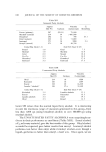
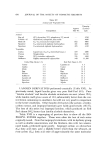
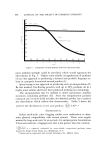
618 JOURNAL OF THE SOCIETY OF COSMETIC CHEMISTS permeability order is rabbit, rat, guinea pig, and man in descending sequence (16). The largest deviation from the average is that human skin is very much less permeable to ions than rabbit or pig skin. While penetrability through rabbit skin is rapid, its structure of epidermis or appendages does not appear to differ significantly from that of other animals which are more resistant to penetration (40, 42, 43). PHYSICO-CHEMICAL FACTORS IN SKIN PENETRATION Hydration Hydration of the stratum corneum is possibly the most important factor in skin penetration, increasing the rate of passage of all substances which penetrate the skin. Hydration results from water diffusing from underlying epidermal layers or from perspiration that accumulates after application of an occlusive vehicle or covering on the surface. Under occlusive conditions, the stratum corneum is changed from a tissue which normally contains very little water (5-15%) to one which may contain as much as 50% water. The importance of hydration can be found in those investigations employing occlusive plastic film in steroid therapy. Here, the preven- tion of water loss from the stratum corneum and the subsequent in- creased water concentration in this skin layer enhances the penetration of the steroid (44-48). McKenzie and Stoughton (45) have shown that penetration of corticosteroids may be increased 100-fold by occluding the site of application, and thus hydrating the stratum corncure. Wurster and Kramer (49) measured the rate of penetration of esters of salicyclic acid through skin with dry and hydrated stratum corneum. They found that when the tissue was hydrated the rate of penetration of the most water-soluble ester increased more than that of the other esters studied. Working with aspirin in a temperature-humidity chamber, Fritsch and Stoughton (13, 50) showed the dual importance of these fac- tors on the penetration of excised skin. Full hydration of the keratin, accomplished by layering water over acetylsalicyclic acid on the epidermal surface, dramatically increased the penetration when compared to con- ditions of lower humidity at the same temperature. The mechanism of transport of a drug through hydrated stratum corncure may be quite different from that through normal stratum corneum. The low diffusion constant and high activation energy ob- tained for water and polar alcohol, as well as the selective diffusion ex- hibited by molecules of varying polar character, suggest that extensive

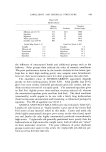
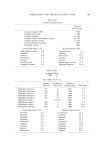
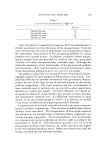
SKIN PENETRATION 619 hydration does not drastically affect the "barrier" function of the stratum corneum (24). The more important point to consider is the thermo- dynamic activity of water in the barrier phase, not just the amount there. The efficiency of varied type vehicles in aiding penetration can be reasonably predicted on the basis of their effect on hydration of the stratum comeurn or how the vehicle alters the activity of water in the stratum comeurn and influences the stratum corneum/vehicle partition coefficient. Greases and oils are the most occlusive vehicles and induce the greatest hydration through sweat accumulation at the skin-vehicle interface (51). This is accentuated by covering with occlusive bandages or plastic. Emulsions of the water-in-oil type are less occlusive than greases. Substances in the vehicle, such as humectants, which have a high affinity for water, would act in proportion to the relative humidity of the environment. If the latter is low, the humectant would tend to dehydrate the stratum comeurn and decrease penetration. Similarly, powders increase surface area, increase the rate of evaporation of water, and so decrease the extent of hydration (51). Temperature Under normal in vivo conditions, substances penetrate the skin only within a very narrow temperature range. Clinical variations derive chiefly from occlusion. In vitro experiments, on the other hand, may be conducted over a much wider range. Blank and Scheuplein (25) studied the rates of penetration of ethanol and 1-pentanol within the range of 0 and 55øC. The flux, or the amount of alcohol penetrating per unit area in unit time, was an exponential function of the temperature. The energies of activation were determined by Arrhenius plots of the log of the permeability constant against the reciprocal of the temperature. The activation energies of the two alco- hols differ measurably from one another and are higher than those ob- tained for diffusion of the same substances in solutions. The magnitude of the activation energies for the penetration of the low molecular weight alcohols through the skin indicates that penetration is a more complex process than diffusion through vehicle-filled channels. The same au- thors observed little alteration of the permeability of the barrier by exposure for several hours to temperatures as high as 60øC. However, Allenby et al. (52) showed that the stratum corneum undergoes irrever- sible structural changes when heated above 65øC or incubated in aqueous media at pH 3 or 9.
Purchased for the exclusive use of nofirst nolast (unknown)
From: SCC Media Library & Resource Center (library.scconline.org)