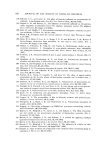
630 JOURNAL OF THE SOCIETY OF COSMETIC CHEMISTS (11) •(12) (i•) ./14) (15) (16) (17) (18) (19) (20) (21) (22) (23) (24) (25) (26) (27) (28) (29) (30) (31) (82) (33) Higuchi, T., Physical chemical analysis of percutaneous absorption process from creams and ointments, J. Soc. Cosmet. Chem., 11, 85 (1960). Blank, I. H., Gould, E., and Theobald, A. B., Penetration of cationic surfactants into skin, J. Invest. Derrnatol., 42, 363 (1964). Stoughton, R. B., and Fritsch, W., Influence of dimethyl sulfoxide on human per- cutaneous absorption, Arch. Dermatol., 90, 512 (1964). Blank, I. H., and Gould, E., Penetration of anionic surfactants into skin. II. Study of mechanisms which impede the penetration of synthetic anionic surfactants into skin, J. Invest. Dermatol., 37, 311 (1961). Swceney, T. M., Downer, A.M., and Matoltsy, A. G., The effect of dim ethyl sulfoxide on the epidermal water barrier, Ibid., 46, 300 (1966). Tregear, R. T., in Rock, A., Progress in the Biological Sciences in Relation to Derma- tology--2, University Press, Cambridge, 1964, p. 275. Onken, H. D., and Moyer, C. A., The water barrier in human epidermis: Physical and chemical nature, Arch. Dermatol., 87, 584 (1963). Blank, I. H., and Scheuplein, R. J., Transport into and within the skin, Brit. ]. Dermatol., 81, Suppl. 4, 4 (1969). Feldmann, R. J., and Maibach, H. I., Absorption of some organic compounds through the skin in man, ]. Invest. Dermatol., 54, 399 (1970). Feiwel, M., Percutaneous absorption of topical steroids in children, Brit. ]. Dermatol., 81, Suppl. 4, 113 (1969). Vickers, C. F., in McKenna, R. B., Modern Trends in Dermatology 3, Butterworths, London, 1966, Chap. 4. Malkinson, F. D., and Rothman, S., in Marchionini, A., and Spier, H. W., Handbuch der Haut und Geschlechtshranhheiten, I, Part III, Springer-Verlung, Berlin, 1961. Witten, V. H., Brauer, E. W., Loevinger, R., and Holmstrom, V., Studies of radioactive phosphorus (p32) applied to human skin. I. Erythema and autoradiographic findings following applications in various forms, ]. Invest. Dermatol., 26, 437 (1956). Scheuplein, R. J., Mechanism of percutaneous absorption. I. Routes of penetration and the influence of solubility, Ibid., 45, 334 (1965). Blank, I. H., and Scheuplein, R. J., in Rook, A., and Champion, R. H., Progress in the Biological Sciences in Relation to Dermatology 2, University Press, Cambridge, 1964, p. 245. Marzulli, F. N., Barriers to skin penetration, ]. Invest. Dermatol., 39, 387 (1962). Wurster, D. E., and Dempski, R. E., Permeability of excised human keratin to lipid- soluble substances, ]. Pharm. Sci., 50, 588 (1961). McCreesh, A. H., Percutaneous toxicity, Toxicol. Appl. Pharmacol., 7, Suppl. 2, 20 (1965). Fredriksson, T., Influence of solvents and surface active agents on the barrier function of the skin towards Satin. I. Development of method, Acta Dermato-Venereol., 43, 91 (196g). Kedem, O., and Katchalskya, J., A physical interpretation of the phenomenological coefficients of membrane permeability, J. Gen. Physiol., 45, 143 (1961). Vinson, L. J., Singer, E. W., Koehler, W. R., Lehman, M.D., and Masurat, T., The nature of the epidermal barrier and some factors influencing skin permeability, Toxicol. Appl. Pharmacol., 7, 7 (1965). Burch, G. E., and Winsor, T., Rate of insensible perspiration locally through living and through dead human skin, Arch. Intern. Med., 7% 437 (1944). Dirnhuber, P., and Tregear, R. T., Equilibration between water vapor and human skin, J. Physiol., 152, 58P (1960).

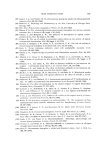
SKIN PENETRATION 631 (53) (54) (55) (56) (57) (34) Bettlcy, F. R., and Donoghue, E., Effect of soap on the diffusion of water through isolated human epidermis, Nature, 185, 17 (1960). (35) Brown, J., Winkehnann, R. K., and Wolff, K., Langerhans cells in vitiligo: A quanti- tative study, J. Invest. Dermatol., 49, 386 (1967). (36) Smith, J. G., Fischer, R. W., and Blank, H., The epidermal barrier. A comparison between scrotal and abdominal skin, Ibid., 36, 337 (1961). (37) Cronin, E., and Stoughton, R. B., Percutaneous absorption: regional variations and the effect of hydration and epidermal stripping, Brit. J. Dermatol., 74, 265 (1962). (38) Feldmann, R. J., and Maibach, H. I., Regional variation in percutaneous penetration of •C-cortisol in man, ]. Invest. Dermatol., 48, 181 (1967). (39) Tregear, R. T., Relative penetrability of hair follicles and epidermis, J. Physiol., 156, 307 (1961). (40) Winkelmann, R. K., The reIationship of the structure of the epidermis to percutaneous absorption, Brit. ]. Dermatol., 81, Suppl. 4, 11 (I969). (41) Marzulli, F. N., Brown, D. W. C., and Maibach, H. I., Techniques for studying skin penetration, Toxicol. Appl. Pharmacol., Suppl. 3, 76 (I969). (42) Wolff, K., and Winkelmann, R. K., in Montagna, W., and Hu, F., Advances in Biology of Skin, Pergamon Press, Oxford, 1967, p. 1935. (43) Steigleder, G. K., Aminopeptidasen--aktivitat auf der hautoberfl•ichc, Klin. Wochen,chr., 40, 1154 (1962). (44) Vickers, C. F. H., Existence of reservoir in the stratum corneum, Arch. Dermatol., 88, 2O (1963). (45) McKenzie, A. W., and Stoughton, R. B., Method for comparing percutaneous absorp- tion of steroids, Ibid., 86, 608 (1962). (46) Hall-Smith, S. P., "Polythene" coverings in dermatological treatment, Brit. Med. J., 2, 1233 (1962). (47) Sulzberger, M. B., and Witten, V. H., Thin pliable plastic films in topical dermatologic therapy, Arch. Dermatol., 84, 1027 (1961). (48) Witten, V. H., Stein, S. J., and Michaelides, P., Use of thin pliable film in selected dermatoses, Ibid., 87, 458 (1963). (49) Wurster, D. E., and Kramer, S. F., Investigation of some factors influencing percuta- neous absorption, J. Pharm. Sci., 50, 288 (1961). (50) Fritsch, W. F., and Stoughton, R. B., The effect of temperature and humidity on the penetration of C • acetylsalicylic acid in excised human skin, J. Invest. Dermatol., 82• 24 (1960). (51) Shelmire, J. B., Factors determining the skin-drug-vehicle relationship, Arch. Dermatol., 82, 24 (1960). (52) Allenby, A. C., Fletcher, J., Schock, C., and Tees, T. F. S., The effect of heat, pH and organic solvents on electrical impedence and permeability of excised human skin, Brit. J. Dermatol., 81, Suppl. 4, 31 (1969). Wagner, J. G., Biopharmaceutics: absorption aspects, I. Pharm. Sci., 50, 359 (1961). Schutz, E., Der einfluss von polyathyleneglykol 400 auf die percutane resorption yon wirkstoffen, Exp. Patrol. Pharmakol., 232, 237 (1957). Maibach, H. I., and Feldmann, R. J., Effect of applied concentration on percutaneous absorption in man, ]. Invest. Dermatol., 52, 382 (1969). Christie, G. A., and Moore-Robinson, M., Vehicle assessment--methodology and re- sults, Brit. ]. Dermatol., 82, Suppl. 6, 93 (1970). Skog, E., and Wahlberg, J. E., A comparative investigation of the percutaneous ab- sorption of metal compounds in the guinea pig by means of the radioactive isotopes: mCr, •SCo, •Zn, •XøAg, •Cd, •Hg, J. Invest. Dermatol., 43, 187 (1964).
Purchased for the exclusive use of nofirst nolast (unknown)
From: SCC Media Library & Resource Center (library.scconline.org)