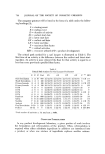
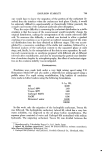
EMULSION STABILITY 799 one would have to know the migration of the portion of the surfactant de- sorbed from the interface when the coalescence took place. Clearly, it would be extremely difficult to experimentally or theoretically follow precisely the complex movements of the surfactant molecules after desorption. Thus, the major difficulty in measuring the surfactant distribution in a stable emulsion is that the means of the measurement would invariably cl•.ange the original distribution, making the interpretation of the results extremely diffi- cult. T.o overcome this difficulty, a method was devised to allow a gradual cracking of an emulsion so as to permit an indirect measurement of the origi- nal distribution from the data obtained at different stages. This was accom- plished by a successive centrifuge of the stable test emulsion, followed by a chemical analysis of the surfactant content in the separated phase at each stage, and, finally, by the extrapolation of the data to zero separation. By mak- ing such measurements on emulsions prepared with different oils at different intervals after emulsification, and also by measuring the particle size distribu- tion of emulsion droplets by microphotography, the effect of surfactant migra- tion on the emulsion stability was investigated. EXPERIMENTAL Emulsions were made both under a very high mixing speed using T-K H.omomixer Model M* and also under a relatively low mixing speed using a paddle mixer. For rapid mixing emulsification, 2-kg batches of emulsions were made in 3-liter beakers using the following formulation: % by Wt. Oil 32.00 Arlacel 804•i 1.40 Tween 80©i 1.60 Carbopol 934©$ 0.10 NaOH 0.04 Deionized water 64.86 100.00 In this work, only the migration of the hydrophilic surfactant, Tween 80, was followed. The hydrophobic surfactant, Arlacel 80, which has a very low water solubility, was dispersed in the oil phase before emulsification. The aqueous phase consisted of water and Carbopol 934 neutralized with sodium hydroxide. The migrating surfactant, Tween 80, was divided between the * Manufactured by Tokushukita Kogyo Co., Ltd., Osaka, Japan. •' Ariaeel 80 (Sorbitan monooleate), Tween 80 (Polyoxyethylene sorbitan monooleate), Atlas Chemical Industries, Wilmington, Del. $ Carbopol 934 (Carboxyl vinyl polymer), Goodrich Chemical Co., Cleveland, Ohio.

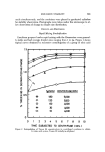
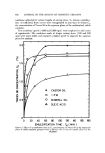
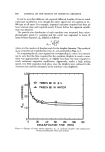
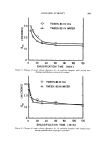
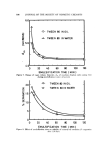
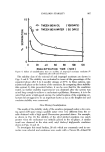
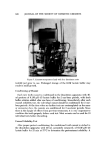
800 JOURNAL OF THE SOCIETY OF COSMETIC CHEMISTS aqueous and oil phases accordiug to the experimental requirement. The com- bination of Arlaccl 80 and Tween 80 gave an HLB value of 10 in the formula- tion. Carbopol 934 was added to improve the stability of the emulsion since it would be difficult to make accurate measurements if the emulsion were mrsta- ble. The oils tested were cosmetic grade mineral oils, oleyl alcohol, isopropyl myristate, castor oil, and others commonly used for cosmetics. To make a test emulsion, the aqueous phase was first placed in the beaker and the Homomixer was placed at the center of the beaker with the clearance between the mixer tip and the bottom of the beaker set at exactly 20 mm. The predispersed oil phase was then carefully placed on the top of the aqueous phase and the Homomixer was turned on to start emulsification. The Homo- mixer speed was kept constant at 11,900 -100 rpm and all operations were carefully controlled to avoid air entrapment and to assure good reproducibil- ity. To determine the distribution of Tween 80 in the prepared emulsion, a set of samples of emulsion were subjected to centrifuge for various lengths of time, usually in six stages sta•'ting h'om 1 min up to 10 min. The rpm of the centrifuge used for a given set of samples was such that a reasonable amount of the aqueous phase could be separated at each stage for analysis. In most cases the rpm ranged from 4,000 to 6,000. The separated aqueous phase was carefully withdrawn with a hypodermic needle and the Tween 80 concentra- tion was determined by a sodium tetraphenylborate titration method de- scribed bv Kasai et al. (4). By plotting the Tween 80 concentrations in the separated aqueous phases at various stages of centrifugal separation, the data were extrapolated to zero separation in order to obtain the surfactant concentration in the unseparated sample of the emulsion. The experiments were repeated until a consistent re- sult was obtained. The snrfactant concentration in the aqueous phase was de- termined as .a function of emulsification time in order to follow surfactant mi- gration as the emulsification progressed. The stability of the emulsions was measured by placing the samples at 37øC for several months and observing any sign of creaming or separation. Photo- graphs of the emulsion were also taken under a microscope to measure the droplet size distribution. For emulsification under slow mixing, several laboratory mixers with identi- cal straight paddle-type impellers were used. The length of the paddle was 60 mm and the height was 20 mm. The batch size of the test emulsions was 400 g and emulsifications were made in 500-ml beakers at speeds ranging from 170 to 650 rpm. The formula used for slow mixing emulsification was the same as the one used for the rapid mixing experiments except Carbopol 934 and the neutraliz- er were taken out and replaced with water to allow a relatively quick separa- tion. In most cases, six emulsions with varying initial surfactant location were
Purchased for the exclusive use of nofirst nolast (unknown)
From: SCC Media Library & Resource Center (library.scconline.org)