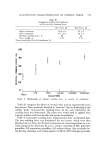
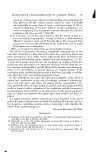
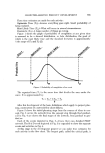
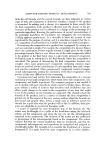
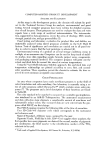
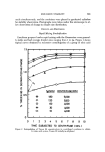
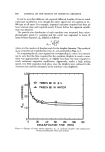
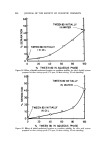
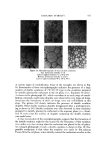
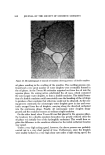
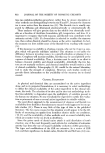
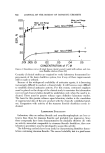
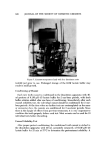
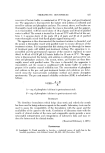
EMULSION STABILITY 801 made simultaneously, and the emulsions were placed in graduated cylinders for stability observation. Photographs were taken under the microscope to al- low observation of change in droplet size distribution. .• I•IgSULTS AND DISCUSSION Rapid Mixing Emulsification Emulsions prepared under rapid mixing with the Homomixer were general- ly stable and had average droplet sizes ranging from 1 to 4/2. Figure 1 shows typical curves obtained by successive centrifugation of a group of oleic acid 1.5 z [ I I I I I I I I '[[' -- id"•ENTRIFUC-• RPM - •' 180 5.000 •" 120 5,000 •:[ 60 4.000 • 3o 4,0oo o- lO 4,00o 0 1 2 3 4 5 6 7 8 9 10 TIME SUBJECTED TO CENTRIFUSE (MIN.) Figure 1. Extrapolation of Tween 80 concentrations in centrifuged emulsions to obtain Co (oleic acid system, Tween 80 initially in oil phase)

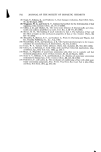
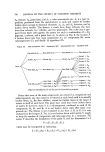
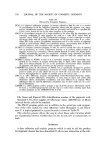
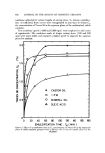
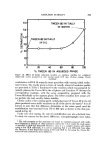
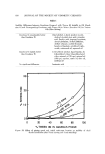
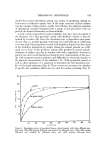
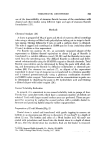
802 JOUBNAL OF THE SOCIETY OF COSMETIC CHEMISTS emulsions subjected to various lcngfl•s of mixing times, T•, during elnulsifica- tion. As indicated, these curves were extrapolated to zero time to obtain Co, the concentration of Tween 80 in the aqueous phase of the undisturbed, stable enmlsion. Two centrifuge speeds (4,000 and 5,000 rpm) were employed in this series of experiments. The emulsions made at longer mixing times (lg0 and 180 rain) were more stable .and required a higher speed to separate the aqueous phase for analysis. 2.0 1.5 ml.0 z z i.1.1 I.iJ •:0.5 CASTOR OIL IPI• mINERAL OIL OLE IC ACID o o 20 40 60 80 lOO 12o ¾.,o 183 18o EMULSIFICATION TImE , Te (MIN ) Figure 2. Effect of emulsification time on Co, concentration of Tween 80 in the continuous phase of stable emulsion, prepared with 4 different ()ils (Tween 80 initia]ly placed in the oil phase)
Purchased for the exclusive use of nofirst nolast (unknown)
From: SCC Media Library & Resource Center (library.scconline.org)