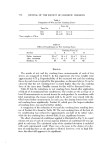
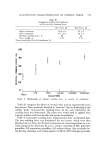
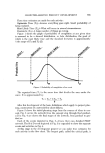
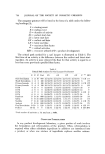
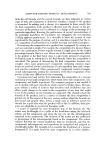
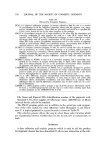
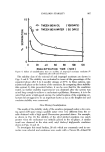
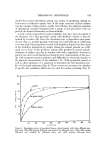
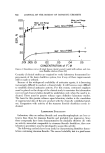
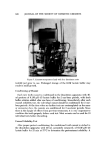
778 JOURNAL OF THE SOCIETY OF COSMETIC CHEMISTS Table I Comparison of Wet and Dry Combing Force a Force (g) Tress No. I 2 "Tress weight -• 4.75 g. Dry 12 4- 3 13 4- 2 Wet 95 4- 20 88 4- 5 Table II Effect of Conditioners on Wet Combing Force Combing Force (g) Product A B C D Before treatment 59 4- 7 54 q- 5 51 + 7 51 4- 4 After treatment 28 4- 3 41 4- 5 37 4- 4 23 4- 3 Residual, % 64 76 73 45 I•ESULTS The results of wet and dry combing force measurements of each of two tresses are compared in Table I. In this experiment, the tress weights were approximately 4.75 g. Reproducibility of the measured wet and dry combing forces for each tress is typical for this procedure, as discussed above. It can be observed that the wet combing force is much higher than the dry combing force of the same tress. Possible reasons for this will be discussed below. Table II lists the reductions in wet combing force found after application of 0.2 ml of 4 commercial hair 'conditioners. The results are the average of at least 25 measurements on several tresses for each product. In accordance with label instructions, the tresses treated with A, B, and C were rinsed with dis- tilled water before measurement. In each case, the rinsing lowered the resid- ual combing force significantly. Product D, which gave the largest reduction of combing force, was used in further studies. A comparison of the reduction of wet and dry combing force resulting from use of Product D is found in Table III. The wet combing force of the hair af- ter conditioning was reduced to approximately one-half of its initial value, while the dry combing force showed little, if any, significant decrease. The effect of amount of conditioner applied is illustrated in Fig. 5. An equal volume, 0.2 ml, of each of several aqueous dilutions of conditioner D was ap- plied to each tress. The calculated value of the standard deviation is included with each experimental result. There was a de?rease in the degree of reduc- tion of combing force as the product is diluted however, even at high dilu- tions, the effect still appears to be significant.

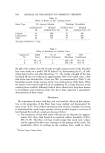
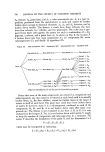
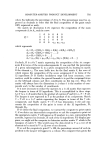
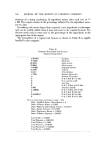
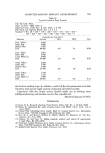
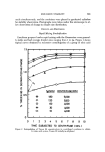
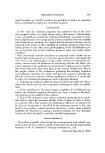
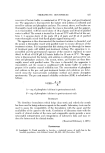
QUANTITATIVE CHABACTEBIZATION OF COMBING FOBCE Table III Comparison of Effect of Conditioner on Wet and Dry Combing Force 779 Dry Force (g) Wet Force (g) Before treatment 12.5 + 2 After treatment a 10 ___ 2 Residual combing force, % 80 Tress weight, g 4.75 •Tress treated with 0.2 ml of conditioner D. 51_4 23_3 45 2.75 100 • 60 z o • 40 co •0 i i/io i/ioo i/i,ooo i/io,ooo i/ioo,ooo r•.6•//• DILUTION Figure 5. Relationship of residual combing force to amount of conditioner Table IV compares the effects of several resins used in experimental men's hair grooms. These materials, intended to "texturize" hair by thickening it and adding "body," increased the combing force. In the cases illustrated, dry combing force was determined. The resins were tested both as applied from aqueous solution and from specific hair groom formulations. Table V summarizes combing force measurements done on bleached hair. The wet combing force was determined for two tresses, which were then bleached once or twice for 30 rain by immersion at room temperature in a so- lution prepared by dissolving 24 g of a mixture consisting of 62% potassium persulfate, 21% ammonium persulfate, 14% sodium silicate (the remainder be- ing flowing, chelating, and wetting agents) in 50 ml of 6% hydrogen peroxide
Purchased for the exclusive use of nofirst nolast (unknown)
From: SCC Media Library & Resource Center (library.scconline.org)