SEX HORMONES AND SKIN 385 skin--texture, glandular activity and body hair--should be profoundly susceptible to the influence of sex hormones. Steroid hormones have been widely used in cosmetics to improve skin texture for such circum- stantial reasons. Is this justified? The question needs, perhaps, to be put precisely: 'Are there any effects which can be objectively measured, and can their value be discerned in a double blind trial against a placebo?' If, as only too commonly, the investigator has been asked 'What evidence is there to justify the marketing of this product?' the answer, if not invaria- bly useless, must be somewhat less respectable! What are the qualities of 'skin texture'? Obviously, certain features can be loosely assessed by eye or touch, but do these reflect any anatomical changes which remain measurable after the skin has been assaulted by biopsy and histology? Are there differences in dermal constitution or in epidermal cell replacement, or are there more subtle changes in the kera- tinized surface or its lipid mantle? Attempts to answer these questions have yielded confusing and equivocal results. In 1949, Eller and Eller (9) reported that topical application of oestrogenic ointments to the backs of senile female subjects locally increased the size of the epidermal cells, as well as accentuating the waviness of the basal layer, which in senile skin normally lacks rete-pegs. Their results might appear reasonably informative were it not for the facts that inunction of oestrogen free ointment by itself had a similar--if less marked--effect, that the ointments were applied under occlusion, and that the effective con- centrations of oestrogen must have been at least 100 times greater than any amounts normally used in hormonal cosmetics. The conclusions can, moreover, be contrasted with those reported in 1962 by Montagna, Formisano and Kligman (10). Three groups, each of 10 men and 10 women, aged 65 or more, were anointed daily for 6 weeks on one side of the face and on the back of one hand, with 1• testosterone propionate, 1•o progesterone, or 0.5• ethynyl oestradiol, respectively. The opposite side of the face and the other hand were treated with ointment base alone. In untreated senile skin the Malpighian cells were shrivelled and vacuolated, with irregular nuclei, but testosterone or progesterone regularly restored the properties of younger skin, as well as giving it increased fullness and producing some alleviation of wrinkles. Only a few of those treated with oestrogen or the ointment base alone showed any amelioration. This effect of testosterone is not perhaps surprising, since there is general agree- ment that given systemically, it stimulates epidermal cell division in

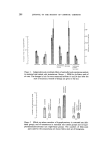
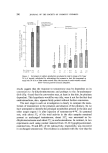
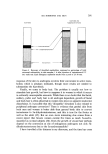
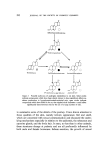
386 JOURNAL OF THE SOCIETY OF COSMETIC CHEMISTS experimental animals, in spite of the disputed contention that oestrogens do so (for review see 11). Clinical trials of hormonal creams have produced equally inconclusive results. Behrman (12) put an oestrogen on one side of the face in some 30 women, using an oestrogen free cream on the other. Neither the observers nor the women themselves noticed any differences. Similarly, in a double blind trial carried out by the British Consumers' Association (13), a face cream containing oestrogen scored no better than one without hormone. Steroids used in face creams have not been confined to oestrogens. It has, for example, been claimed that pregnenolone (14), a common precursor of progestogens, androgens and oestrogens, will produce a degree of oedema in senile skin, though it must be admitted that the cosmetic results are not dramatic (15). When we turn to the skin glands, the experimental results are much easier to interpret. In experimental animals or in man, and whether measured histologically or by changes in sebum secretion, it is generally agreed that male hormones increase, and oestrogenic female hormones decrease the activity of the sebaceous glands (6, 16, 17). The effect of injecting testosterone propionate or oestradiol benzoate on the sebaceous glands of immature female rats was described by me in 1948 (18). Similarly, it can be shown in the rabbit that specialized'. glands of apocrine type are enlarged by testo- sterone and diminished by oestradiol (19). Using a simple technique in which the sebum is collected from the forehead on pads of cigarette papers, Strauss and Pochi (20, 21) have clearly shown that sebaceous secretion is influenced by similar factors in man. They have established that secretion is very low until puberty, when it rises in both males and females, that oral treatment with methyl testosterone prior to puberty, though not afterwards, will greatly increase it, and that oral oestrogens will markedly suppress it in adult males. We have studied sebum production in rats by measuring the changes in the level of hair fat (22). The animals are washed in detergent and warm water to reduce the base level, and dried with a hair dryer. A sample of hair is then clipped from one flank, and the level of fat determined gravi- metrically after successive extraction with di-ethyl ether. After an interval of days, a sample from the other flank is similarly treated. That testo- sterone increases and oestradiol decreases secretion has been clearly demon- strated in castrated male and in spayed female rats. The sebaceous glands are holocrine, that is to say that their secretion is formed by complete disintegration of the cells, which are replaced from
Purchased for the exclusive use of nofirst nolast (unknown)
From: SCC Media Library & Resource Center (library.scconline.org)