CHEMISTRY OF HUMAN HAIR CUTICLE 361

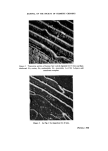
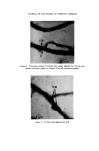
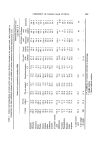
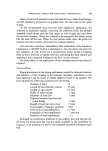
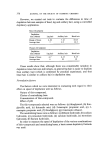
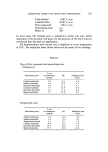
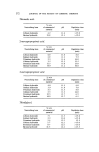
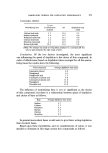
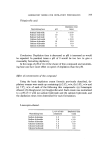
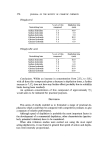
362 JOURNAL OF THE SOCIETY OF COSMETIC CHEMISTS Membranes As discussed previously, the insoluble material remaining after digestion for 3 days consists mainly of cell membrane complex and contains approxi- mately 39•o lipid material. The amino acid analysis for this fraction prob- ably represents that for the membrane-associated proteins and it is interest- ing in that it differs considerably from that for intact cuticle. The last three columns of Table I show the amino acid compositions of membrane frac- tions obtained from wool by Bradbury and co-workers (8, 9) while column 6 shows the composition of wool cuticle (3). In each case the membrane fractions show substantially higher concentrations of aspartic acid, glycine and lysine, and lower concentrations of serine, proline and cystinc than the corresponding cuticle samples. The cuticular membrane fraction from human hair also contains higher proportions of isoleucine, leucine and the aromatic amino acids than does intact cuticle. Closer comparison of the human hair and wool membrane fractions is not possible since those from wool are prepared from whole wool rather than isolated cuticle. The presence of high concentrations of basic amino acids in the cuticle membrane complex is consistent with the intense staining which is seen under the transmission electron microscope, in the intermembranous cement (b-band) and the thin layers bounding the complex in hair sections stained with dodecatungstphosphoric acid (1). This heteropolyacid exists in solution as a trivalent anion and is generally believed to bind readily to the basic groups of proteins (10). Electron histochemical staining of hair sections for cystinc (7, 11) indicates that this amino acid is absent from the cuticle cell membrane complex. Since some cystinc is present in our mem- brane fraction, at least part of the fraction is probably derived from the protein on either side of the lamellated membrane complex proper and indeed this is consistent with our present electron microscope observations (rig. 5). The main advantage of the present method for preparing cell membrane fractions from human hair compared with the previously used oxidafire procedures (8) is that the destruction of sensitive amino acids such as tyro sine and methionine is minimized. Furthermore the lipid components of the membranes are well preserved so that further study of these materials is possible. The A-layer The fractions obtained after digestion for 45 and 90 min evidently
Purchased for the exclusive use of nofirst nolast (unknown)
From: SCC Media Library & Resource Center (library.scconline.org)