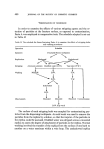
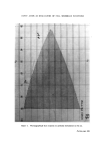
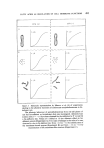
494 JOURNAL OF THE SOCIETY OF COSMETIC CHEMISTS If the nonlinearity of biological membranes indeed reflects the existence of such processes, then its disappearance can be expected when the carriers lose or are prevented from performing their allosteric transitions. This seems to be the case in EFA-deficiency according to Morero et al. (7) whose findings have now been confirmed by many other scientists the results of their studies are illustrated in Fig. 3. Accordingly, it appears that acetylcholinesterase, even if it has not lost its allosteric properties, is unable to exercise them in a membrane subject to polyunsaturated fatty acid deficiency. Such phenomena have been reproduced in liver cell or brain cell membranes, using ATPase, adenylcyclase, etc. It would seem that the presence of a certain amount of polyunsaturated fatty acids is required for co-operative phenomena to take place in the membrane. A likely hypothesis put forward by the above-mentioned authors states that, in a condition of polyunsaturated fatty acid deficiency, the flip-flop motion is impeded owing to a change in fluidity of the membrane. Whatever the mechanisms involved at the molecular level, these findings are of the utmost importance since they introduce an entirely new approach regarding the role played by polyunsaturated fatty acids. It would indeed seem that, in addition to their well-known activity in the cell metabolism and the biosynthesis of prostaglandins, their presence is a fundamental structural requirement for the display of allosteric properties in membranes. New pathways of investigation are thus opened in the vast domain of hormonal and nervous regulation judging from the tremendous interest these studies have already aroused, promising results might be expected. From the experimental point of view it is worth mentioning that electro- physiological methods which, by their very principle, rest on ion-perema- bility properties of membranes, are an ideally suited approach in studies of this kind. ACKNOWLEDGEMENTS The work described in this article was carried out at Unilever Research, Colworth/Welwyn Laboratory, Colworth House, Sharnbrook, Bedford, England. At the time, Dr J. I. McCormack was studying biochemical changes in EFA-deficient rats he kindly made the water-loss measurements and the biochemical analyses. The author acknowledges his profitable con- tribution and expresses his thanks for most helpful discussions. (Received: 26th April 1974)

FATTY ACIDS AS REGULATORS OF CELL MEMBRANE FUNCTIONS 495 II II EFA (-) EFA (-I-) •1 II n 1,6 n [,6 Figure 3. Schematic representation by Morero et al. (6) of experiments relating to the allosteric transition of erythrocyte acetylcholinesterase in fat- deficient rats. The allosteric behaviour of acetylcholinesterase from red cell ghosts of rats fed fat-sufficient or fat-deficient diets was investigated. Allosteric-type kinetics with n = - 1.6 have been obtained for the inhibition by F- in rats fed a fat-sufficient diet. Values of n shifted to 1.0 (no allosteric effect) in fat- deficient animals (Experiment A). Two types of changes in the value of n were observed in vitro in fat-deficient rats: from - 1.0 to - 1.6 by solubilization of the membrane-bound enzyme (Experiment B) and from -1.6 to -1.0 by reconstitution of the membrane-like structure (Experiment C).
Purchased for the exclusive use of nofirst nolast (unknown)
From: SCC Media Library & Resource Center (library.scconline.org)