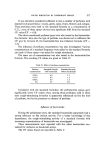
510 JOURNAL OF THE SOCIETY OF COSMETIC CHEMISTS particularly to deodorant sprays which are known to induce coughing on some occasions. A method was developed in our laboratories to quantify this effect this so-called Consumer Test Method derived the average value for a numerical rating given by a number of test subjects, with respect to the feature being investigated. The different facets of this test method will be discussed in more detail. The investigation was carried out on 'wet' deodorant sprays without antiperspirant ingredients. Such products are designed to reduce the bac- terial skin flora, thereby preventing the products of bacterial metabolism from giving rise to malodour. Deodorant sprays containing anti-oxidants and odour-absorbers were excluded. Experience had shown that, in spite of similarities in composition, there were wide differences between the irritant properties of commercial sprays. It therefore seemed likely that one or more factors responsible for cough stimulation might be identified. The spray formulae investigated for cough-stimulating activity ranged in composition within the following limits: Fatty substances 0-0.30•o Perfume 0-0.20•o Bactericides 0-0.25•o Solvent 0-50•o Propellant up to 100•o By changing the proportions of the five main components, a number of different deodorant sprays could be prepared, each of which was tested for cough-stimulating potential. No formula without both fatty substances and solvents was studied, as this would have meant that the bactericide would have been sprayed as a dry powder. Fatty substances Perfumes MATERIALS Isopropyl myristate Propylene glycol Isopropyl isostearate Isopropyl palmitate Various

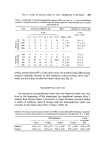
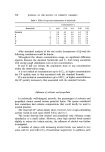
COUGH IRRITATION BY DEODORANT SPRAYS 511 Bactericides 2,3,5,2',3',5' hexachloro-6,6' dihydroxydiphenylmethane 2,4,4' trichloro-2' hydroxydiphenylether 3,4,4' trichlorocarbanilide 4,4' dichloro-3-trifluoromethylcarbanilide, 3,5-dibromo-3' trifluoromethyl-salicylanilide, 2,5,4' tribromosalicylanilide. Solvent Absolute ethanol, not denatured Propellant Monofluorotrichloromethane (F 11) Difluorodichloromethane (F12) To test the influence of the spray pattern and of the spray rate on cough stimulation, several valve combinations (Deutsche Pr//zisions-Ventil) with different actuator, stem and housing orifices were used. TEST METHOD The cough-stimulating potential of each deodorant spray was determined under conditions as near to normal use as possible. Randomly chosen volunteers were asked to give absolute appraisals of the irritant properties of the spray being tested. In this respect the test method deviates from the several standard methods which are used in sensory testing (7). The value obtained by averaging the numerical ratings given by the tested subjects is probably influenced by a combination of chemical, physical and psychological factors, as occurs in practice. From this angle, the method offers advantages compared with instrumental analytical methods, which yield data influenced only by physical and/or chemical, but not psycho- logical, factors. For optimum results in consumer testing, the following criteria are applicable: Ten people or more should be interrogated. All interrogated subjects should collaborate on a voluntary basis. Each test should be completed as quickly as possible, preferably within lh.
Purchased for the exclusive use of nofirst nolast (unknown)
From: SCC Media Library & Resource Center (library.scconline.org)