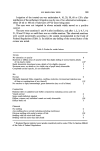
310 JOURNAL OF THE SOCIETY OF COSMETIC CHEMISTS glass with the loop the animal was taken by the tail while gently pressing its back with the third and fourth fingers. The vagina opened itself, so that it was easy to insert the loop. Gently moving the loop back and forth, some vaginal secretion was collected in the loop, which was then dispersed in the droplet on the object glass. One object glass can serve for 9 smears. The preparations were air-dried and fixed for 3 min in methanol. After evaporation of the methanol, the smears were stained in a Giemsa solution diluted 1 : 10, for 20 min, the slides were then rinsed with water and airdried. Microscopical evaluation was done at a medium magnifi- cation without oil immersion. Smears were taken at the following times: Day 3 1500 Day 4 1000 and 1500 Day 5 1000. The smears were evaluated as follows: (a) = (b and c) = (d) = (e and f) = Basic state as seen in juvenile and castrated animals and in mature intact animals in di-oestrus: over two-thirds of the cell material consisted of leucocytes. First sign of beginning of oestrus (comparable with pro-oestrus in intact animals): 1/3-2/3 of the cells were epithelic, either with or without a nucleus. Distinct oestrogenic activity (comparable with beginning of full oestrus in intact animals): over 2/3 of the cells were epithelic, predominantly without a nucleus. Positive (comparable with full heat): over 95•o of the cells were epithelium cells, either with or without a nucleus. The highest score per animal and per group of 3 animals was recorded within one group, reactions should have been comparable if this was not the case, the test should be repeated. If the results of a quantitative test was not 'full heat', but rather stage b, c or d, the test should be repeated with a larger amount of material. Detection limits Some samples of cream-base were tested percutaneously to which known amounts of various oestrogens had been added. The results of these tests are shown in Table I. The limit of detection at percutaneous application lies under 0.00025• for oestradiol-17• and for diethylstilbestrol probably the same is true for oestriol (see Table I). In the quantitative test, the amounts of extract are chosen to obtain responses on the levels of 0.01, 0.025 and 0.0005•o oestrone (or oestradiol-1713- dibenzoate) equivalents per gram. (N.B. 0' 1 pg oestrone or 0.1 pg oestradiol-17[3- dibenzoate = 1 Mouse Unit.)

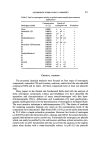
OESTROGENIC SUBSTANCES IN COSMETICS 311 Table I. Test for oestrogenic activity in spiked cream samples (percutaneous application) Concentration Result of Oestrogens added in (%) cytological test Evaluation None 0.0000 a a a -- Oestradiol-17[• 0.00025 e e/f c + Id. 0.00050 e/f f e + Id. 0.00100 f e/f f + Diethylstilbestrol 0.00025 fid f/d f/d + Id. 0.00050 f f f + Id. 0.00100 e/f f/d e/f + Oestradiol-17[•-benzoate 0.00250 f f f + Id. 0.00350 f f f + Id. 0.00750 f f f + Id. 0.01500 f f f + Diethylstilbestrol 0.00250 f f f + Id. 0.00350 f f f + [d. 0.00750 f f f + Id. 0.01500 f f f + Oestriol 0.00050 e/f d e/f + Id. 0.00250 e/f e e/[ + Id. 0.01500 e/f f d/e + CHEMICAL METHODS The proposed chemical methods were focused on four types of oestrogenic compounds, oestradiol- 1713 and its esters, oestrone, oestriol and the non-steroidal compound DES and its esters. All these compounds have at least one phenolic ring. Many papers in the clinical and biochemical fields deal with the analysis of these oestrogenic compounds. Lisboa and Dicsfalusy (11) have described the separation and characterization of many steroid-oestrogens with thin layer- chromatography (TLC). Adlercreutz and Luukkainen (12) used gaschromato- graphic techniques (GLC) for the determination of oestrogens in biological fluids. The most sensitive technique is radioimmunoassay (13). The choice of methods for analysing cosmetics depends very much on the concentration levels of the compounds to be determined. High levels (0.05 or 0.5•o) can be easily determined by TLC after a simple extraction procedure. However low levels of oestrogens !,ca 0.0035•o) after the extraction need a cleanup step before the actual chromato- graphic determination can be carried out. Fortunately the oestrogens are phenols which can easily be purified by the well-known add/base solvent extraction pro- cedures (14): at pH 1 the phenolic steroids move from the aqueous to the organic phase when shaken with a water-immiscible solvent. At pH 10.5 the phenolic
Purchased for the exclusive use of nofirst nolast (unknown)
From: SCC Media Library & Resource Center (library.scconline.org)