J. Soc. Cosmet. Chem. 27, 307-318 (1976) ¸ 1976 Society of Cosmetic Chemists of Great Britain Biological and chemical oestrogenic substances in assay of cosmetics D. H. LIEM,* L. G. HUIS IN 'T VELD,? G. J. RUNDERVOORT,* J. ROOSELAAR,* and J. TEN HAVE-• Synopsis--A screening method of testing for OESTROGENIC ACTIVITY was developed using direct application of cosmetic products to the shaven skin of castrated female mice vaginal smears were taken subsequently. Levels down to 0.00025 •o OESTRADIOL-17•3 can be detected. Of forty-five samples examined three were shown to contain oestrogenic substances. A quantitative test, based on extraction and subcutaneous administration of the extract to test animals, was developed for further examination of samples found positve in the screening test. The forty-five samples were also analysed CHEMICALLY for the presence of the following oestrogenic osubstances: oestradiol-17[3, OESTRONE OESTRIOL, and DIETHYLSTILBES- TROL (DES). INTRODUCTION Since Zondek's discovery (1) of percutaneous absorption of oestrogenic hormones by human skin and its beneficial effects on wrinkles and skin texture, the cosmetic industry has been interested in the use of hormonal substances in its products. Several papers (2-5) and patents (6, 7) have appeared since then. Other cosmetic effects than anti-wrinkle action have been claimed, such as the develop- ment of the female breast (by oestrogens and gestagens (8)) and the depression of abnormal growth of facial and body hair in the female. * Government Food Control Station, Enschede, The Netherlands. ? National Institute of Public Health, Bilthoven, The Netherlands. 3O7

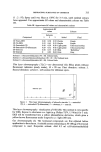
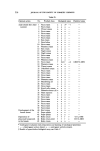
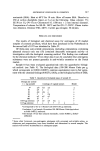
308 JOURNAL OF THE SOCIETY OF COSMETIC CHEMISTS The use of hormonal substances is however not without risk. The hazards depend much on the concentration levels of these pharmacologically very active compounds (7). Thus it is important to develop biological and chemical methods to detect the hormonal activity, to identify the active compounds and to determine the levels of concentration. In this paper the methods developed for the detection of oestrogenic substances will be discussed. The biological methods developed for detection of oestrogenic activity are valid for the female sex hormones (oestradiol-1713, oestrone and oestriol) and other steroidal oestrogens (such as ethinyl-oestradiol) as well as for the stilbene- derivatives (such as diethylstilbestrol (DES) and hexoestrol). Chemical methods, on the contrary, focus the analysis on characteristic chemical structures and thus per- mit identification of the biologically active compound in many cases. This paper describes biological methods for qualitative and quantitative detection of oestro- genic activity and chemical methods for the detection of oestradiol-17[3, oestrone, oestriol and DES. Methods for the biological and chemical detection of other hormones will be described in a subsequent paper. PROCEDURES Sampling The forty-five samples were purchased from the Dutch market in the second half of 1973. Since no formula is stated on the labels or on the information pamphlets, the selection of the products to be examined was based exclusively on their beautifying or cosmetic claims such as: anti-wrinkle creams for the neck and around the eyes and sometimes for the face, particularly indicated for the older woman, with visible results after about 2 weeks of daily application: growth promoting effect on the female breast depression of abnormal hair growth in the female, such as hirsutism. Prices of the samples varied from $3 to $40 per unit. BIOLOGICAL METHODS The Allen-Doisy test (10) was chosen for use with cosmetics because of its specificity. Samples could in principle be administered orally or parenterally (subcutaneous, intravaginal, percutaneous, etc.). In the case of cosmetics, the advantage of percutaneous administration of the specimen without extraction is obvious however, for a quantitative assay it was necessary to extract the material to be examined and to administer the extract subcutaneously. The percutaneous method proved to be very useful in our hands for screening pur- poses, as it is simple, sensitive and rapid.
Purchased for the exclusive use of nofirst nolast (unknown)
From: SCC Media Library & Resource Center (library.scconline.org)