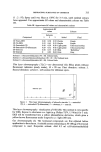
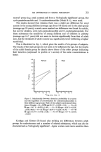
SEX DIFFERENCES IN ODOUR PERCEPTION 321 neutral' group (e.g. amyl acetate) and from a 'biologically significant' group, like cyclo-pentadecanolide and 11-oxahexadecanolide (Musk R-I), were used. The results showed that whereas there was a slight sex difference for amyl acetate in the young children (average age about 9.0 years) and in the adult group (average age 20 years), a much more marked sex difference was found for adults, but not for children, with cyclo-pentadecanolide and 11-oxahexadecanolide. For these substances the sensitivity of young children and of children in puberty (average age 16.7 years) did not seem to deviate significantly from that of adult men, but the threshold of adult women was significantly lower (reflecting a higher sensitivity). This is illustrated in Fig. 1, which gives the results of six groups of subjects. The results of the male groups do not seem to be influenced by age, but the results of the adult female group lie clearly above those of the other groups indicating their detection (expressed in probits or z-scores) of the same concentrations is better. +4 Female Male -•1 ._ o -1 -4 -9 -7 -5 -• -I -9 -7 -5 -• -I 2Lo• conc. (mol. /I) Figure 1. Relationship between detection probability in z-scores and the logarithm of concentration for cyclopentadecanolide in three different age groups. Each of the subjects participated three times. (Female :--N = 58 M age 20.1 Y= 0.24X + 1.18 ß --. N =43 l•l age= 16.7 Y=0.47X+ 1.09 - - - N=32 • age= 10.0 Y=0.33X 40.66. Male :--N= 52 M age=20.4 Y=0.27X+0.54 .--. N=48 • age=16.7 Y=0.37X+l.04 - - - N=37 • age=9.7 Y=0.33X 40.62.) Koelega and K/Sster (7) found also striking sex differences between adult groups for androstenone and a number of related substances, which can also be characterized as 'biologically significant'. Again women were more sensitive than

322 JOURNAL OF THE SOCIETY OF COSMETIC CHEMISTS men. This was also true for a 'neutral' odour like m-xylene but here again the difference was much less marked. According to some authors the incidence of a specific anosmia, i.e. total incapacity to perceive a specific odour, is much more widely spread among adult men than among adult women. Le Magnen (2) reported that about 50•o of the adult males show an anosmia for cyclopentadecanolide. Griffiths and Patterson (8) found that 7.6•o of the women in their experiment were unable to detect the odour of androstenone, in contrast to 44'3•o of the men. However, Whissell- Buechy and Arnoore (9) found no sex difference in the incidence of pentadeca- lactone anosmia. They found significant differences in the frequencies of specific anosmias between two human races: the musk anosmia occurred in about 7•o of the Caucasians but in none of the Negroes, whereas the anosmia for isovaleric acid was prevalent (about 95/0) among Negroes and uncommon (about 1•o) in Caucasians. The inability to smell pentadecalactone seems to be inherited as a simple recessive autosomal character. Comfort (10) pointed out that these results raise several points of biological interest, as both isovaleric acid and musks are candidates for consideration as functional pheromones, the former at any rate in monkeys. Koelega and K/Sster (7) were not able to show occurrence of a specific anosmia for musk or androstenone in a systematic way. Sometimes a person who could not smell the highest concentration presented to him (or her) in a particular session of the experiment, did quite well on other occasions. Much seems to depend on the method of stimulus presentation used and on instructions. The general hypothesis forwarded by Broverman et al (5) cannot explain why the differences found in the adult groups are much more pronounced for the biologically meaningful odours than for the other odours and why a sex difference for amyl acetate should be found at an early age when the sex hormones are not yet active. Differences in motivation may have contributed to this difference among young subjects, although Koelega (7) tried to hold motivation constant by the prospect of rewards for the best smellers. The specific hypothesis of Le Magnen (2) is supported to some extent by these results since the sensitivity for the biologically significant odours seems to develop well only under the influence of the female sex hormones adult women are clearly more sensitive than men for these odours. However, Le Magnen's (2) hypothesis also suggests a greater sensitivity in men than in women for biologically non-significant odours like amyl acetate and m- xylene. The results of the experiments do not support this. In fact, women do slightly better on these odours too. Motivational differences and differential smoking habits might contribute to this result.
Purchased for the exclusive use of nofirst nolast (unknown)
From: SCC Media Library & Resource Center (library.scconline.org)