WATER-IN-OIL EMULSIONS 313 common to conventional w/o type cosmetics. In addition, the products were highly safe for skin application. These many advantageous characteristics of the creams may be at- tributed to the phenomena suggesting the role of NMF. The stability of these products were excellent and had long shelf life, even at elevated temperature together with less dependability of hardness on aging and temperature. It is well known that the NMF content in stratum comeurn is high and has water absorbing and water holding properties. It is said that the chapping of the epidermis in the winter and the dryness of the aged skin are due to insufficient secretion of sebum and NMF. In view of this fact, it is quite natural and reasonable to supply the deficiency of NMF with cosmetics. NMF is said to be found mostly at the boundary below the stratum comeurn and is found also in stratum granulosum and sweat. Sixteen free amino acids have been identified such as serine with more than 30 per cent, glutamic acid, proline, etc. (7). It has been proven that mono-, di- and triglycerides of fatty acids also exist in sebum. Sebum flows readily and spreads on the surface of skin after reach- ing the hair follicles and is then mixed with sweat and eventually forms a skin surface lipid film which is a w/o type emulsion. It is easily inverted to o/w type emulsion under the condition when the ratio of sweat becomes high. But, this is reversible and the type emulsion is determined depending upon the physiological condition of the skin surface (w/o, --• o/w) (8). We can find an interesting similarity between the natural emulsification phenomena on the skin surface and that of the gel-emulsification method developed by the authors. As mentioned before, in our emulsification method, monoglyceride, and aqueous solution of amino acid which correspond to sebum and NMF, respectively, were mixed and a w/o type emulsion was formed. On the contrary, urea and uric acid, which are found in sweat broke down such w/o emulsions and inverted to that of the o/w type. Further- more, when the gel was kept in water, it expanded remarkably. This property is similar to semipermeability of the lipid film. As the amino acids in the gels retard moisture loss and maintain moisture by their strong hydration effect, it is considered that cosmetic bases utilizing amino acids play an important role in maintaining the flexibility and elas- ticity of the skin. The effect of products formulated with amino acids on the skin are now under investigation by the authors from the view point of viscoelasticity of stra- tum comeurn and percutaneous absorption of amino acids using radioisotope. CONCLUSION The w/o emulsions stabilized with amino acids or their salts were investigated. The following may be concluded. 1. Stable w/o type emulsions which have the capacity to contain wide ranges of water ratio, were obtained by using the gels prepared in a given combination of the amino acids and their salts with lipophilic surfactants having high orderly lameIlar structures. 2. The authors applied this technology to the formulation of cosmetics such as creams, stick type cosmetics, foundations, etc. 3. The outstanding characteristics of the products obtained by using this method are their refreshing, smoothing, ready adaptation to the skin and moisturizing effects

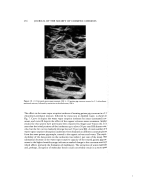
314 JOURNAL OF THE SOCIETY OF COSMETIC CHEMISTS with hardly any greasy feel and glaring appearance which are common to w/o type emulsion. 4. It is important that such surfactants to be used in these w/o emulsions have lameliar structures. 5. Amino acids are very effective in forming lameliar structure and contribute to preserve the tight interfacial atmosphere concentrating the surfactant at the inter- face. As a result, coalescence of water particles is prevented and stabilization of the w/o emulsion is achieved. 6. The stabilization mechanism of the w/o emulsions using the new method was elu- cidated through surface chemical investigation synthetically by means of X-Ray analysis, heat of solution, NMR, electron microscopy, etc. ACKNOWLEDGMENT The authors wish to express their sincere appreciation to Professor Kenjiro Meguro of Tokyo University of Science, Faculty of Science, Professor Stig Friberg of University of Missouri-Rolla, Mr. Yoichi Miya, Managing Director, and Dr. Takeo Kaneko and many others of Shiseido Co., Ltd, for their many useful suggestions and guidance. REFERENCES (1) R. M. Gattefose, Physicochemical study of the skin, Rev, Chim. ind., 83, 27-30, 127-30 (1939) Ibid., Some physicochemical aspects of Cosmetics, Tech. Ind. Chira., 284, 71-6 (1939). (2) D H. Powers, Effect of cosmetic ingredients and preparations on motsture loss from th• skin, Drug Cosmet. Ind., 82,233-4,239-40 (1958). (3) H. Czetch-Lmdenwald and Helmi A. F. Machroos, Water-in-oil emulsion ointments, Pharm. Zentralh., 98, 362-5 (1959). (4) E.J. Claret al,, Skin impedance and moisturization, J. Soc. Cosmet. Chera., 26, 337-53 (1975). (5) A. Fujita, The prediction of organic compounds by a conceptional diagram, Kagaku no Ryoiki., 11, 719- 25 (1957). (6) T. Kaneko eta[., Chemistry of Protein I., Kyoritu Publishers, Tokyo, Japan, 1969, Pp. 272-73. (7) K. Laden, Natural moisturizmg factors (NMF) in skin,Amer. Perfu,n, Cosmet., 82, 77-9 (1967). (8) M. Sekine and T. Kobayashi et al., "Handbook," Nikko Chemicals Co., Ltd., Tokyo, Japan, 1968, Pp. 1044-46.
Purchased for the exclusive use of nofirst nolast (unknown)
From: SCC Media Library & Resource Center (library.scconline.org)