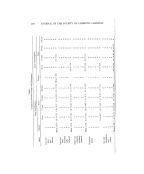
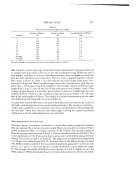
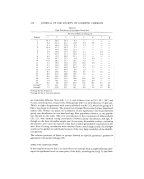
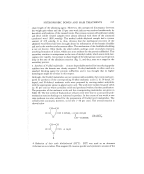
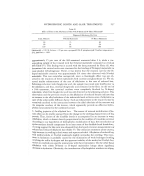
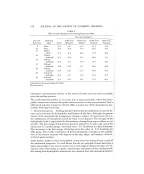
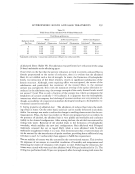
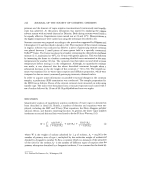
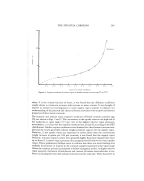
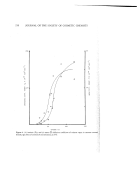
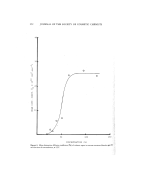
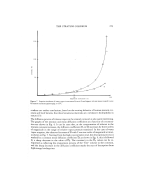
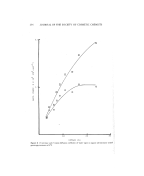
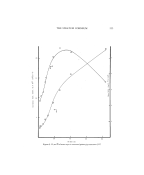
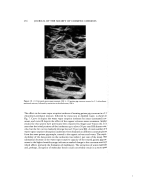
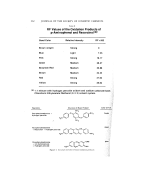
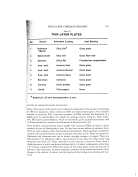
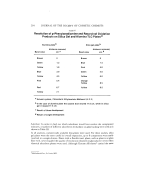
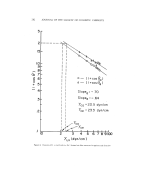
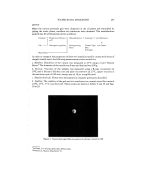
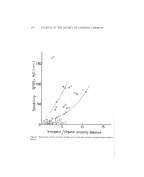
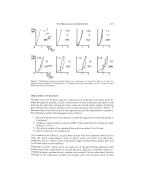
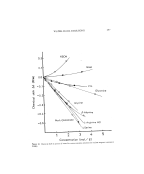
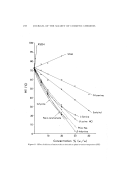
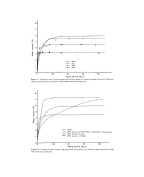
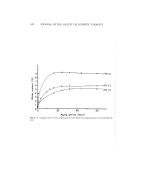
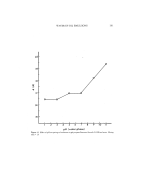
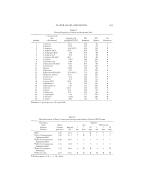
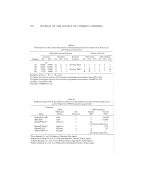
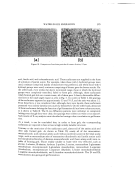
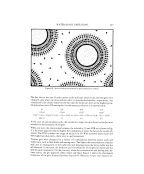
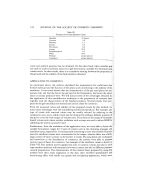
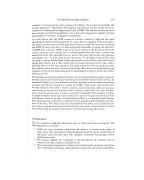
WATER-IN-OIL EMULSIONS 311 hardness of the w/o cream using such gels also changed depending on the former change. As was previously described, the gel obtained by Sunsoft O-30B and the amino acid was stable however, it is necessary to observe the changes in the cream when an unsta- ble gel is used. Table V and Fig. 18 indicate the results obtained when an unstable gel, such as obtained between Sunsoft O-30B and water in the absence of an amino acid, was used. In comparing these results with the case where stable gels were used in the preparation of creams, remarkable differences were recognized as to viscosity, hard- ness, stability, and size of the emulsion particles. Table VI indicates the relationship of the X-ray diffraction patterns of the surfactants to it• function in gel-formation and the properties of the w/o emulsions using these gels. As is evident from this Table, it is readily understood that the surfactants having clear X-ray diffraction patterns can readily form gels and the creams obtained were stable while those having indistinct X-Ray diffraction patterns did not form gels and produced unstable creams. These facts can also be confirmed by other studies. As was mentioned previously, the amino acid functions to prevent the expansion of the spacings of the surfactanr when an aqueous solution of amino acid is added to the surfactant phase. It was also found that amino acids possessing this property produced a good stable gel. Furthermore, the relationship between these properties and the stability of w/o emulsions were also studied. The results are shown in Table VII. There is a correlation between the stability of the gels and the stability ofw/o emulsions namely, the better the stability of the gels, the better the w/o emulsion obtained. Furthermore, the stability of the gels, which have been studied on the standard sample by using squalane as the main constituent of the oil, must be changed with the polarity of the oil. Figure 19 shows the influence of a component in the oil phase on the stability of the w/o emulsion. When squalane only was used as the oil phase, the destruction of the gel was not observed and the resulting w/o emulsion had a high viscosity of greater than 100,000 cps, but as the mixing ratio of glycerol tri-2-ethylhexanoate became higher, the viscosity dropped rapidly and finally, no emulsification occurred which was accompanied by a total destruction of the gel in the oil phase. In a nonpolar oil, such as squalane, there was no structural change of the surfactant however, in a polar oil, such as glycerol tri-2-ethyl- hexanoate, the structure disappeared completely. Therefore, as the polar components in the oil phase increased, the emulsion became increasingly unstable. Thus, in the gel- emulsification method, it is advisable to use nonpolar oils and waxes in the oil phase, such as, squalane, liquid paraffin, and microcrystalline wax, etc. These facts have been proven to be identical in practical formulations of cosmetic creams as well as in the simple systems studied. In the gel-emulsification method, the drawings of the emulsion when the oil is added can be assumed to be as is shown in Fig. 20. In the case of nonpolar oils, the water particles surrounded by several layers of surfactant disperse in the oil phase. On the contrary, in the case of polar oils, it may be assumed that the orientation of the surfactant is loosened and its adsorption at the interface are hindered, resulting in an unstable emulsion. The above results may be summarized as follows. By initially forming a stable gel and maintaining conditions to maintain gel stability, a stable w/o emulsion having high vis-

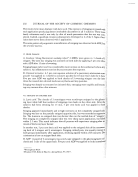
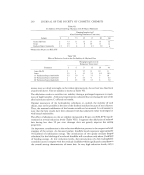
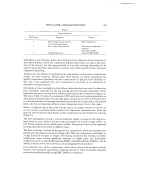
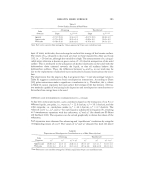
312 JOURNAL OF THE SOCIETY OF COSMETIC CHEMISTS Table VII :. :: Example of w/o Type Emollient Cream Squalane 25.0 parts Ceresine 3.0 Beeswax I, 5 Lanolin 0.5 Petrolatum 6.0 w/o gel 20.0 Propylene glycol 5.0 Water 3 9.0 Perfume proper amount Antiseptics proper amount cosity and uniform particles may be obtained. On the other hand, when unstable gelS:i i are used (or under conditions inducive to gel destruction), unstable w/o emulsions and creams result. In other words, there is a correlation existing between the properties of?i the gel used and the stability of the final emulsion obtained. ß APPLICATION TO COSMETICS As mentioned above, the authors elucidated the requirements for surfactants that.i?: formed stable gel and the function of the amino acid contributing to.the stability emulsions. It was noted therein that the characteristics of the gel used played an portant role, and that the better the gel used in the formulation, the better the sions or creams produced were. We will discuss some of the advantages obtained the application of this emulsification technique in the preparation of cosmetic together with the characteristics of the finished products. Several creams were pared by the gel-emulsification method and used as a base for cosmetics. From the measured values and stability of the prepared creams by this method, noted many advantages with this emulsifying method and products. For example, any type of cream with required values may be readily selected by referring to the'•)?• component ratio, and a stable cream may be obtained by adding a definite quantity the gel to cover the wide ranges of volume ratio. Even those at the range of extremelY/i:'•} biased volume ratio where another surfactant such as soaps are used to adjust HLB stabilizing the system can also be used. Furthermore, from the evaluation of the application tests, we were able to know th e suitable formulation ranges for 3 types of creams such as the cleansing, massage, and'-j!:ii emollient types, respectively. It was especially interesting to note that suitable formula'i:':!? tions for emollient creams were concentrated in the ranges, wherein there was a large content of water contrary to the former 2 creams. By using these new techniques and know-how in the formulation of cosmetics, the authors were able to prepareT!i: various types of bases for cosmetics. An example of the emollien.t cream is shown in'? Table VII. This method may be applied not only to cosmetic creams, but also to stick type emulsion products with extremely low water content and also to different pharma-' :' ceutical preparations. The characteristics of the cosmetic bases prepared by using this ß' method were their ready adaptation to the skin, their excellent spreadability and j3 moisturizing effect with hardly any greasy feel and glaring appearance, which were ..
Purchased for the exclusive use of nofirst nolast (unknown)
From: SCC Media Library & Resource Center (library.scconline.org)