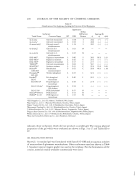
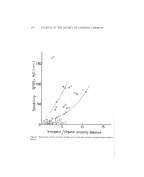
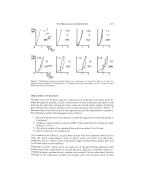
j. Soc. Cosmet. Chem., 28, 219-229 (May 1977) Observations on female scalp hair population, distribution, and diameter ELLYN M. COTTINGTON, ROY H. KISSINGER, and WILLIAM S. TOLGYES I Gillette Research Institute, 1413 Research Boulevard, Rockw'lle, MD 20850. Received July 20, 1976. Presented Ninth IFSCC Congress, June 1976, Boston, MA. Synopsis : :. :. SCALP FIBER POPULATION DENSITY, GROUPING, and DIAMETER were studied on a panel of 20 : women ranging in age from 24 to 59. The average number of fibers per square cm was above 200, which can " be translated to about 170,000 fibers for a full head of hair. The fibers grow in a variety of groupings with :i.:: wide individual variations. The average fiber diameter for the group was about 70 •m, with individuals rang- ing from under 60 to about 90 •m. The influence of the fiber number and diameter on the bulky appearance of the hair is often masked by other characteristics such as waviness and hair care practices. INTRODUCTION The hair fiber characteristics which determine most cosmetically important hair mass mechanical behavior are: population density, diameter, moduli, shape, and fiber-fiber interactions (1). Fiber length, not being an intrinsic characteristic, is excluded from this list, even though it influences certain properties such as combing (2). Most cosmetic products and processes perform their functions with regard to hair mass mechanical be- havior in the dry state by modifying the last 2 groups of parameters. The first 3 groups of parameters, even if partly or completely outside the influence of cosmetic products, are of interest to the cosmetic industry because of their influence on hair behavior. This paper is aimed at collecting and interpreting data on scalp fiber population and diameter of adult women. The traditionally accepted value for the fiber population of a full head of adult hair is about 100,000 (3, 4, 5). The mean fiber diameters for groups of individuals range from 60 to 100/zm (6, 7, 8, 9) with individual fiber values from 25 to above 100/xm hav- ing been reported (10, 11, 12, 13, 14, 15, 16). We wanted to check the validity of the accepted mean values, investigate variations between individuals, establish ranges of values for single heads, and determine correlations, if any existed, among different characteristics. 219

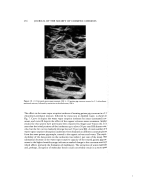
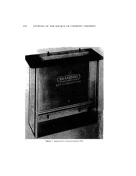
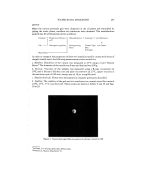
220 JOURNAL OF THE SOCIETY OF COSMETIC CHEMISTS EXPERIMENTAL Twenty women employees of the Gillette Research Laboratory were used for this study. They ranged in age from 24 to 59 years, with 17 of them between 24 and 42. The three oldest panelists were Chinese all others were Caucasians. Within the Cau- casian group, the hair color ranged from light blond for 2 panelists to a nearly black, dark brown for 2 panelists. One panelist had reddish hair, but most had hair color in . the brown range. The ancestry of the Caucasians--when known--varied from Scandi-.: nayJan to Mediterranian. All 3 Orientals were born in China. A minimum of 12 cm hair length and the absence of Negroid-type curliness were the only criteria for the sele,._-• tion of the panelists. These restrictions were necessary because of the counting tech-":'(':' nique used. ß . , . . Simple hair: one hair fiber emerges from a follicle orifice. Compound fibers: 2 or more ?.• :i fibers emerge from a follicular opening without a contiguous epidermal or stratum co '- neum bridge between them, as seen at 45-fold magnification. Single hair: a simple whose nearest neighbor is set at more than about 10 fiber diameters distance. Grouped. i: hairs: all compound hairs and those simple hairs which had neighbors not more than 3?'5: fiber diameters away. Site' the area occupied by a single hair or by grouped hairs. Conig ca.ia of ech vertex anterior and in front of the vertex posterior, according to the area designation of Moretri (17). On 8 of the panelists, the counting was repeated on the symmetrical right temporal area. ß ,: COUNTING METHOD Both counting and fiber collection were carried out in November and December, 1975. A template with a 1.00 cm z opening was placed on the head of the panelists i:?:. within 24 h of the last shampoo. With the help of a hooked needle, all fibers emerging • : jl from the skin within the 1.00 cm z opening were pulled through the frame while they were being viewed through a stereo microscope at 45-fold linear magnification. All the fibers were bent in one direction and counting started at the opposite end of the.i square, scanning along the skin line row by row. Each fiber counted was pulled over the?. opposite side of the opening with the hooked needle and held there by hand and All data and observations were called out by the observer and tape recorded for later .• transcription, because both hands of the observer were occupied during the process i:i:.: I' and the subject had to remain still. Only "terminal" fibers were counted. In our: , method, a fiber was classified as terminal if it was at least about 2 cm long (18) and was 5• : similar in diameter to the long fibers. The following characteristics were noted: total number of fibers, total number of sites, number of fibers within each single site, ing versus compounding for each fiber, relative geometric arrangement of the sites within the area, and the relative geometric arrangement of the fibers within sites.
Purchased for the exclusive use of nofirst nolast (unknown)
From: SCC Media Library & Resource Center (library.scconline.org)