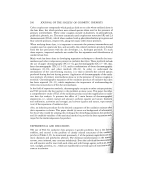
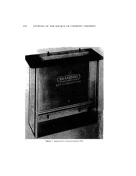
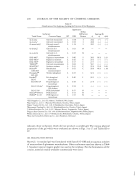
208 JOURNAL OF THE SOCIETY OF COSMETIC CHEMISTS At first glance, stripping might seem to offer the alternative of screening substances on areas other than the face and without the requirement of sweating. Unfortunately, this is not a feasible alternative. ADP, for example, did not elicit typical stinging in stripped skin of the back and was not different from its vehicle ethanol. Moreover, stinging in stripped skin was evanescent and not at all discriminating. Many irritating substances, which do not cause facial stinging, will produce pain and stinging on stripped skin. GUIDELINES FOR PERFORMING STINGING TESTS SUBJECTS Stingers are likely to be white females with light complexions who give histories of easy sunburning. They frequently complain of having sensitive skin and of having trou- ble with cosmetics and soaps. The lesser susceptibility of blacks is doubtless due to their possession of a more effective barrier, the horny layer being both more dense and with a greater number of cell layers (7). •.:.:•.• THERMAL STIMULATION The facial sauna* is a useful substitute for an environmental chamber the latter can hardly be viewed as standard equipment. The subject places the face directly into the steam stream for at least 15 min or until sweating is brisk. The steam exposure must be continued for another 10 min after plication of the test agent. We obtained comparable results with a variety of stinging formulations in a panel tested with both the chamber and the sauna. The intensity of stinging was a little less with the sauna. REPEATED TESTING If no stinging develops in 5 min, one can wipe off the substance with a wet towel and apply a new test material. This can be repeated at least twice on each cheek, allowing for the evaluation of 6 agents in a single session. The limiting factor in "no response":-:i.(: testing is the time that subjects can stay in the thermal chamber. They are generally i•?• wrung out by 45 min. On the other hand, a positive response increases susceptibility to stinging. To avoid i71. false positive readings, no further testing should be conducted on that cheek. We have never observed tachyphylaxis over the short term, that is, unresponsiveness induced by repeated testing. However, we have witnessed the development considerable resistance in 2 of 5 stingers, who were regularly used twice weekly for several months. One subject became virtually a nonstinger after 3 months of testing'":11i with stinging materials though irritation was never observed. This induced refratori- •i!i ness may be a subliminal form of "hardening" that occurs with prolonged exposure to irritants. In any event, subjects who are used repeatedly, should be monitored from !•:-:i *Facial Beautifying Mist, Model 60. Schick Electric, Inc., Lancaster, PA.

STINGING CAPACITY OF APPLIED SUBSTANCES 209 time to time for retention of sensitivity to lactic acid. Susceptibility returns after a rest period of several weeks. We have recently developed a simpler method of selecting stingers for recruitment of test panels. Thermally induced sweating is not required. The application of 10 per cent lactic acid to the face will elicit stinging which is almost equivalent to 5 per cent acid on sweating skin. The same is true for 15 per cent ethanolic ADP. These higher concentrations have no effect on nonstingers. Let it be clearly noted, however, that tests of unknown materials must be carried out on sweating facial skin of preselected stingers. It should also be noted that substances with a high capacity to induce stinging can do so in the absence of sweating. REFERENCES (1) W. W. Wilson, R. Quero, and K. J. Masters, The search for a practical sunscreen, South. Med. J., 59, 1425-30 (1966). (2) J. A. Parrish, M. A. Pathak, and T. B. Fitzpatrick, Facial irritation due to sunscreen products, Letter to the Editor, Arch. Derrnatol., 111,525 (1975). (3) D. R. Armstrong, M. L. Dry, C. A. Keele, and J. W. Markham, Methods for studying chemical excitants of cutaneous pain in man, J. Physiol., 115, 59P (1951). (4) K. Laden, Studies on irritancy and stinging potential, J. Soc. Cosmet. Chera., 24, 385-93 (1973). (5) R. W. Shanahah and C. O. Ward, An animal model for estimating the relative sting potential of sham- .poos, J. Soc. Cosmet. Chern., 26, 581-92 (1975). :: (6) D. A. Weigand and M. M. Mershon, The cutaneous irritant reaction to agent 0-chlorobenzylidene malo- nonitrile (CS). II. Quantitation and racial influence in human subjects, Edgewood Arsenal Technique No. 4332, 1970. (7) D. A. Weigand, C. Haygood, and J. R. Gaylord, Cell layers and density of Negro and Caucasian stratum comeurn, J. Invest. Dermatol., 62,563-68 (1974).
Purchased for the exclusive use of nofirst nolast (unknown)
From: SCC Media Library & Resource Center (library.scconline.org)