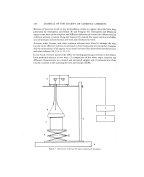
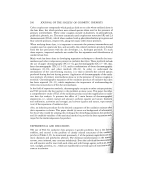
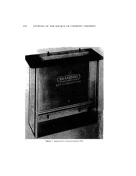
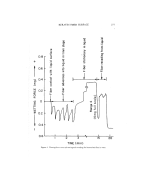
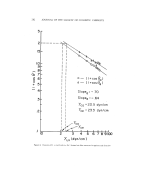
198 JOURNAL OF THE SOCIETY OF COSMETIC CHEMISTS It is this sustained, crescendo type stinging that we undertook to study. An embarrass. ing experience precipitated our research. Although, it had been previously noted (1) that amyl-dimethyl-p-aminobenzoic acid (ADP)* could cause stinging, our premarket- ing tests of a sunscreen containing this ingredient repeatedly failed to disclose sus- tained stinging even under thermal stress. It was only after widespread sale that com- plaints were made by a small proportion of users. In our opinion, the prevalence of disagreeable stinging from this product is less than that reported by Parrish et al. (2) Were this not so, the extensive field testing, which was done in hot climates, would have revealed this adverse reaction much earlier. We are not the first to become conscious of the need to ascertain undesirable subjec- tive reactions. Armstrong and his coworkers applied test substances to the base ofcan- tharidin blisters in order to appraise their capacity to cause pain (3). This test is not relevant for materials that provoke stinging on normal skin. Laden (4) clearly perceived •. the problem and attempted to develop appropriate methodologies for detecting sting- • ing potentiality. He immersed the abraded tails of rats in test solutions and determined the time re- quired for the rat to flick its tail out of the solution. He emphasized the variability the results though useful information could be secured. For human testing, Laden ap•.:: ß plied test materials to scotch-tape stripped skin, obtaining reasonable agreement with7 the animal data. Again this procedure mainly measures pain (or does not clearly dis51 criminate between pain and stinging) its applicability to stinging from application to normal skin is uncertain. Laden made the important observation that stinging and irri -• tation could not be correlated. For example, substances such as citric and acetic acids :?_ caused intense stinging but scored quite low in tests of primary irritancy. . Recently, Shanaban and Ward (5) described an interesting animal model for estimating 71 i the stinging capacity of shampoos. They injected mice intraperitoneally and scored the ß intensity of the ensuing writhing. The results correlated well with human eye sting"•'::! :. tests. Again, stinging and irritancy were not found to parallel each other. Some sham-:t•} poos which proved to be nonirritating by the Draize rabbit eye test caused stinging. MATERIALS AND METHODS We gradually came to appreciate that only a small proportion of persons would show i'7: a stinging response to ADP. Our first task then was to develop a screen to locate?55 "stingers," persons who had this peculiar susceptibility. The following procedure ii: proved reliable. A volunteer was brought to a state of profuse sweating in an environ•.•'5': mental chamber at 110øF and 80 per cent relative humidity (R.H.). Then a 5 per cent::'. ß -? aqueous solution of lactic acid was rubbed briskly over the nasolabial fold and cheek. *Padimate, Eclipse, G. S. Herbert Co.

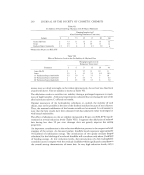
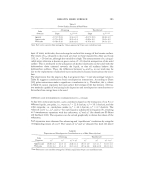
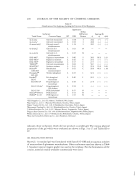
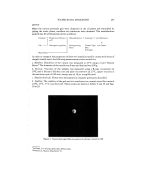
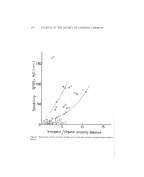
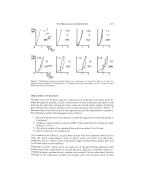
STINGING CAPACITY OF APPLIED SUBSTANCES 199 Those who experience sharp stinging for at least 3 to 5 min are identified as stingers. An alternative screening test, which can be carried out at room temperature, involves the application of 2 ml of 90 per cent aqueous dimethylsulfoxide (DMSO) in a small glass cup on the cheek for 5 min. This produces intense burning in stingers however, the disadvantages of DMSO are disqualifying. The substance smells and tastes badly, not to mention that a solid tender wheal and persistent erythema develop. By contrast, lactic acid produces no visible changes. II. STINGING ASSAY This is carried out on groups of 5 to 10 stingers, depending on the degree of accuracy required. The subject enters the environmental chamber (110øF, 80 per cent R.H.) and after the face has begun to sweat copiously (generally after 15 min) a liberal amount of the test material on a cotton swab is thoroughly rubbed over the nasolabial fold and cheek. Stinging is evaluated immediately (10 sec) and at 2.5, 5.0, and 8.0 min on a 4-point scale: 0 = no stinging 1 = slight 2 = moderate and 3 = severe. The time se- quence was formed empirically. Some substances cause slight to severe stinging im- mediately after application with disappearance of the sensation within 5 to 30 sec. De- layed stinging is generally not preceded by a transient phase and usually becomes evident within a minute or two. The delayed stinging score for an individual is the mean of the three readings at 2.5, 5.0, and 8.0 min. We arbitrarily regard substances with average scores falling between 0.4 and 1.0 as having slight stinging potential. The range 1.1 to 2.0 signifies moderate stinging, and 2.1 to 3.0 signifies severe stinging. A second agent can be simultaneously evaluated on the opposite cheek. Within limits, a series of agents can be evaluated during 1 sweating period. EXPERIMENTAL OBSERVATIONS I. PREVALENCE or STINGERS Thirty young adult student volunteers (20 whites, 10 blacks, equally divided as to sex) were evaluated using both lactic acid and DMSO probes. Both tests gave concordant results. There were 4 stingers among the whites, only one of whom was a male. Only 1 black, again a female, exhibited stinging. With lactic acid stinging began after a few seconds and in 4 of 5 subjects persisted strongly for about another 5 min, subsiding slowly over the next 10. DMSO produced peak stinging within 3 min this rmnained at high intensity for another 10. The nonstingers did not perceive significant stinging with either test. It is worth noting that DMSO induced considerably less whealing and erythema in the latter. All 5 sting- ers thought they had unusually "sensitive" facial skin having had past trouble with cos- metics, soaps, etc. Three had a history of atopy (but not atopic dermatitis). The white stingers had light complexions, sun-burned easily, and tanned poorly. All 5 blushed easily. The sample is too small for any but the most tentative judgments. Females seem to be more susceptible. It remains to be shown whether this is a true sex difference or
Purchased for the exclusive use of nofirst nolast (unknown)
From: SCC Media Library & Resource Center (library.scconline.org)