j. Soc. Cosmet. Chem., 28, 231-241 (May 1977) Application of the theory of hydrophobic bonds to hair treatments KATHLEEN E. HALL and LESZEKJ. WOLFRAM The Gillette Company, Personal Care Division, Boston, MA 02I 06. Received July 16, 1976. Presented Ninth IFSCC Congress, June 1976, Boston, MA. Synopsis A novel technique of HAIR TREATMENT via introduction of nonpolar residues into hair structure in HYDROALCOHOLIC MEDIA is described. HaJr modified in this manner exhibits greatly ENHANCED SETTABILITY and HIGH SET RETENTION, even at high levels of ambient humidity. The setting be-. havior can be manipulated by uulizing the differential swelling response of treated hair to water and aqueous alcohols. I. INTRODUCTION Conformational stability of a protein, and thus, its response to external mechanical or chemical forces, depends on the type and number of stabilizing bonds present within the protein structure. In the case of o•-keratin, this stability is primarily derived from covalent crosslinking by cystine and intrachain hydrogen bonding. Some contribution also comes from the electrostatic interaction of basic and acidic sidechains, as well as from the hydrophobic bonding of nonpolar residues such as proline, leucine, and valine (1). However, the contribution of the latter is small, and in the intact fiber, the covalent and polar interactions greatly overshadow the nonpolar ones. In an earlier work reported by Harris (2), it was shown that the wet mechanical properties of reduced keratin fibers could be restored without crosslinking by alkylat- ing the fibers with high molecular weight monohalides. Alkylation with alkyl halides of low molecular weight produced permanently weakened fibers. Successful mechanical recovery of the alkylated fibers was ascribed to the interaction of secondary forces, arising from the high molecular weight residues incorporated into the fiber structure during alkylation. In this respect, it is of particular interest to note that the introduction of apolar residues creates an environment favoring the formation of hy- drophobic bonds, and that the strength of these bonds depends on the size and shape of the introduced alkyl groups.

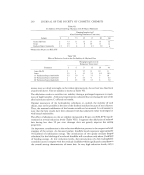
232 JOURNAL OF THE SOCIETY OF COSMETIC CHEMISTS The term "hydrophobic interaction" describes the tendency of nonpolar groups to associate in aqueous solution. This interaction results in an increased ordering of the water molecules into a quasi-crystalline structure in which there is improved hydrogen. bonding surrounding the nonpolar groups. These hydrophobic regions are disrupted in nonpolar solvents because stronger solute-solvent interactions are thermodynamically favored. Thus, a unique property of the hydrophobic bond is its dependence on water for its existence. The important practical point raised by these considerations is the utility of this type of bonding for setting hair. If the hydrophobic bonds could resist the swelling pressure generated within the keratin which is exposed to high humidity, then the set-conforma- tion would be maintained and a novel process for hair manipulation would be feasible. An investigation of the properties of S-alkylated keratin was therefore undertaken, and this report is an account of such study. II. EXPERIMENTAL ,: a. MATERIALS AND METHODS 1. Reagents.' The chemicals utilized in this study were commercially available:•ii American Chemical Society grade reagents and were used without further purification. 2. Cauc sian hair.' Brown Caucasian hair as supplied • was used w•thout cleansing. ' •:-: .:. 3. Mechanical properties.' The mechanical properties of hair were determined on table model Instron.* The fibers were mounted on plastic tabs at 2 in. guage length,•:55•:. equilibrated under the desired conditions, and stretched to break at a rate of 1 in./min.• •':.• The broken ends were conditioned at 65 per cent RH, cut off the tabs, weighed, and the denier of the tested fibers calculated. :. In some cases, the calibration technique (3) was used to follow the change in the fiber :•: performance. Intact fibers were mounted as above, equilibrated in the desired solvent, and then stretched to 30 per cent extension at a rate of 1 in./min, using the table model. • Instron. After a 24-h relaxation period in water, the calibrated fibers were given the proposed chemical treatment. The ratio of the energy required to stretch the fibers (30 per cent extension) the second time to that required initially, was expressed as the 30 .-: per cent index. 4. Amino acid anaOsis.' Hai /wool samples (•10 rag) were hydrolyzed at 105øC for :• 24 h in 6 N HC1 followed by lyophilization for removal of HCI. The hydrolyzates were :• analyzed for cystine on a Phoenix$ model M-7800 Micro Analyzer. 5. Liquid retention measurements.' The swelling of hair was determined by the liquid retention technique as described by Valco and Barnett (4). This involved measuring. *De Meo Brothers, New York, N.Y. ]'Instron Corp., Canton, MA. •Phoenix Instrument Co. ß
Purchased for the exclusive use of nofirst nolast (unknown)
From: SCC Media Library & Resource Center (library.scconline.org)