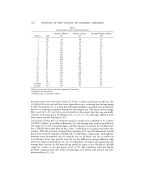
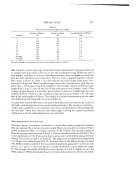
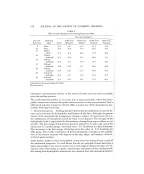
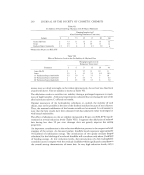
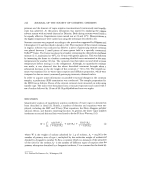
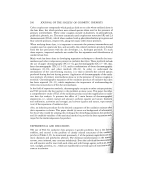
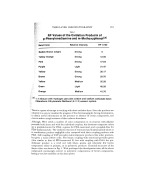
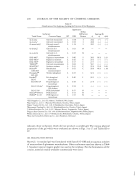
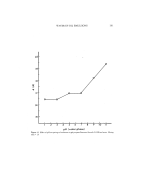
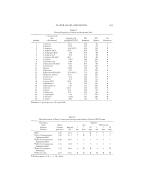
HYDROPHOBIC BONDS AND HAIR TREATMENTS 233 the liquid retained by the hair after a 30 min equilibration in water or other specified solvent. 6. Setting.' One gram (7 in.) tresses were set on one-half in. rollers with water or aqueous alcohol as specified in the text. The set tresses were allowed to dry overnight at ambient temperature and humidity. After removing the tress from the roller, the hair was combed, being careful to maintain the alignment of the hair fibers. The set stability of treated hair was assessed by measuring the hanging length of the tresses after various relaxation times, while exposing them to maintained conditions of humidity and temperature (85 per cent RH, 85øF). B. RESULTS AND DISCUSSION 1. The reaction of reduced hair with alkyI iodides.' Earlier investigations conducted by Harris (2) on wool suggested that the wet mechanical properties of reduced wool could be restored following alkylation with long chain alkyl halides. Both the magnitude of the restorative effect and the simplicity of the alkylation step suggested this approach as being particularly attractive for application to hair. An attempt was, therefore, made to evaluate the efficacy of the alkylation reaction. Calibrated hair fibers were treated with 0.25 N potassium thioglycolate at pH 5 (3 h at 50øC, 25:1 bath ratio) to cleave approximately 50 per cent of the disulfide bonds. Sam- ples of the reduced fibers were then alkylated with 0.02 M alkylating agent suspended in 0.1 M pH 8 phosphate buffer utilizing 100:]_ bath ratio. The alkyl halides used as blocking agents were methyl, hexyl, and decyl iodides, respectively. After 20 h, at 35øC, the fibers were thoroughly rinsed with running tap water and dried. Bulk sam- ples were treated simultaneously in order to determine the weight changes following alkylation. A small weight increase (1.9 per cent) was observed only in the case of the sample treated with decyl iodide. This weight increase corresponded to less than 20 per cent yield of the alkylation reaction. The alkylation treatment also had a negligible effect on the mechanical properties of the reduced hair (Table I). These results were in sharp contrast with the data reported for wool by Harris (2). To ascertain whether the reactivity of the substrate (hair versus wool) contributes to these large differences in behavior, it was decided to re-examine the reaction system using wool fibers. The reduction-alkylation cycle was run under conditions identical to those described by Harris. 2. AIkylation of wool with alkyl iodides.' New Zealand wool samples were reduced with 0.2 N potassium thioglycolate at ph 4.5 for 2]_ h at 35øC (25:]_ bath ratio). The subsequent alkylation was performed using 0.02 M alkylating agent, methyl, hexyl, or decyl iodides suspended in ]_ M, pH 8 phosphate buffer, 35øC at 100:1 bath ratio. The alkylation proceeded very slowly in the presence of the longer chain halides, as was evident by the persistence of thioglycolic acid after ]_8 h reaction time. To insure that an excess of alkylation agent was present, fresh solutions of the hexyl and decyl io- dides, respectively, were added to the wool samples, and the alkylation continued for an additional 7 h. These reactions were monitored by measuring the weight changes, as well as examining the properties of the treated wool.

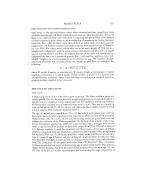
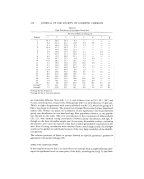
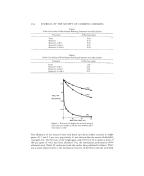
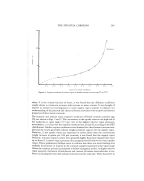
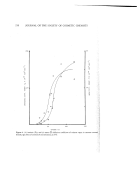
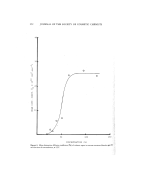
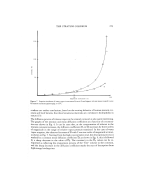
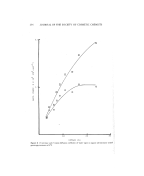
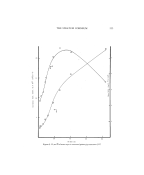
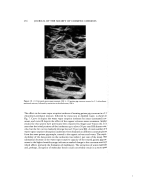
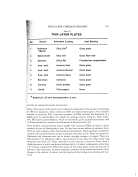
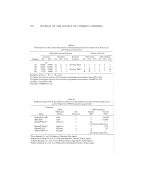
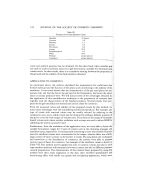
234 JOURNAL OF THE SOCIETY OF COSMETIC CHEMISTS Table I 30 Per Cent Indices of Hair Samples Following Treatment wtth Alkyl Iodides Treatment 30 Per Cent Index Intact 0.98 Reduced 0.54 Reduced--CHal 0.66 Reduced--C6H•aI 0.66 Reduced--C•0H2•I 0.64 Table II 30 Per Cent Indices of Wool Samples Following Treatment with Alkyl Iodides Treatment 30 Per Cent Index Intact 1.02 Reduced--CHaI 0.63 Reduced--C•HtaI 0.85 Reduced--C•0H2•I 0.92 /•EC•, TGA O.16 I CHal REMAINING I[ 0.08• 0 20 40 REACTION lIME, min. Figure 1. Reactivity of thioglycolic acid with methyl, ethyl and butyl iodides in 40 per cent ethanol, pH 9 with respect to time The alkylation of the reduced wool with hexyl and decyl iodides resulted in weight gains of 1.7 and 2.5 per cent, respectively. It was obvious that the extent of alkylation was again low. On the basis of the weight gain, only 0.18 to 0.20 m moles at most, of SH per gram of wool had been alkylated. Yet, the mechanical performance of the alkylated wool (Table II) conformed with the earlier data published by Harris. There was a steady improvement in the mechanical recovery of the fibers with the increasing
Purchased for the exclusive use of nofirst nolast (unknown)
From: SCC Media Library & Resource Center (library.scconline.org)