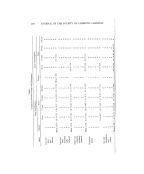
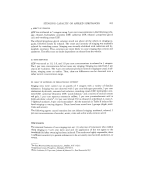
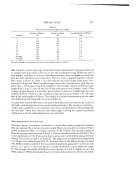
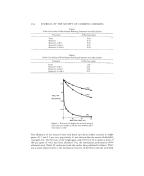
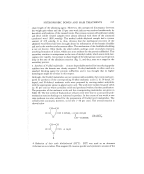
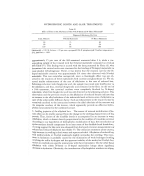
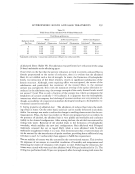
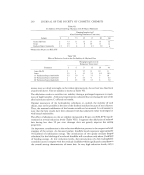
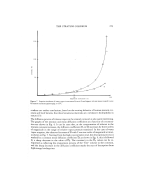
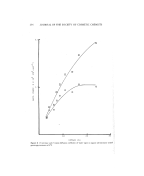
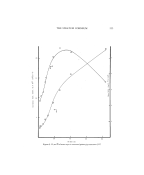
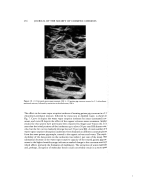
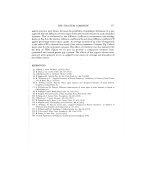
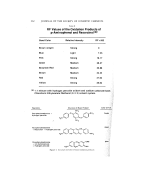
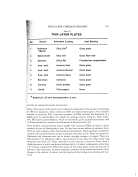
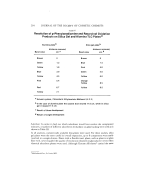
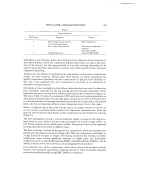
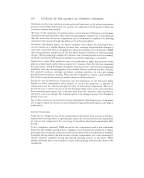
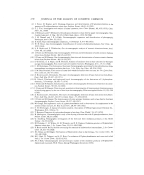
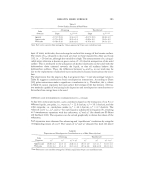
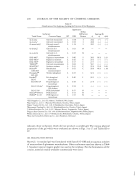
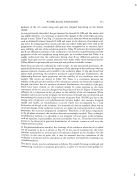
HYDROPHOBIC BONDS AND HAIR TREATMENTS Table VI Yield Stress of Hair Alkylated with N-Hexyl Maleimide 239 Yield Stress, g/denier in: Water 20 Per Cent Propanol 50 Per Cent Propanol Reduction Level, Per Cent Calculated a Observation Calculated a Observation Calculated a Observation 0 0.42 0.42 0.36 0.36 0.36 0.36 31 0.28 0.40 0.25 0.30 0.25 0.27 42 0.22 0.32 0,21 0.17 0.21 0.14 82 0.08 0.27 0.06 0.11 0.06 0.10 aCalculated yield stress = (intact hair yield stress) (100-per cent reduction/100). of alkylated fibers (Table VI). The alkylation was performed at 3 reduction levels using N-hexyl maleimide as the alkylating agent. If one relies on the fact that the percent reduction in work to stretch a reduced fiber is directly proportional to the extent of reduction, then it is evident that the alkylated fibers do not exhibit such a loss of strength. In water, the formation of hydrophobic bonds, via interaction of the hexyl residues, results in significant stabilization of the keratin structure. Although, some repairing effect was anticipated, the extent of the stabilization and particularly the resistance of the treated fibers to the external stresses was unexpected. Even with the maximum overlap of the apolar sidechains in- troduced in the alkylation step, the average strength of the newly formed bonds would not exceed 5 kcal. This is only a fraction of the energy loss which accompanies the breakdown of cystine crosslinks (-50 kcal/mol). It is apparent that the hydrophobic interactions which accompany the blocking of cysteine residues are very intensive, al- though, a possibility of cooperative multichain hydrogen bonding in a hydrophobic en- vironment cannot be excluded. 8. Setting properties ofalkylated hair.' The alkylation of reduced hair limits the swell- ing of hair in water. On the other hand, such hair can be readily deformed in alcoholic media. An attempt was made to utilize this change in swelling characteristic for the set- ting purposes. Thus, the hair was swollen in 50 per cent propanol and set on rollers. In the presence of alcohol, the alkylated hair is very pliable and moldable and conforms readily to the desired configuration. After setting the hair, the alcohol was removed by rinsing with water. Removal of the alcohol leads to the formation of hydrophobic crosslinks, which stabilize the new (set) configuration. Hair alkylated with N-heptyl maleimide retained the set in liquid HzO, while a tress alkylated with N-ethyl maleimide straightened within 1 to 2 min. This demonstrates that a water-resistant set can be attained by the introduction of apolar residues, providing that a sufficiently long sidechain is used. A 7-carbon alkyl chain appears to fulfill this requirement. The set stability of tresses was also assessed by the conventional manner. This involves the exposure of set tresses to controlled conditions of humidity and temperature and measuring the extent of relaxation with respect to time. Following the reduction, the tresses were rinsed with water and then alkylated with N-heptyl maleimide for 2 h. The setting was performed with 50 per cent propanol after thorough rinsing with water the

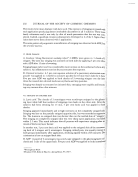
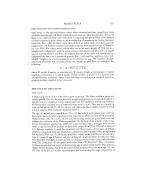
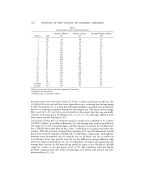
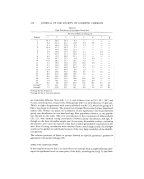
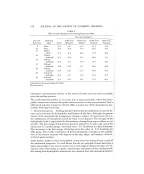
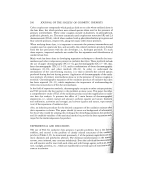
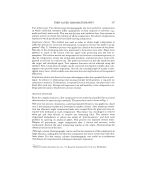
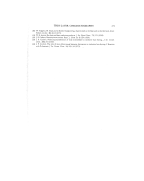
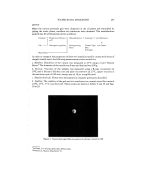
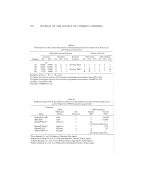
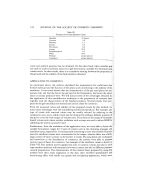
240 JOURNAL OF THE SOCIETY OF COSMETIC CHEMISTS Table VII Set Stability of Hair Following Alk¾1ation with N-Hept¾1 Maleimide Hanging Lengths (cm): After Following Relaxation Time (min): Sample 0 5 7.5 I0 15 30 150 Intact (H=O set) 2 7.5 11 12 13 13 13 Intact 2 5.0 7 8 I0 11 12 Reduced/hepryl maleimid e 2.5 3.5 4 4 4.5 5.0 6 •Measured at 84 per cent RH, 85øF. Table VIII Effect of Reduction Level on the Set Stability of Alkylated Hair Hanging Lengths (cm) at Relaxation Times (min):: Treatment 3 6 9 12 20 45 Intact (H20) 2 3 5.5 8 I0 11 Intact 2.5 3 3.5 5.5 8.5 10.5 15' Reduction/hepty[ maleimide 2.5 5.0 6 7.5 9 I0 30' Reduction/hepr¾1 maleimide 2 3 3.5 4 5 6.5 60' Reduction/heptyl maleimide 2 2.5 3.0 3 5 4 5.0 tresses were air dried overnight on the rollers (alternatively, the set hair was dried with a hand held dryer). The set stability is shown in Table VII. The alkylation results in excellent set stability during a prolonged exposure to condi- tions of high humidity. Additional experiments indicated that increasing the size of the alkyl substituent above C7 offered no benefit. Optimal interaction of the hydrophobic sidechains or, indeed, the mobility of such chains, may not be possible in the case of the dodecyl residues because ofsteric factors. Thus, the maximal stabilization of the keratin would not be attained. It is of interest to note that the best results have been obtained with hair alkylated either with heptyl or with benzyl maleimides. The effect of alkylation on the set stability (measured at 84 per cent RH, 85øF) was de- termined at several reduction levels (Table VIII). It appears that alkylation of reduced hair having less than 50 per cent cleavage does not greatly improve the setting properties. An important consideration in the reduction-alkylation process is the respective bond energies of the system. As discussed earlier, disulfide bonds represent approximately 50 kcal/mol of stabilization energy. The introduction of two apolar residues (heptyl sidechain) for the blocking of a reduced disulfide will contribute only about 3 kcal/rnol of binding energy. At low reduction levels, the introduction of a few hydrophobic crosslinks cannot compete with the residual disulfides which significantly contribute to the overall setting characteristics of intact hair. At very high reduction levels, only a
Purchased for the exclusive use of nofirst nolast (unknown)
From: SCC Media Library & Resource Center (library.scconline.org)