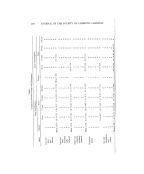
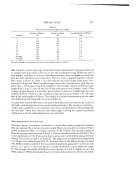
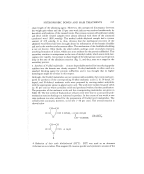
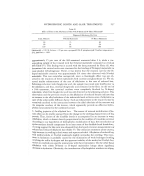
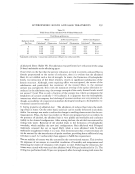
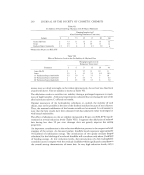
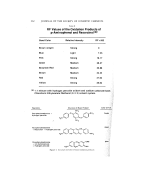
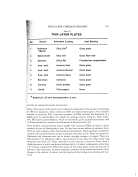
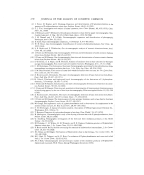
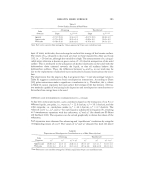
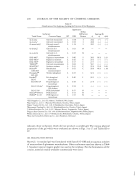
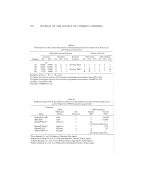
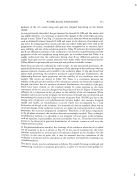
THIN-LAYER CHROMATOGRAPHY Table III THIN LAYER PLATES Source Adsorbent Coating Inert Backing 263 Brinkman Slica Gel a (Merck) Glass plate Mallinckrodt Slica Gel Glass fiber web Eastman Silica Gel Anal. tech. Alumina Acid Polyethylene terephthalate Glass plate Anal. tech. Alumina Neutral Glass plate Anal. tech. Alumina Basic Glass plate Brinkman Cellulose Glass plate Corning Glass powder Glass plate Varied Filter papers None a Analytical (.25 mm) and preparalive (2 mm) ! • FACTORS OF CHROMATOGRAPHIC SEPARATIONS :?•::Solutes.' The nature of the solutes to be analyzed is important to the success of obtaining :!!('an effective separation. Upon oxidation, PDA and allied amines given very complex i: :: :mixture of products. This is because oxidation of PDA involves the formation of a :highly reactive intermediate (32), which can undergo various reactions. Upon oxida- i: don, PDA gives quinonedimine, which on hydrolysis, gives quinone-monoimine, and i'i: on further hydrolysis, results in the formation of benzoquinone (33). •:::' Once formed, quinonediimine reacts rapidly with unreacted PDA and gives a major : products known as Bandrowski's base. As has been shown before in oxidative dyes, there are may couplers, other than primary intermediates, which undergo competitive :: reaction with quinonediimine to give a mixture of products (34). These are mostly in- dophenols and indamines and can be bound through nitrogen or oxygen. These are main products. In addition to these, various forms of one ring, two ring or poly-ring structures can form (25). Thus, selectivity in the reaction is very low. Even when a single precursor is used, one always ends up with 3 to 4 major components, and at least 5 to 6 minor components. While the nature of the solute plays a role, the amount of solvent is also important. In many instances, inversion of the bands was found, with a change in the amount of solute, fast-moving bands becoming slow-moving and vice- versa.

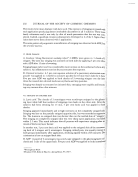
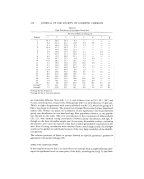
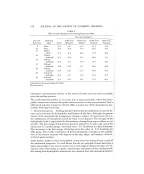
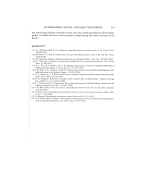
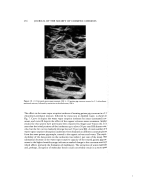
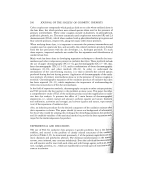
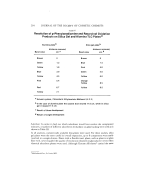
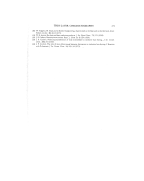
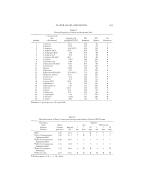
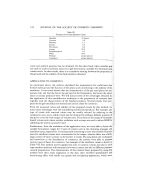
264 JOURNAL OF THE SOCIETY OF COSMETIC CHEMISTS Table IV Resolution of p-Phenylenediamine and Resorcinol Oxidation Products on Silica Gel and Alumina TLC Plates a Alumina plate b $1ica gel plate b distance removed, distance removed, Band color cm. c Band color cm. d Brown 0 Brown 0 Green 1.2 Blue 1.5 Yellow 1.9 Pink 4.0 Blue 3.0 Green 5.0 Yellow 4.5 Yellow 6.0 Pink 5.4 Orange Yellow 8.5 Red 6.7 Yellow 9.5 Yellow 7.1 a Solvent system, Chloroform: Ethylacetate: Methanol (6: 2: 2) b In the case of alumina plate the solvent front moved 17.0 cm, while in silica gel it moved 17.5 cm. c Resull of three development d Result of single development Adsorbent: In order to find out which adsorbent would best resolve the complicated mixtures, a number of different adsorbents with plastic or glass backing were tried as is shown in Table III. In all analyses, commercially available thin-plates were used. For these studies, silica gel plates were the most useful in • overall separation, up to 8 components were easily resolved in a single elution. Plates with a flexible inert phase, such as plastics or glass fiber web, never equaled the quality of resolution obtained on glass plates--even when identical adsorbent phases were used. Although Chroam AR sheets* carried the same *Mallinckrodt Inc., St. Louis, MO.
Purchased for the exclusive use of nofirst nolast (unknown)
From: SCC Media Library & Resource Center (library.scconline.org)