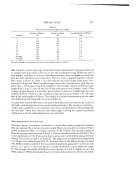
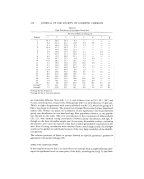
•'• J. Soc Cosmet. Chem., 28, 2713-2 84 (May 1977) Wettability of keratin fiber surfaces ':??:it Y' K. KAMATH, C. J. DANSIZER, and H.-D. WEIGMANN ii!:i!:!i•!.:.i Textile Research Institute, Princeton, New Jersey. ::. !53!•:i?!i•... Received July 19, 1976. Presented Ninth IFSCC Congress,June 1976, The WETTING of HAIR FIBERS by WATER has been measured using the Wilhelmy balance technique developed at Textile Research Institute Princeton, N.J. specifically for FIBROUS MATERIALS. The data for selected and treated hair samples suggest cause-effect relationships between WATER WETTABILITY of the FIBER SURFACE and MECHANICAL, WEATHERING, and CHEMICAL FIBER DAMAGE. Critical surface tension of the hair fiber surface has been determined with water-butanol mixtures using the same technique. Furthermore, dispersion and nondispersion contributions to the surface free energy of the fiber have been evaluated by measuring wettabilities against a polar and a nonpolar liquid. The results indi- cate that the molecular processes occurring at the interface between the keratin fiber surface and a liquid have considerable effect on the surface free energy of the fibers. INTRODUCTION Human hair is an important member of the keratin fiber group. Keratins are structural proteins, which occur widely in the vertebrate epidermis and its appendages. Unlike man-made fibers, human hair is cellular in structure, consisting of a central core called the cortex covered by a sheath of several layers of flattened cuticle cells. The cuticle cell itself consists of various layers, the endocuticle, exocuticle, and the a-layer, proceeding from the inside to the outside in that order. The thin outermost layer that forms a sheath around the cuticle cell is known as the epicuticle and is hydrophobic, whereas, the cortex is hydrophilic. Although, no definitive information is available about the composition of the epicutJ. cle of hair fibers, King and Bradbury [1] have found that the epicuticle obtained from Merino wool consists of 7 8 per cent protein, 5 per cent lipid, and 4 per cent ash. Values may be of a similar order for hair. The hydro- phobicity of the fiber surface may in part be due to the lipid content of the epicuticle. The characteristic toughness and the insolubility of keratins in water is attributable to the presence of the sulfur-containing amino acid, cystine, which acts 'as a crosslinking agent. From the work of Wolfram and Lindemann [2] and Swift and Bews [3], it can be seen that the cuticle of hair contains more cystine than the cortex. Histochemical observations of cuticle cross sections by the latter authors show that most of the cystine is concentrated in the exocuticle and especially in the a-layers. This renders these outer :. 273

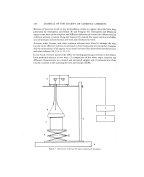
274 JOURNAL OF THE SOCIETY OF COSMETIC CHEMISTS layers of the cuticle tough and somewhat brittle. Exposure to ultraviolet rays of the sun can degrade the cuticle material, giving rise to hydrophilic groups in the surface. Severe mechanical damage during washing and combing of hair can destroy the cuticle and expose the hydrophilic cortex. It would appear, therefore, that measurement of the water wettability of the fiber surface could provide useful semiquantitative in- formation about the extent of damage undergone by the fiber. Apart from the kinds o'f damage described above, various chemical treatments of hair for aesthetic purposes such as bleaching (oxidation) and waving (reduction) also degrade the cuticle by breaking disulfide bonds and generating hydrophilic groups in the surface. Again, changes in the wettability of the hair surface against water should be a good measure of the extent of oxidation or reduction in the surface regions of the fiber. However, it should be noted that such measurements do not give any informa- tion about the changes occurring within the bulk of the fiber. Knowledge of the surface free energy of the fiber will be useful for the formulatot of hair-care products, which are applied in the form of sprays, and are expected to spread spontaneously on the surface. The critical surface tension would be a useful measure of the surface free energy of the hair fiber surface. It should be noted, however, that the conventional method of Zisman [4] for determining the critical surface tension of solids, is of limited applicability in that it represents only the dispersion contribution to the surface free energy. In the work presented here, an attempt has been made to understand the effect of weathering and mechanical damage on the wettability of the fiber surface against water. The same technique has been used to monitor oxidation and reduction reactions at the fiber surface. The role of dispersion and nondispersion contributions to the surface free energy have been evaluated, and it is hoped that this will lead to a better under- standing of the processes occurring at hair-liquid interfaces. THEORETICAL The spreading of liquids on the surface of a solid is governed by the 3 interfacial ten- sions, Tsv, Ts•., and %.v, where the symbols S, L, and V stand for solid, liquid, and vapor, respectively. The relationship between these tensions when a liquid surface is in equilibrium contact with a solid surface is given by the Young-Dupr• equation: 7t.v cos 0 = 7.sv -- 'Ys•. (1) where 0 is the contact angle. The term %.x cos 0 is often referred to as the wettability W of the surface. Determination of the wettability of a fiber by the Wilhelmy balance principle involves the measurement of the force acting (upward or downward), depending on the contact angle) on a counterbalanced single fiber when contact with the liquid surface is es- tablished. Equations relevant to this situation have been developed by Miller and Young [5]. The vertical force acting on the fiber is given by F,,. = w - F•, (2) where w is the wetting force, F,,. is the electrobalance force reading corrected for force
Purchased for the exclusive use of nofirst nolast (unknown)
From: SCC Media Library & Resource Center (library.scconline.org)