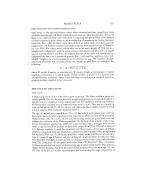
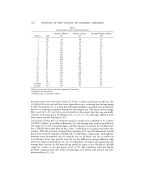
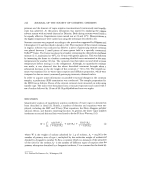
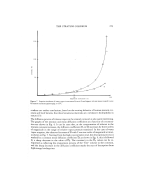
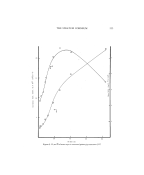
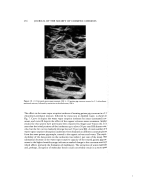
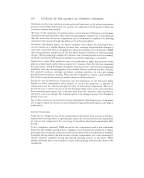
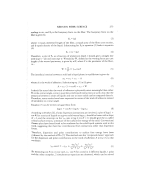
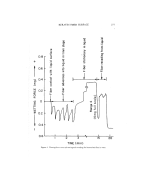
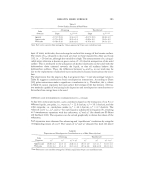
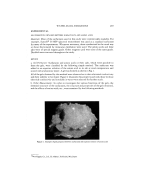
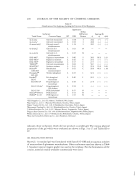
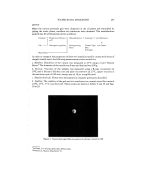
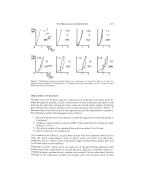
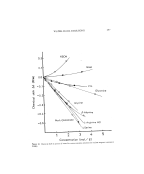
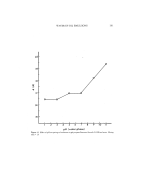
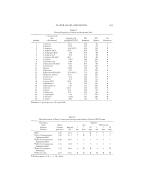
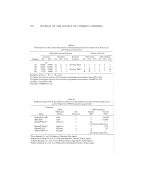
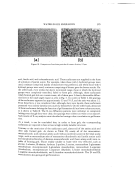
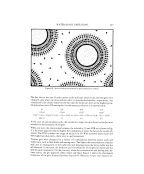
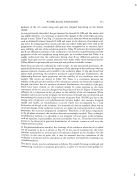
WATER-IN-OIL EMULSIONS 291 METHOD When the various premade gels were dispersed in the oil phase and emulsified by adding the water phase, excellent w/o emulsions were obtained. The emulsification method may be schematically shown as follows: Oil phase -'- (Dispersion/Mixing) • (Emulsification) • (Cooling) • w/o Emulsions 7oøC Gel• Homogeniz•ng Mixer Water Phase or Homogeniz•ng Votator-Type w/o Creams Mixer Heat Exchanger In order to compare the properties of these w/o emulsions and/or creams with those of the gels initially used, the following measurements were carried out. a. Hardness.' Hardness of the creams was measured at 25øC using a Curd Tension Meter.* The diameter of the needle was 8 mm and the load was 200 g. b. Viscosity: Viscosity of the samples was measured using a B-type viscometer (at 30øC) and a Ferranti-Shirley cone and plate viscometer-• (at 25øC, upper viscosity at the maximum rpm of 100 and a sweep time of 10 sec using M-cone). c. Emulsion Particles: These were determined in a manner previously described. d. Stability: The stability of the gels and w/o emulsions (or creams) stored for a month at 0øC, 25øC, 37øC was observed. These results are shown in Tables V and VI and Figs. 18 to 20. Figure 3. Typical small-angle diffracuon pattern ofsurfactant, Sunsoft O-30B *Iio Denki, 2-27 Yoyogi, Shibuyaku, Tokyo, Japan. -I'Ferranti Ltd., Maston, Manchester 10.

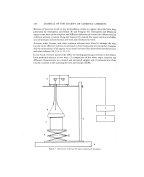
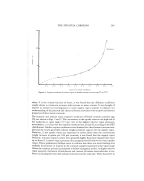
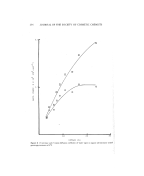
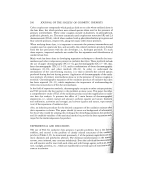
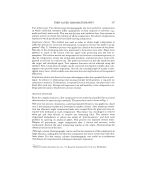
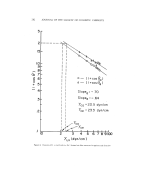
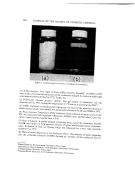
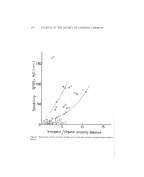
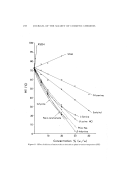
292 JOURNAL OF THE SOCIETY OF COSMETIC CHEMISTS c) -r' .•,.lOO z= 5o 0'4 1 5 10 inorganic/Organic property Balance 1'5 Figure 4. Relationship between solubility of amino acids or their salts and their inorganic/organic property balance
Purchased for the exclusive use of nofirst nolast (unknown)
From: SCC Media Library & Resource Center (library.scconline.org)