J. Soc. Cosmet. Chem. 29 185-200 (1978) compounds with the menthol cooling effect H. R. WATSON, R. HEMS, D. G. ROWSELL,* and D. J. SPRING Wilkinson Match Research Division, Poyle Road, Coinbrook, Buckinghamshire Presented at the Annual Scientific Meeting, Society of Cosmetic Chemists, 1-2 December 1977, New York Synopsis The cooling sensation of menthol on the skin results from a physiological action on the nerve endings. Structure/activity analysis as used in pharmacology has allowed prediction and subsequent synthesis of a large number of compounds which have the cooling action of menthol. The compounds range in chemical type, e.g. carboxamides to ureas to phosphine oxides. Many are as effective as menthol, and yet do not have the disadvantages associated with its volatility they are non-odorous and remain longer on the skin. To be effective the compounds need to penetrate the skin, and as expected, the degree of cooling sensation for an area of the body correlates inversely with the thickness of the stratum corncure. The range of cooling effects (e.g. subjects' descriptions, duration of effect) which has been noted, and the influence of vehicles, is described. Some postulates relating to the ease of skin penetration, and the physical parameters of the molecule are discussed. Future potential applications are briefly described. INTRODUCTION The effect which/-menthol imparts to the skin and oral cavity is well known and is usually described as 'cooling' or 'fresh'. The compound has long been added to toiletdes in order to give a fresh sensation and to pharmaceuticals to alleviate the sensations of inflammation or itch. Because menthol is volatile, its effect on the skin is somewhat transient. In some uses, especially shaving foams, the vapour can give rise to an unwanted cooling sensation in the eyes. In all uses, the dominant odour is almost impossible to mask when menthol is present in a proportion sufficient to give an appreciable cooling effect. This paper describes compounds which give a cooling effect, but do not have the undesirable characteristics which result from the volatility of menthol. The compounds were synthesised by us between 1971 and 1976, during a search based on concepts of correlation between structure and biological activity. Over 1200 cooling compounds were found the purpose of this paper is to give a general account of the molecular require- ments of cooling, and of the action of cooling compounds on the skin. Details of the synthetic work and other aspects of the study will be published elsewhere, but further description of the compounds is available in published patents (1). * Present address: Footscray Institute of Technology, Ballarat Road, Footscray, Victoria 3011, Australia. 0037-9832/78/0400-0185 $02.00 ¸ 1978 Society of Cosmetic Chemists of Great Britain 185

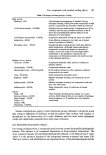
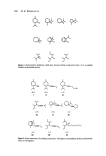
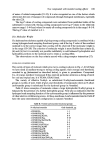
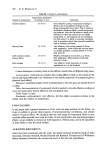
186 H.R. Watson et al. THE CHEMISTRY OF COOLING COMPOUNDS THE COOLING ACTION OF MENTHOL Menthol does not cool by volatilisation. The cooling effect almost certainly results from chemical action at or near those nerve endings which are associated with the sensation of cold. When menthol is placed on the lingual nerve of the cat the cold fibres of that nerve are either provoked into firing or, if already firing, respond with a higher rate of firing (2). Since the neurophysiological bases of the response to cold are essentially the same in all mammals (3-15), including man (16), and since there are many common features in the action of menthol and synthetic cooling agents, as related in this paper, it seems reasonable to assume that all such coolants act by a common mechanism, which is essentially that of a drug-receptor interaction (17). MOLECULAR REQUIREMENTS OF COOLING ACTIVITY We have established that four important criteria need to be satisfied for a compound to possess effective cooling activity: (i) a hydrogen bonding group (ii) a compact hydrocarbon skeleton (iii) a correct hydrophilic/hydrophobic balance (iv) a molecular weight in the range 150-350. (i) Hydrogen Bonding A hydrogen bonding function is essential for cooling action. We believe that the function must contain an oxygen atom capable of acting as a hydrogen bond acceptor. For greatest cooling activity, strong hydrogen bond accepting capability is necessary. There is no indication that the provision of more than one hydrogen bond accepting group in the molecule enhances the cooling effect some p-menthane-diols are active, but none is as active as/-menthol. Functional groups are listed in Table I, together with comments on the groups, and on the compounds which incorporate them. (ii) Hydrocarbon Skeleton It is assumed that the functional group takes part in hydrogen bonding at a receptor site, and that for cooling the hydrocarbon portion or portions of the molecule must provide a compact hydrophobic region near to the site of hydrogen bonding. The relationship between the structure of the hydrocarbon skeleton and cooling activity has been most thoroughly examined with N-alkyl carboxamides. Figure 1 indicates the variety of hydrocarbon structures which, in conjunction with suitable N- alkyl carboxamide groups (-X), give compounds of strong cooling activity. It is note- worthy that the hydrocarbon skeletons are highly branched this forces a compact configuration, and for many skeletons, allows an apparent requirement that for strong cooling activity the functional group should be attached to a carbon atom which itself is a branching site, or is adjacent to a branched carbon atom. If the functional group is separated from the branching by a -CH•- group, cooling activity is much reduced, and when separated by a -CH•CH•- group, activity is almost lost.
Purchased for the exclusive use of nofirst nolast (unknown)
From: SCC Media Library & Resource Center (library.scconline.org)