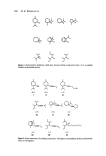
New compounds with menthol cooling effects 195 variation of threshold levels. (If this were not the case, then it is unlikely that menthol would be used so widely in toilet preparations.) The duration of the cooling effect on the skin is related to the dose, higher doses resulting in a more prolonged effect. Also, at a given concentration, the more active the compound then the more prolonged the effect this pertains regardless of compound type. Obviously, volatility is an important factor in determining duration. The cooling effect of volatile compounds, including menthol, is relatively transient and is rarely recorded for more than 15 min. The duration of involatile compounds is considerably longer some produce cooling for more than 4 h. After the initial perception of cooling effect has ceased, it is frequently observed that the cooling sensation is further perceived, but for shorter periods. This effect is more noticeable with strong compounds at high doses, and normally follows washing or sweating. The long duration of involatile compounds, and the repetition of the cooling effect, is consistent with the finding that compounds can still be detected in the stratum corneum 24 h after application. Thus, when Compound II (Fig. 2) was applied as a 10•o solution in ethanol to a 5 x 5 cm area of the forearm, half of the area being stripped with pressure-sensitive tape after 30 rain, and the other half after 24 h, 1-5 mg of compound was detected in strippings 3-6 after 30 min and 0.3 mg in stripping 3-6 after 24 h. OTHER SENSATIONS PRODUCED BY COOLING COMPOUNDS All cooling compounds produce sensations other than pure cooling. They are most readily described by reference to a strong peppermint candy, which produces tingle in the mouth and, if strong enough, a burning sensation. Compounds differ in the relative degree of cooling and side effects those that produce little effect other than cooling are, in our terminology, of high 'quality'. The relative degree of cooling and side effect appears to correlate to some degree to compound type for instance, phosphine oxides and hydroxyesters tend to have particularly low levels of side effect. The side effects are dose sensitive at low doses with most compounds, or at medium doses with compounds having a low level of side effects, they are not apparent. In general, increasing the dose of the cooling compound beyond a certain limit gives no apparent increase in cooling, but causes an increase in side effects, finally to a degree where the side effects dominate the cooling effect. Descriptions of side effects in the mouth, normally tingling, stinging, and burning, are paralleled by descriptions of side effects on the skin, and compounds prone to give oral side effects give side effects on the skin. In general, the more active the compound the less noticeable are the side effects at a given level of perceived cooling. SKIN PENETRATION Hydration or partial stripping of the stratum corneum aids penetration of the cooling compounds considerably, thus according with the established pattern reported by the other workers (27). The brief account of skin penetration which follows is directed to the relationship between the nature of the compounds and their ability to penetrate skin, and refers to non-occluded application where the skin has had no previous treatment, with relative humidity at between 40 and 60•o. When a composition containing a cooling

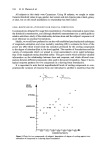
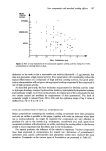
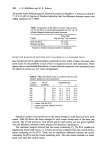
196 H.R. Watson et al. compound is placed on the skin, three processes must occur before a cooling effect is perceived: (i) molecules of the compound must transfer from the vehicle and must penetrate the surface of the stratum corneum. (ii) molecules must diffuse through the skin. (iii) molecules must interact with the receptors. Each of the three processes is influenced by the properties of the compounds, but the properties of the vehicle, in relation to its interaction with the compounds, are also of considerable influence on process (i). Polarity is the most important parameter of the vehicle. This is apparent from results obtained from usage formulations, and also from direct vehicle trials. Nine compounds with the/-menthol stereochemistry, either carboxamides chosen from compounds listed in Table II or hydroxyesters, were tested as 0'25•o solutions in eight vehicles which represented a polarity range from olive oil to aqueous ethanol, using the face test detailed above for shaving foams. Regardless of their intrinsic activity, all compounds gave higher cooling ratings in the more polar vehicles. Indeed, no cooling was noted from solutions in the two vehicles of lowest polarity, olive oil and hexyl laurate. In a corresponding test the Compound III (Fig. 2) was tested as a 0'4•o solution in different ethanol-water mixtures (25 33 50 67•o w/w of water). The cooling score increased progressively from 'weak-moderate' (25•o water) to 'moderate-strong' (67•o water). Onset of cooling effect occurred in less than 2 min, and it is believed that skin hydration had little or no influence on the increase of score. The process of transfer of compound from the vehicle to the outer skin layers may be viewed as a partition between the vehicle and the protein/lipid material which represents the stratum corneum. The cooling compounds are relatively hydrophobic (log P 0) and therefore they will partition only little from less polar vehicles into the skin: increase in polarity of the vehicles will shift the equilibrium in a direction which will favour absorption into stratum corneum. This effect is well established for example, hydro- phobic drugs are absorbed better from hydrophilic than from hydrophobic vehicles (31- 33). Once a cooling compound has been released from the vehicle into the stratum corneum, then its ability to diffuse to receptor sites is of prime importance. It is recog- nised that the size of molecule is a parameter of skin diffusion, and it is noteworthy that of the compounds of our series, those that give effective topical cooling all have molecular weights lower than 250. A degree of water solubility as well as lipid solubility appears essential for skin diffusion, and it is known that for most drugs the limiting parameter is water, rather than lipid, solubility (23). This is also apparent with cooling compounds, where in general compounds with lower log P values are more likely to be effective on the skin. A simple correlation of log P value with cooling effect is not expected, because the log P value influences intrinsic activity, but in those (short) homologous series which we have been able to study, the log P value of the compound with the highest topical score is displaced by approximately one unit, in the direction of more hydrophilic, when compared to the log P value of the compound of highest intrinsic effect. Oral threshold values are of limited use for prediction of topical effects. Figure 4 shows a plot of oral threshold against mean activity scores for 64 compounds in shaving foam (0'15•o concentration). There is clearly no well-defined correlation, and the only
Purchased for the exclusive use of nofirst nolast (unknown)
From: SCC Media Library & Resource Center (library.scconline.org)