New compounds with menthol cooling effects 193 particular note of time of onset, degree of cooling, and 'quality' (the meaning of the term 'quality' in this context is described below). The degree of cooling effect was scored on an 8-point scale (no effect, threshold, weak, weak-moderate, moderate, moderate-strong, strong, very strong). Repeat tests on different days were desirable a subject's repeat scores could vary by as much as 3 points on the scale. It was important that, as much as possible, the subject's skin was in the same state of hydration on repeat tests. (As an extreme example, the face is considerably more sensitive immediately following shaving than at other times of the day.) It was also desirable frequently to include as a control the base composition with no cooling com- pound this acted as a test on the panelists, and also permitted weighting of the scores since the base composition invariably caused the subjects to record sensations. Similarly, compositions of known very strong cooling effect were included as positive controls. SENSITIVITY OF DIFFERENT PARTS OF THE BODY Different parts of the body differ greatly in their sensitivity to the cooling compounds. No attempt has been made to determine the relative sensitivities in absolute terms, but the order of sensitivity is: eye tongue interior buccal region ano-genital area lip trigeminal area other face areas axilla inside forearm, breast other arm areas, thigh, back hands, feet palms,* soles. The eye is extremely sensitive, with thresholds probably measurable in nanograms, and to an extent that a simple test for cooling effect in a vol•tile compound is to hold the opened bottle near the eye. This test with menthol gives a sharp and very obvious sensation, which accords with consumers comments on the effect of mentholated shaving foam on the eye. Like menthol, synthetic cooling compounds also give a cooling sensation in the lungs (when added to cigarettes or inhaled as an aerosol spray) and to the gastrointestinal tract (when ingested). The order of sensitivity clearly follows a general order of increasing thickness of stratum corneum (26), and it seems probable that the sensitivity of an area is determined mainly by the ease with which the compound can penetrate this barrier. Further in- dication is provided by the fact that abraded or hydrated forearm skin has a reduced threshold compared to intact skin. Although the barrier role of the stratum corneum is probably dominant (27), it is likely also that the number of cold-sensitive nerve endings per unit area, and the efficiency with which the central nervous system processes nerve signals, vary with the location on the skin (3, 28). (During a search for an equipotency method based on mirror imaged body areas, the menthol thresholds of sixteen subjects were measured on the left and right forearm. Six were more sensitive on the right, and six on the left forearm. Four had no difference of threshold. There was no correlation with the side of the dominant hand of the subjects. Similar differences between left and right sides of the face have been noted in threshold tests. The study has not been taken further, but it seems possible that these differences are related to the efficiency of neural signal processing. At suprathreshold levels these bilateral differences are not detectable). * Some subjects have recorded a response when strong solutions are applied to the palms but our current view is that the effect is insufficiently distinct to be recorded positively.

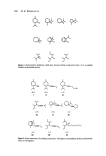
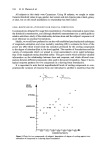
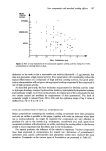
194 H.R. Watson et al. All subjects in this study were Caucasians. Using 50 subjects, we sought to relate forearm threshold values to age, gender, hair colour and skin type (as pale or dark, greasy or dry), but on this small population no relationship has been noted. DOSE--RESPONSE RELATIONSHIPS FOR COOLING COMPOUNDS In compositions designed for usage the concentration of cooling compound is many times the threshold concentration, and although threshold measurements are a useful guide to relative activities a study of the relationship between dose and the subjects' response is of more relevance to practical formulations. Ideally, we would have preferred to use the well established psychophysical techniques of magnitude estimation and cross modality matching (29) to evaluate the form of the power law (30) which would relate the sensation produced by the cooling compounds to the degree of stimulus (that is, the dose) applied. The number of formulations and the variety of compounds which we wished to cover necessitated a more rapid technique, that of the magnitude rating described earlier. This gave results which afforded valuable information on the relationship between dose and response, and which allowed com- parison between different compounds when used in the same formulation. Figure 3 shows typical response patterns for two compounds in a shaving foam formulation. It is important to note that at suprathreshold levels of cooling compounds in com- positions the variation of response from one individual to another is much less than the ONHCH3 MEAN RATING O O STRONG V V o o MODERATE V • V o o o • o o o WEAK o 0 0.02 0,04 0'06 0.08 0.10 0,12 0.14 CONCENTRATION o• Figure 3. Plots, for two compounds, of subjects' description of degree of cooling against con- centration of compound in a shaving foam formulation.
Purchased for the exclusive use of nofirst nolast (unknown)
From: SCC Media Library & Resource Center (library.scconline.org)