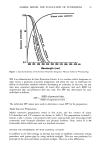
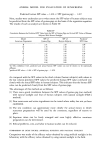
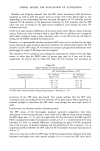
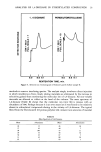
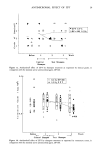
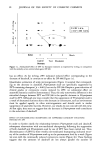
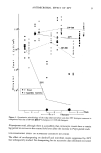
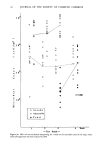
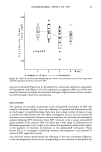
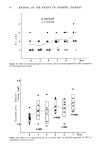
ANIMAL MODEL FOR EVALUATION OF SUNSCREENS 11 100. Global solar radiation 0.1 300 310 320 330 340 350 360 370 360 390 400 nm Wavelength (nm) Figure 1. Spectral sensitivity of the Sunburn Ultraviolet Integrator. *Human Subjects **Guinea Pigs. SPF is an abbreviation for Sun Protection Factor. It is a number which designates to what extent a particular sunscreen preparation will allow the user to withstand the effects of ultraviolet radiation without developing an erythema. In this test, the test sites were examined approximately 20 hours after exposure, and each MED for unprotected skin and protected skin was read. The SPF was determined for each individual as follows: SPF = MED of protected skin MED of unprotected skin The individual SPF values were used to determine a mean SPF for the preparation. Model Sunscreen Preparations Model sunscreen preparations tested in this study, and the content of major UV-absorbers and UV-scatterers are shown in Table I. The preparations included 3 lotions, 3 oils, 3 creams, 2 oily powder sticks and 1 solid powder cake formulated with commonly used chemical absorbers and physical blockers. Here, lotion B is 8% homosalate lotion which was used as a standard sunscreen. METHOD FOR DETERMINING SPF WITH ARTIFICIAL SUNLIGHT In addition to the field testing, an attempt was made to establish a laboratory testing procedure with guinea pigs by using artificial sunlight. This test was performed in principle in the same procedure as natural sunlight. There are a few differences.

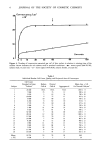
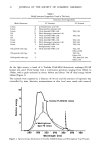
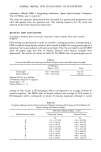
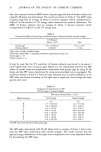
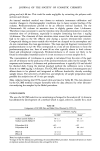
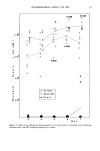
12 JOURNAL OF THE SOCIETY OF COSMETIC CHEMISTS Table I Model Sunscreen Preparations Tested in This Study Sunscreen Active Ingredients Model Sunscreen UV Absorber UV Scatterer Lotion Lotion Lotion Oil Oil Oil Cream Cream Cream A p-Aminobenzoic acid 3.0% B Homomenthyl salicylate 8.0% C Octyl dimethyl PABA 3.0% D Ethyl diisopropyl cinnamate 1.5% E Octyl dimethyl PABA 2.0% F Octyl dimethyl PABA 2.0% G Octyl dimethyl PABA 1.0% H Ethyl diisopropyl cinnamate 1.0% ! Octyl dimethyl PABA 2.5% Benzophenone-3 0.5% Oily powder stick type J Octyl dimethyl PABA 1.5% TiO2 1.0% Others 45.0% Oily powder stick type K TiO• 15% Others 35% Solid powder cake type L TiO• 20.0% Talc 55% Others 15% TiO 2 1.0% TiO2 1.0% TiO2 1.0% TiO• 5.0% TiO2 6.5% As the light source, a bank of 6 Toshiba FL40-SE30 fluorescent sunlamps (FL-SE lamps) was used. These lamps emit a continuous spectrum ranging from 280nm to 370nm, with a peak emission at about 305nm and about 73% of total energy below 320nm (Figure 2). The animals were exposed at a distance of 30 cm and the amount of exposure was controlled by time. Intensity measurements at skin level were made with research 10- shiba FL40SE 0 lamps I -': x,,.. ,', ] ./e- Westinahouse • II /s' Type F$ lamps •-•.. •, 280 300 320 340 360 380 400 Wavelength (nm) Figure 2. Spectral energy distributions of Toshiba FL40SE30 lamps and Westinghouse Type FS lamps.
Purchased for the exclusive use of nofirst nolast (unknown)
From: SCC Media Library & Resource Center (library.scconline.org)