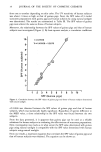
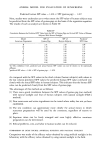
J. Xoc. Cosmet. Chem., 33, 9-18 (January/February 1982) New method for evaluating the effectiveness of sunscreen products MINORU FUKUDA, SATORU AKIU, MIEKO YAMAZAKI, KEISUKE NAKAJIMA and SABURO OHTA, Shiseido Laboratories, Nippacho 1050, Kohoku- ku, Yokohama, Japan. Received May 6, 1981. Presented at the SCC Annual Scientific Seminar, 1Vashington, D.C., May 21-22, 1981. Synopsis An accurate and convenient method for determining the SPF value using laboratory animals as a substitute for human subjects was developed. A good correlation between the SPF values of guinea pigs and human subjects was found using natural sunlight. Guinea pigs proved useful in evaluating the effectiveness of sunscreen preparations. However, considerable SPF difference was found to depend not only on the type of light source with different emission spectra, but also on the UV intensity of the light source. When artificial sunlight, including the solar simulator, is used for determining the SPF value, it is necessary to consider the spectral output, the UV intensity, and environmental factors. INTRODUCTION An increased interest in the harmful effects of sunlight on human skin has resulted in the marketing of numerous consumer products containing sunscreens. Simultaneously, a variety of methods have been used for evaluating the effectiveness of sunscreen products. In 1978, the United States Food and Drug Administration (FDA) published proposed rules which would establish conditions for the safety, effectiveness and labeling of over-the-counter (OTC) sunscreen drug products (1). Among the proposed rules, a method for the evaluation of the SPF is included, with the recommendation that the SPF value should be determined with human subjects either exposed to natural sunlight or solar simulator. However, testing with human subjects has some disadvantages: it is expensive, labor intensive, and frequently painful to the panelists. For these reasons, an accurate, yet convenient method for determining the SPF value using laboratory animals as a substitute for human subjects has been evaluated.

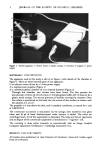
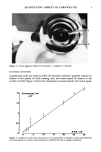
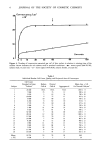
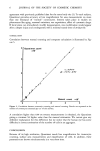
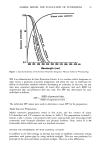
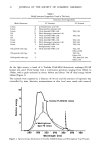
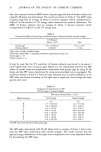
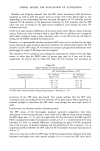
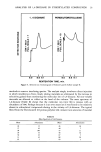
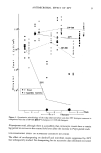
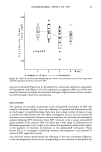
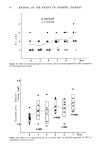
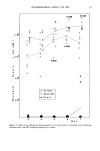
10 JOURNAL OF THE SOCIETY OF COSMETIC CHEMISTS MATERIALS and METHODS METHOD FOR DETERMINING SPF WITH NATURAL SUNLIGHT Guinea Pig Studies Studies were conducted on 100 male albino guinea pigs of Hartley strain 8 to 10 weeks of age. On the average, a group of 10 guinea pigs were used for testing each sunscreen preparation. The depilated back was sectioned off into three columns with cloth-tape. Then each test preparation was applied uniformly to an area of the back measuring 2cm x 9cm in a concentration of 2mg/cm 2 or 2/zg/cm 2. Test material was not applied in the central column for determining the untreated control MED value. Then 6 to 8 slots were made with cloth-tape, each slot covering an area of lcm x lcm. Exposures were given 15 minutes after application. Each exposure in a series was increased in a geometrical progression, i.e., each exposure was 30% greater than the previous exposure. The initial exposure for the series was selected on the basis of previous experience. At the end of each exposure period, one of the slots was covered in the control and test area to stop the exposure at that site. The duration of each exposure was monitored by means of a Sunburn Ultraviolet Integrator for administering a series of uniform and reproducible exposures to natural sunlight despite the variations produced by atmospheric condi- tions. Human Subject Studies This procedure is basically the same as that set forth in FDA's proposed rules. Studies were conducted on 73 healthy, fair-skinned and medium-skinned Japanese male volunteers 16 to 38 years of age (2). On the average, 20 subjects were used for each sunscreen preparation. The untanned mid-back was used for testing. The back was sectioned off into 6 columns with rubber plates so that each covered an area of 2.5cm x 32cm. Then each test preparation was applied to each column. Test material was not applied in one of the columns in order to determine the untreated control MED value. 8 slots were made with cloth-tape, each slot covering a 2.5cm x 3cm area. Field tests with guinea pigs and human subjects were performed at the same time in Okinawa, which is located at 26 degrees North latitude. Sunburn Ultraviolet Integrator ( SU- Integrator ) The relationship between the spectral sensitivity of SU-Integrator and erythema action spectra of guinea pigs and human subjects which was determined by using monochro- mator are shown in Figure 1. It may be seen that the SU-Integrator has a spectral sensitivity between 290nm and 330nm similar to the erythema action spectra of guinea pigs and human subjects (3,4). This instrument was found to be suitable in monitoring the study of sunscreen efficacy testing with natural sunlight. MED and SPF MED is the abbreviation for Minimal Erythema Dose. It is defined as the amount of energy required to produce a minimal perceptible erythema response approximately 20 hours after exposure and it is used as an index of sensitivity to UV irradiation.
Purchased for the exclusive use of nofirst nolast (unknown)
From: SCC Media Library & Resource Center (library.scconline.org)