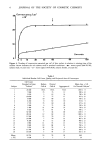
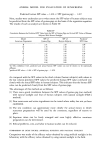
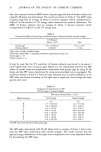
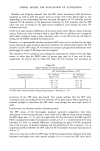
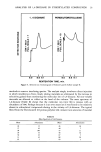
ANIMAL MODEL FOR EVALUATION OF SUNSCREENS 17 Kaidbey and Kligman showed that the SPF values determined with fluorescent suniamps as well as with hot quartz mercury lamps were either falsely high or low depending on the relationship between the peak absorption of UV absorber and the maximal UV-B emission of the fluorescent suniamp (5). This indicates that the SPF value may vary according to the light source employed, even though the same UV absorber was used. LeVee et al. also reported differences of the same nature when efficacy values obtained using a Xenon arc solar simulator with a 2mm WG-305 cut off filter were compared with values obtained using a solar simulator with a lmm WG-320 cut off filter in testing the 4% PABA standard formulations (6). However, it is questionable whether consistent SPF value can be obtained by the light source having the same emission spectrum therefore, the relationship between the UV intensity and the SPF values of 4 commercial sunscreen preparations determined with guinea pigs by using FL-SE lamps was investigated. The intensity of UV irradiation was changed by adjusting the distance from the light source in order that the MED value of guinea pigs may be 6 min and 30 min, respectively. As will be seen in Table VII, when the UV intensity was increased, an Table VII Relation Between UV Intensity and SPF SPF Values Obtained (Mean _+ S.D.) • Commercial Sunscreen FL ß SE-lamps FL ß SE-lamps Preparation Tested Med--6 min. MED--30 min. X 19.5 _+ 5.0 9.9 -+ 1.6 Y 15.0 _+ 4.4 6.7 + 1.2 Z 5.5 + 1.5 2.0 _+ 1.0 U 2.5 _+ 0.8 2.3 _+ 0.7 •The SPF values were determined with guinea pigs using FL ß SE-lamps. (n = 10) increment of the SPF value was found. The results indicate that the SPF value commonly varies according to the UV intensity of the light source when employing an artificial sunlight to determine the SPF value, even though the same light source is used. Furthermore, we obtained another interesting result. The SPF values of 8% homosalate standard sunscreen preparation have been determined 3 times during the past 3 years (1978, 1979, 1980) by using natural sunlight the SPF values were 2.2, 2.3, and 2.0, respectively. On the other hand, the SPF value for FDA's standard homosalate formulation is listed as 4.24 ___ 1.14 determined with solar simulator (1). This is a marked difference. Considering the spirit of FDA's proposed rule in the accuracy of product labeling and the protection of the consumer, it is an important problem whether the SPF value for 8% homosalate standard formulation is 4.24 or 2.1. Sayre et al. also found that the SPF value of 8% homosalate lotion obtained with solar simulator was higher than with natural sunlight (3.6 vs 2.4) and the SPF value had a

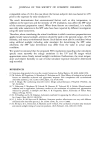
18 JOURNAL OF THE SOCIETY OF COSMETIC CHEMISTS comparable value of 2.8 in the case where the human subjects' skin was heated to 33øC prior to the exposure by solar simulator (7). The result demonstrates that environmental factors such as skin temperature, in addition to the spectrum and the intensity of UV irradiation, may affect the SPF value of the sunscreen preparation tested. When these factors are considered, it is readily seen why wide variations in the SPF value have been reported by different investigators using the same sunscreens. Therefore, when considering the actual conditions in which sunscreen preparations are applied under natural sunlight, attention should be paid to the spectral output, the UV intensity, and many environmental factors. Such factors must also be considered when using artificial sunlight including solar simulator for determining the SPF value otherwise, the SPF value determined may differ from the value in actual usage condition. We would recommend that the proposed FDA regulations regarding solar simulators specify more narrowly the energy emissions in the UV and IR ranges which approximate more closely natural sunlight conditions. Furthermore, the room temper- ature and relative humidity in case of solar simulator exposure should be determined an d recorded. REFERENCES (1) Sunscreen drug products for over-the-counter human use, Federal Register, 43, 38206-38269 (1978). (2) M. Fukuda, M. Nagashima, A. Munakata, K. Nakajima and S. Ohta, Effects of biological and physical factors on ultraviolet erythemal and pigmentary response: Skin complexions and environmental ultraviolet radiation,J. Soc. Cosmet. Chem. Japan., 13, 20-28 (1979). (3) D. S. Berger, The sunburning ultraviolet meter: Design and performance, Photo?hem. Photobiol., 24, 587-593 (1976). (4) Y. Nakayama, F. Morikawa, M. Fukuda, M. Hamano, K. Toda and M. A. Pathak, Monochromatic radiation and its application: Laboratory studies on the mechanism of erythema and pigmentation induced by psoralen, in Sunlight and Man, T. B. Fitzpatrick, Editor, (University of Tokyo Press, Tokyo, 1974)pp. 591-611. (5) K. H. Kaidbey and A.M. Kligman, Laboratory methods for appraising the efficacy of sunscreens, J. Soc. Cosmet. Chem., 29, 525-536 (1978). (6) G.J. LeVee, R. M. Sayre and E. Marlowe, Sunscreen product effectiveness can vary with different simulated solar ultraviolet spectra,J. Soc. Cosmet. Chem., 31,173-177 (1980). (7) R. M. Sayre, D. L. Desrochers, E. Marlowe and F. Urbach, The correlation of indoor solar simulator and natural sunlight testing of sunscreen products, Arch. Dermatol., 114, 1649-1651 (1978).
Purchased for the exclusive use of nofirst nolast (unknown)
From: SCC Media Library & Resource Center (library.scconline.org)