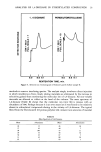
ANALYSIS OF 1,4-DIOXANE IN ETHOXYLATED COMPOUNDS 25 range of samples and has a detection limit comparable to the Birkel procedure. Results obtained using this procedure on Polysorbate 60, PEG-8 and Sodium Laureth Sulfate samples compare favorably with results obtained by other laboratories using the unmodified Birkel procedure. ACKNOWLEDGEMENTS The author wishes to thank the Cosmetic Toiletry and Fragrance Association who supplied the samples and organized and coordinated the round robin. Special thanks to C. T. Desmond for his efforts as a liaison between Union Carbide Corp. and the CTFA. The excellent technical advice of J. j. Behen and G. W. Heylmun is appreciated. REFERENCES (1) CTFA Final Report on the Dioxane Round Robin Program (Cosmetic, Toiletry and Fragrance Association, Inc., Washington, D.C., 1981). (2) T. J. Bikel, C. R. Warner and T. Fazio, Gas chromatographic determination of 1,4-dioxane in polysorbate 60 and polysorbate 80,J. Ass. O•c. Anal. Chem., 62 (4), 931-936 (1979). (3) M. L. Stafford, K. F. Guin, G. A. Johnson, L. A. Sanders and S. L. Rockey, Analysis of 1,4-dioxane in ethoxylated surfactants,J. Soc. Cosmet. Chem. 31,281-287 (1980).

J. Soc. Cosmet. Chem., 33, 27-37 (January/February 1982) Antimicrobial effect of zinc pyrithione GENJI IMOKAWA, HARUO SHIMIZU and KIKUHIKO OKAMOTO, Kao Soap Co. Ltd., Tochigi Research Laboratories, 2606 Akabane, Ichikai- Machi Haga- Gun, Tochigi, Japan. Received April 27, 1981. Presented at the SCC Annual Scientific Seminar, IVashington, D.C., May 21-22, 1981. Synopsis The antimicrobial effect of zinc pyrithione has been studied with healthy scalps in relation to its ANTIDANDRUFF effect. Use of zinc pyrithione-containing shampoo sharply reduced the CORNEOCYTE COUNTS, while the similarly active antimicrobial agent, Irgasan DP-300 © had no effect on the corneocyte counts. Quantitative estimation of scalp microorganisms revealed that corresponding to the decrease in dandruff, Pityrospbrum ovale were specifically lowered by zinc pyrithione treatments, but not by Irgasan DP-300 ©. Subsequent observations without shampooing indicated that the corneocyte count recovered to control level after 6 days despite the continued suppression of Pityrosporum ovale. In contrast, non-medicated shampooing, after the suppression of dandruff by zinc pyrithione, showed a continued reduced corneocyte count despite recovered growth of Pityrosporum ovale. INTRODUCTION In their study on the pathogenesis of dandruff, Leyden et al (1) indicated that after suppression of dandruff and yeast with selenium sulfide, dandruff returns despite the continuous suppression of Pityrosporum ovale by amphotericin B and suggested that scalp microorganisms do not play a primary role in the pathogenesis of dandruff and that the mode of antidandruff action of selenium sulfide is cytostatic. A view has been expressed by Kligman et al (2) that zinc pyrithione could have a similar antimetabolic action on the epidermis. Although zinc pyrithione, a derivative of the naturally occurring antibiotic aspergillic acid (3,4), is a potent antimicrobial agent (5-8), there are few papers describing quantitatively the antimicrobial effect of ZPT on the scalps in vivo relative to its antidandruff mechanism. In the present study, antimicrobial effect of zinc pyrithione has been studied on healthy scalps to test the relationship between microorganisms and dandruff. MATERIALS AND METHODS SHAMPOOING Using healthy volunteers, test shampoos containing 1.0% Zinc pyrithione (ZPT) or 0.2% Irgasan DP-300 © (DP-300) were treated 3 times weekly for 2 weeks following 3 27
Purchased for the exclusive use of nofirst nolast (unknown)
From: SCC Media Library & Resource Center (library.scconline.org)