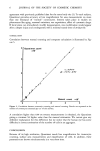
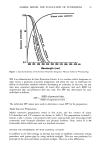
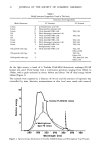
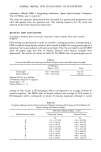
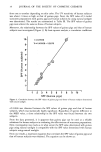
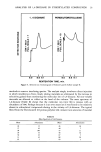
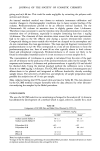
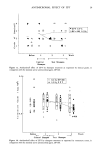
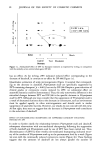
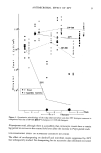
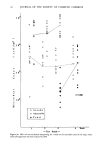
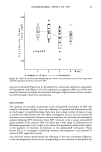
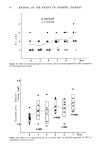
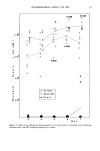
28 JOURNAL OF THE SOCIETY OF COSMETIC CHEMISTS times weekly pretreatments for 1 week with a non-medicated shampoo. This non-medicated shampoo was composed of the same materials (mainly 1556 lauryl sulfate triethanolamine salt) excluding ZPT or DP-300. Grading and counts were obtained on days 0, 7, 14 and 21, always 3 days after washing with each shampoo. Subjects were graded on a ! to 4 scale separately for dandruff and itching. The descriptive equivalents of various grades are as follows: In dandruff, grade 1 shows no or minimal scaling, grade 2 mild dandruff, grade 3 moderate dandruff, and grade 4 severe dandruff. For itching, grade ! shows no or minimal itching, grade 2 mild itching, grade 3 moderate itching, and grade 4 severe itching. SAMPLING AND CORNEOCYTE COUNTS Sampling of corneocytes, bacteria and yeasts was performed at two different scalp areas for the same person according to the method of Leyden et al (1), using two 1-minute scrubs with ! ml of 0.2% Triton X-100 in a 2.0 cm 2 area delineated by a sterile glass cylinder. Corneocyte counts were done according to the method of McGinley et al (9) and density expressed as the geometric mean per cm? MICROBIAL COUNTS Aerobic bacteria which were mostly composed of S. epidermidis in our subject's scalps were counted by pour plate method. In brief, 102, 103 and 104-fold dilutions of the scrubbed sample were made. One ml of the dilution and 15 to 20 ml of Tripticase Soy Agar (BBL) with 0.5% yeast extract sterilized and then cooled to 45 to 50øC was poured into strile petri dish. After the agar solidified, the plates were inverted and incubated at 35øC for 3 days to count the colonies. Anaerobic bacteria which predominantly consisted of a few species of Propionibacter- ium were counted by surface culture method. 0.1 ml each of 102, 103 and 104-fold dilutions of the scrubbed sample were spread on PUK-Agar. The colonies which were judged as strict anaerobe were counted after incubation at 35øC for 7 days in an atmosphere of 90% N2 and 1056 CO2. Yeast which mainly consisted of Pityrosporum ovale and Pityrosporum orbiculare with average ratio of 10:1 were directly counted according to the method of McGinley (10). 0.2 ml of each scrubbed sample was poured in a flat hollow of 1.4-cm-dia. equipped on a slide glass. After drying, triple-strength Giemsa stain was added for 1 hr, the slide glasses rinsed with tap water, then dried and counted light microscopically under oil immersion. Microbial counts were expressed as the geometric mean per cm •. The significance of the difference was calculated by the Student's t-test. RESULTS COMPARISON OF ANTIDANDRUFF EFFECT BETWEEN ZPT AND DP-300 BY SHAMPOOING Antidandruff effect of zinc pyrithione (ZPT) has been studied in comparison with the similarly active antimicrobial agent, Irgasan DP-300 (DP-300). The use of ZPT- containing shampoo sharply reduces the amount of dandruff, as revealed by both clinical grade (Figure la) and corneocyte count (Figure lb) (p 0.01) 2 weeks after initiation of test shampooing, whereas the similarly active antimicrobial agent, DP-300

ANTIMICROBIAL EFFECT OF ZPT 29 ..4 ß ZPT 1.0 % o DP,-300 0.20/0 Before 1 2 3 Week Control Test Shampoo Shampoo Figure la. Antidandruff effect of ZPT by shampoo treatment as expressed by clinical grade, in comparison with the similarly active antimicrobial agent, DP-300. 6.0- 5.0 o o ß o 0.2% DP-300 ß 1.0% ZPT ß o ß o o o ) P•O.01 i I I Before 1 2 3 Week Control Shampoo Test Shampoo Figure lb. Antidandruff effect of ZPT by shampoo treatment as expressed by corneocyte count, in comparison with the similarly active antimicrobial agent, DP-300.
Purchased for the exclusive use of nofirst nolast (unknown)
From: SCC Media Library & Resource Center (library.scconline.org)