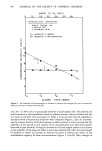
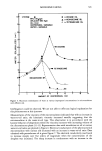
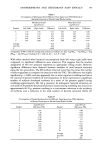
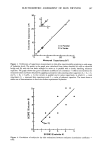
ELECTROMETRIC ASSESSMENT OF SKIN DRYNESS 385 INSTRUMENT VALIDATION FOR MEASUREMENTS OF SKIN CAPACITANCE For reasons which will be discussed below, the data in this report were calculated on the basis of capacitance measurements. Due to the fact that the electrical bridge employed by us was not especially designed for skin research [unlike those used in other laboratories (2,8)], the capacitative nature of the measurements obtained with it had to be verified experimentally. The following procedure was used for that purpose. Six circular areas (3.8 cm 2 each) located on the inner forearms of one subject were treated with 5 •tl of an aqueous solution containing 1% Triton X 100 © (a surface active agent) and glycerine in one of the following concentrations expressed as percentages: 1, 2, 3, 4, 5 and 6 (W/W). This treatment has been shown (1) to produce a wide range of relatively stable skin hydration levels. After two hours of equilibration in an air conditioned room (T = 22øC, RH -- 55%) with subject idle and the forearms exposed, routine capacitance measurements were taken from the sites as described above. Then, the measurements were repeated with the test leads connected "in parallel" and "in series" with an external reference capacitor (capacitance decade box, Comell-Dubilier Electronics © No. Carolina 27526). Each time before these measurements were taken, the value of the reference capacitor was set to match to the nearest digit those obtained in the routine determinations. The two sets of the assumed skin capacitance readings, one obtained with the instrument alone and the other with the instrument connected to the external reference capacitor, were tested for conformance with summation rules applicable to ideal capacitors (details are given in the results section). SELECTION OF SUBJECTS WITH NORMAL AND DRY SKIN The studies were performed during February and March when the incidence of skin dryness is known (10) to be at maximum in the temperate zone. The subjects (n -- 27) were healthy male and female volunteers of twenty-one to fifty-seven years of age (mean = 40.5). Twenty individuals claimed to have dry skin on their extremities and used a moisturizer either during the winter or throughout the year seven regarded their skin as not dry and did not have to use lotions on their extremities. The subjects were instructed to wash their forearms exclusively with Ivory © soap daily and to refrain from using any topical products on the respective sites for seven days prior to the study. A last soap and water wash was done on day seven approximately three hours before the experimental steps described below. SUBJECTIVE EVALUATION OF SKIN DRYNESS AND ELECTROMETRIC EVALUATION OF TRANSEPIDERMAL WATER DIFFUSION On the day of testing the degree of dryness on the forearms was scored independently by two members of the laboratory staff on a scale of one (= absent or normal) to five (-- severe, marked by the presence of large scales and chapping). The scores were based on the degree of scaliness and superficial roughness evaluated visually by touch, and by the subjects' own perception. After completing the evaluation of dryness, three circular areas each of 3.8 cm 2 were delineated along the longitudinal axis of the inner forearms. After at least one hour of equilibration in an air conditioned room (T -- 22øC, RH -- 55%) in which the subjects sat idle with the forearms exposed, capacitance measure-

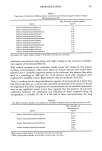
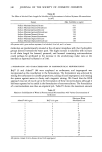
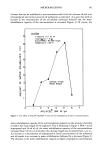
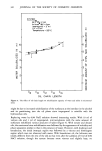
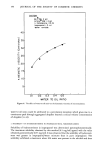
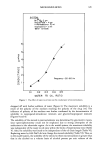
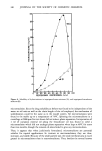
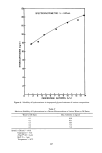
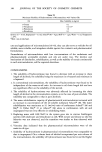
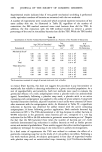
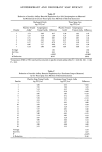
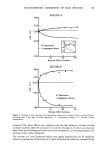
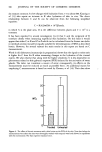
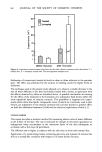
386 JOURNAL OF THE SOCIETY OF COSMETIC CHEMISTS ments were taken in the center of each area. The test sites were then occluded with a thin film of anhydrous white petrolatum. The occlusive film was produced from approximately 2.5 mg (+ 10%) of petrolatum dispensed onto the center of a site and spread over the entire area with the tip of a thin, fire polished glass rod. Care was taken to form a continuous film, and not to apply petrolatum outside the test area. The measurements were repeated ten minutes later when relative stabilization of the new capacitance values had occurred. The two sets of capacitance measurements were used to calculate what we designated as "Water Diffusion Index" (WDi) using the formula WDi = ICao - Co]/Co in which C•o = capacitance (in Farads) measured at ten minutes after occluding the skin with petrolatum, and Co = capacitance before occlusion. In order to observe more closely the changes taking place after occlusion, in two subjects measurements were taken immediately following application of petrolatum and were repeated at short intervals over the ten minute period. EFFECT OF TREATMENT WITH A LOTION ON THE RATE OF TRANSEPIDERMAL WATER DIFFUSION Twelve healthy subjects with dry skin were selected for the study using the criteria described above. After a seven day pretest period, which consisted in washing the forearms with Ivory © soap and water, the subjects treated one forearm with a skin lotion daily for ten to twelve days. The lotion was a water-in-oil emulsion containing the following ingredients in decreasing order of concentration: water, diisopropyl sebacate, glyceryl monostearate, cetyl alcohol, glycerine, and mineral oil. The contralat- eral forearms were left untreated. Both arms were washed with soap and water and thoroughly rinsed shortly before each treatment. A last application of lotion was made at the end of the treatment period. Then after approximately five minutes the arms were washed with soap and water, and the WDi was determined in three sites on each arm as described above. RESULTS AND DISCUSSION EVIDENCE FOR THE CAPACITATIVE NATURE OF C MEASUREMENTS Figure 1 shows that C values observed over a wide range of skin hydration levels conformed with summation rules applicable to pure capacitors. This provides evidence for the capacitative nature of the C values reported in this paper. The results also show a linear relationship between C and skin hydration in agreement with observations made by others (2) in skin hydrated by increased environmental humidity. RELATIONSHIP BETWEEN SUBJECTIVE SKIN DRYNESS AND ELECTROMETRICALLY DETERMINED WDi Figure 2 shows the correlation between the dryness scores observed by the two evaluators on the forearms of the experimental group. The sub-group, which lacked signs of superficial dryness, was clearly identifiable within the population all members of the sub-group were scored "1" on the 1-5 scale (coefficient of correlation = 1). The
Purchased for the exclusive use of nofirst nolast (unknown)
From: SCC Media Library & Resource Center (library.scconline.org)