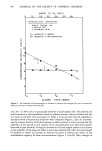
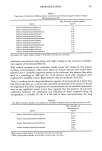
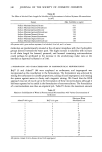
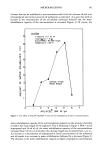
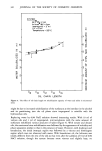
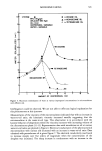
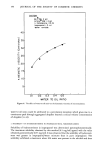
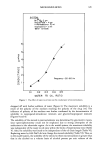
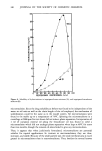
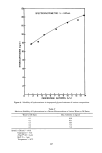
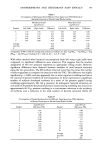
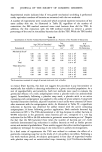
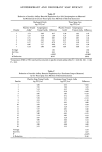
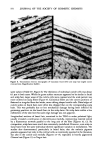
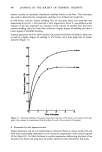
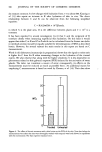
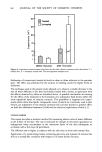
ELECTROMETRIC ASSESSMENT OF SKIN DRYNESS 391 that C is a more sensitive indicator of the size of the effective area under the electrode particularly when R is very low. Since one of the objectives of the present work was to observe differences between normal and dry skin in which, due to topographical characteristics, the ratio of nominal to effective area is different (15), C appeared to be the logical parameter of choice. The properties of stratum corneum with respect to its water barrier function have both medical (2) and cosmetic (12) implications. The technique described in this paper is useful for demonstrating that skin which manifests signs of superficial dryness permits water to diffuse to the exterior at a higher rate than does normal skin. Similar but somewhat less conclusive results have been reported by Leveque et al. (6) based on measurements of transepidermal water loss. The increased rate of water diffusion detected at the surface of dry skin by means of C measurements could be accounted for by one or a combination of the following factors: (a) A higher ratio of actual to apparent surface area known to exist in dry skin (15), possibly in relation to an error of desquamation (5). (b) A partial lack in the ability of the most superficial layers of stratum corneum to prevent loss of water (which with this technique is measured as it accumulates at the skin-petrolatum interface). (c) An increase in the permeability of stratum corneum perhaps throughout its entire thickness. More experimental data would be needed in order to analyze the contributions of these factors to the observed differences. EFFECT OF TREATMENT WITH A SKIN LOTION ON THE TRANSEPIDERMAL WATER DIFFUSION OF DRY SKIN Figure 5 shows the effect of treatment with lotion on the WDi values of dry skin. A comparison between the values presented in this figure and those given in Figure 3 reveals that the WDi values in dry skin after treatment with lotion are very close to those measured in normal skin. In addition to a lower WDi, the treated sites have a slightly higher capacitance (P -- 0.01) than the control sites (Figure 6). This indicates greater hydration of the stratum corneum. Furthermore, after occlusion with petrola- turn (Figure 6), the rate at which water diffuses to the skin surface is lower in the treated than in the untreated sites (P = 0.005). The two effects (higher initial levels of hydration and decreased rate of hydration with occlusion in the treated sites) are consistent with one another and, although not measured with the same sensitivity, demonstrate a favorable change in the water barrier properties of stratum corneum. Several studies suggested to us indirectly that chronic occlusion with a moisturizing lotion may result in an improvement of the water barrier function of stratum corneum, and that we may be able to observe the effect using WDi measurements. Studies by Kligman (10) show that treatment of xerotic skin with petrolatum produced a favorable and lasting change in the skin topography. Other experiments (16) appear to demonstrate a cause-effect relation between chronic treatment with a lotion and an improvement in the water sorption properties of stratum corneum. More recently, transmission electron micrographs revealed (17) that regular use of a lotion resulted in

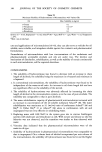
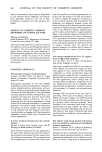
392 JOURNAL OF THE SOCIETY OF COSMETIC CHEMISTS =. Treated Untreated 30 o o-- o o 10 I Before Occlusion Affer Occlusion Figure 6. Capacitance measurements taken from dry skin after chronic treatment with a skin lotion T = treated sites, U = untreated control sites. The bars represent standard error. thickening of corneocytes located at levels as deep as those adjacent to the granular layer. The effect was attributed by the authors to swelling caused by higher levels of hydration. The technique used in the present study allowed us to observe a sizable decrease in the rate of water diffusion in dry skin chronically treated with a lotion, in agreement with the effects observed by others as described above. A possible mechanism accounting for the effect of the treatment is the formation of a substantive lipid barrier within the most superficial layers of stratum corneum. This possibility is supported by experi- ments which show that lipidic compounds, some of which are commonly used in skin lotions, are substantive to the stratum corneum (18), and they produce a positive effect on both the diffusional resistance (19,20) and the electrical capacitance of skin (1,3). CONCLUSION This report describes a sensitive method for measuring relative rates of water diffusion at the surface of the skin. The rate is indicated by changes in electrical capacitance as endogenous water accumulates in the outermost layers of the skin subsequent to occlusion with a thin layer of petrolatum. The diffusion rate is higher in subjects with dry skin than in those with normal skin. Application of a moisturizing lotion containing glycerine and mineral oil restored the skin to a normal-like condition with respect to its water-barrier function.
Purchased for the exclusive use of nofirst nolast (unknown)
From: SCC Media Library & Resource Center (library.scconline.org)